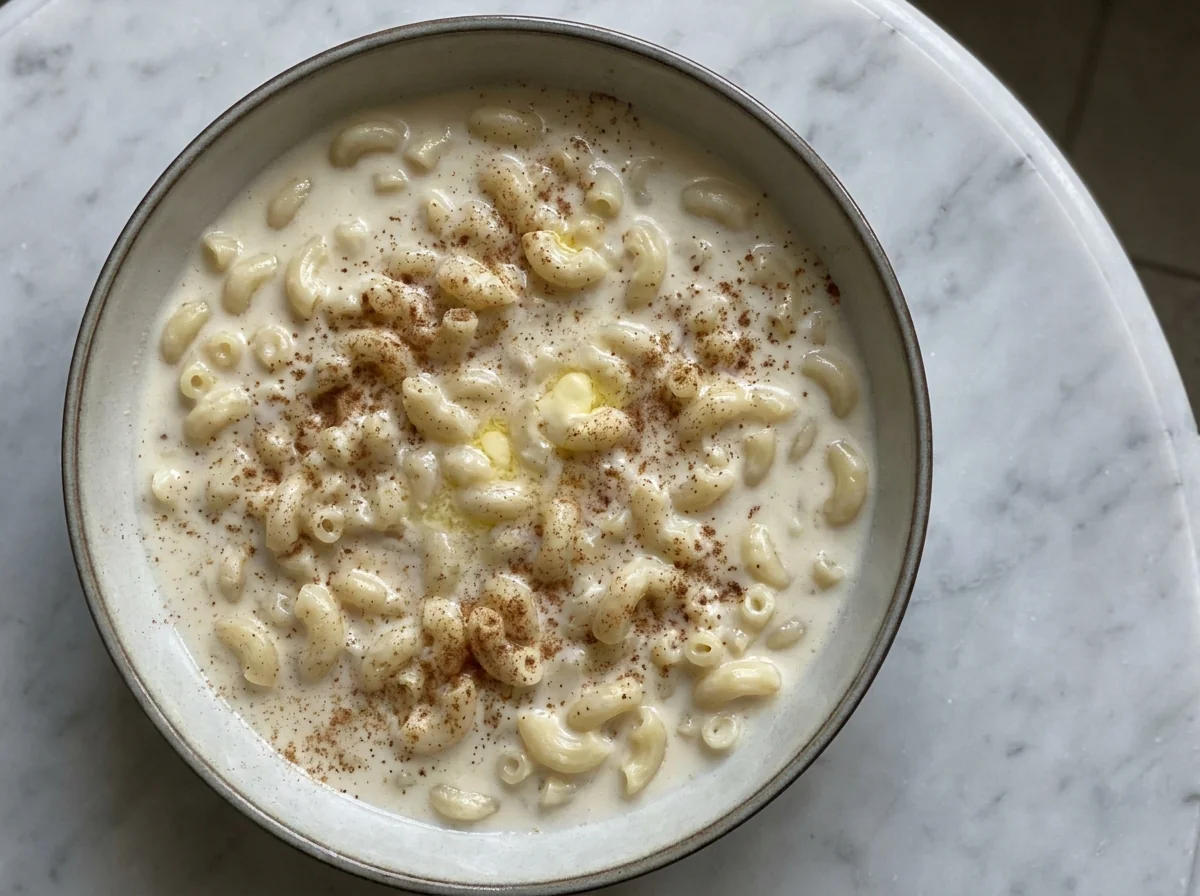
Milk pasta is the tender childhood dish in countless Arab homes.
Small pasta that cooks in sweetened milk that thickens creamily around it, the winter breakfast and the children's dinner that mothers inherit without books.
Preparation Steps
Half-boil the pasta in water
In a pot, boil the water and cook the small pasta for five minutes only until half-softened and most of the water is absorbed. The first water boil shortens the milk's time on the heat so it does not boil too long.
Pour in the milk and cook gently
Add the milk and salt and lower the heat, and cook for ten minutes with frequent stirring that guards the bottom from sticking. The pasta finishes cooking in the milk as it thickens around it with its starch into a creamy texture.
Sweeten and scent at the end
Add the sugar or honey, the butter, and the vanilla or orange-blossom water and stir for the last two minutes. Sweetening at the end protects the milk from the surprises of a long sweetened boil.
Adjust the texture and serve warm
Turn it off while it is a little looser than you want, as it will thicken as it settles, and pour it into deep bowls with a sprinkle of cinnamon, and serve it warm in winter or cold from the fridge in summer: two delicious faces of one childhood dish.
Blood Sugar Impact
The glycemic index (GI) measures how quickly a food raises blood sugar, while the glycemic load (GL) measures how much a full serving raises it. Together they give the complete picture.
Glycemic Index
GI
50Low
Low0–55Medium56–69High70+
A low value (≤55) means a gradual rise in blood sugar — the most suitable range for diabetes and insulin resistance.
Glycemic Load
GL
26High
Low0–10Medium11–19High20+
Glycemic load reflects the impact of the full serving. To lower it: take half a serving, or pair the recipe with a source of protein and fiber.
Nutritional Information
Per ServingMakes 4 servings · one serving is about 310 g of raw ingredients
Calories351 kcal18%of Daily Value*
Protein12 g24%of Daily Value*
Carbohydrates55 g20%of Daily Value*
Fat9 g12%of Daily Value*
Fiber2 g7%of Daily Value*
Sodium384 mg17%of Daily Value*
Potassium368 mg8%of Daily Value*
Phosphorus254 mg20%of Daily Value*
* Percent Daily Values are based on a 2,000-calorie diet per FDA food-label reference values — your daily needs may be higher or lower. Values are derived from the recipe's ingredients via the USDA database.
Troubleshooting
The most common problems when preparing Homestyle Milk Pasta, and how to fix them:
The milk stuck to the bottom and burned
High heat or careless stirring. Low heat after the milk goes in and the spoon wiping the bottom every two minutes.
It thickened until it set
The nature of starch after cooling. Loosen it with warm milk stirred in a spoon at a time so it returns creamy.
The pasta fell apart
A long first boil. Five minutes to half-soft only, as the milk will finish the job.
The milk boiled over on the heat
A violent covered boil. Low heat without a lid and a wooden spoon laid across the pot, the grandmothers' honest trick.
Storage and Make-Ahead
Warm
The tender winter dish in the hour it is cooked.
In the fridge
Two days and it thickens into a pudding. Eaten cold with cinnamon or loosened with warm milk.
Not suitable for freezing
Cooked milk separates when thawed.
Tested Ingredient Substitutions
Original Ingredient
Tested Substitute
Ratio
Flavor Difference
The sugar
Honey or date molasses
1:1
A warmer sweetness suited to winter
The small pasta
Cut vermicelli
1:1
Closer to our milk vermicelli, and any small cut works
The cow's milk
Almond or oat milk
1:1
For anyone avoiding dairy. It thickens a little less
The cinnamon
Ground cardamom or a pinch of nutmeg
~
All the warm milk spices suit it
How Much Does It Make? Scaling Guide
Ingredient
4 servings
2 servings
8 servings
Pasta
200 g
100 g
400 g
Milk
750 ml
375 ml
1.5 L
Sugar
30 g
15 g
60 g
EEINA Nutrition Tip
Turn off the heat while the texture is a degree looser than you want. The pasta's starch keeps tightening the milk as it settles in the bowl; whoever turns it off at the full texture eats a petrified porridge minutes later.
Add This Recipe to Your Plan
The EEINA app saves your favorite recipes, calculates them from their real ingredients, and shows your daily numbers toward your goal. Try it free now.
The vermicelli is toasted first in ghee so it gains a color and a toasted aroma; milk pasta is boiled white and cooks creamy in its milk without toasting. Two neighbors, each with its texture and memory.
Is it really a suitable breakfast for children?
Carbohydrates and milk with calcium and protein in a warm, easy-to-swallow bowl. With a banana on the side it becomes a balanced child's meal, and its sugar is in your hand, not the factory's.
Is it made savory, as I have heard?
Yes, in many homes with grated cheese and pepper instead of sugar. A quick white homestyle pasta, and that is another recipe for another day.
How do I lighten its sugar more?
Fifteen grams with more generous vanilla and cinnamon, or a banana mashed in the last minute sweetens it without a single spoon of sugar.