Saudi Mathloutha (three-platter dish: Kabsa rice, Jareesh, and Qursan flatbread)
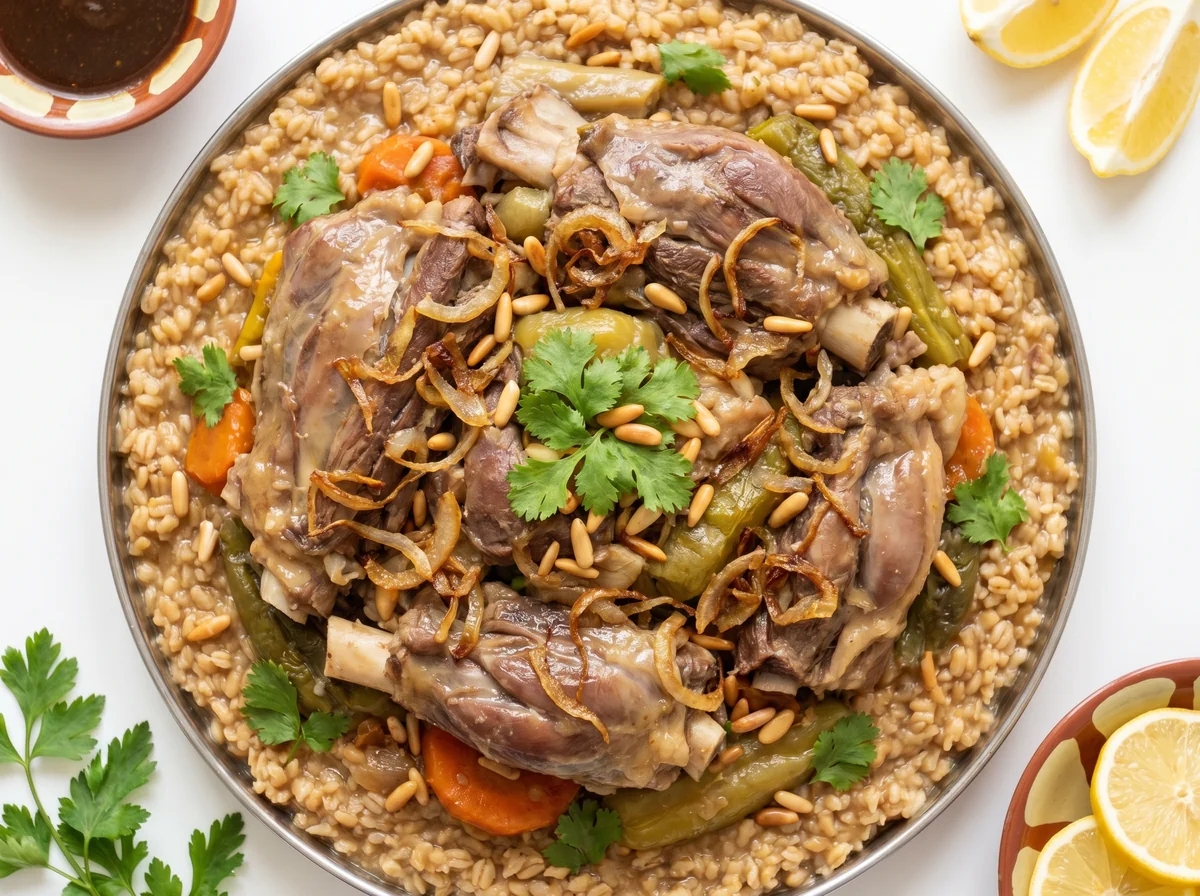
A traditional Najdi Saudi dish — three platters in one bowl: Kabsa (Saudi spiced rice dish), Jareesh (cracked wheat porridge), and Qursan (thin flatbread soaked in broth), all with lamb and its rich broth. A dish of abundance and generosity, high in protein, medium glycaemic load, containing gluten.
Mathloutha is a venerable traditional Najdi Saudi dish — its name comes from the Arabic word for three, as it brings three dishes together in one bowl: Kabsa (Saudi spiced rice dish), Jareesh (cracked wheat porridge), and Qursan (thin flatbread soaked in broth), all with lamb and one rich shared broth. It is a dish of abundance and generosity, gathering the variety of the Najdi table in a single bowl, served at banquets, celebrations, and grand gatherings.
Mathloutha reflects Saudi hospitality and the honouring of guests — its variety satisfies every taste — and the wisdom of the traditional kitchen in drawing on one broth for three dishes. It is a beloved dish that carries the memory of banquets and family gatherings.
Preparation Steps
Cook the lamb and build the broth
Cook the lamb with the onion, cardamom, cinnamon, bay leaf, loomi (dried black lime), and salt until fully tender and a rich broth forms, then add the grated tomatoes, tomato paste, and Kabsa (Saudi spiced rice dish) spice blend. One rich broth serves all three platters — it is the foundation of the Mathloutha.
Cook the Kabsa portion
Cook the rice in a portion of the spiced broth (like Kabsa (Saudi spiced rice dish)) until it is perfectly fluffy and infused with the flavour of lamb, tomato, and spices. This is one of the three thirds of the Mathloutha — Kabsa rice with the flavour of lamb, tomato, and spices.
Cook the Jareesh
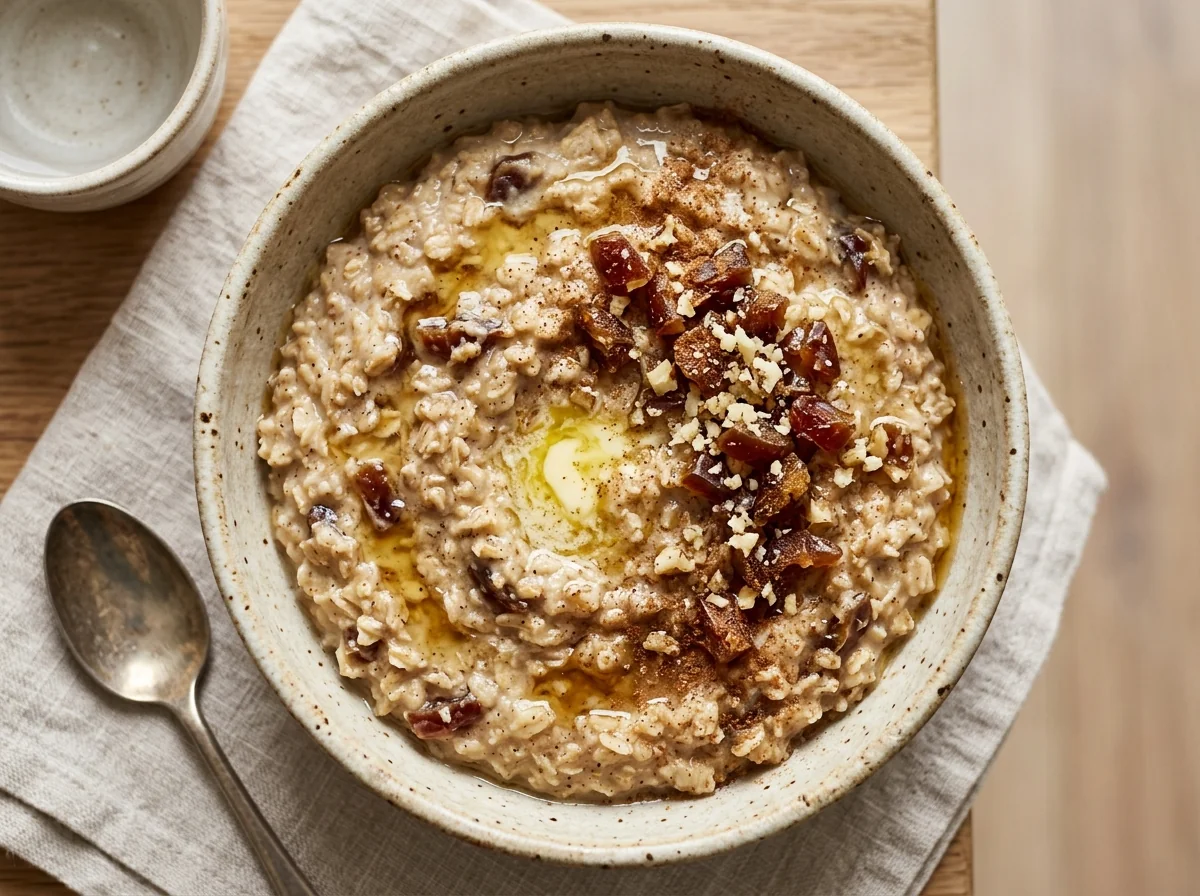
Cook the Jareesh (cracked wheat) in another portion of the broth over a low flame for a long time, stirring frequently until it softens and thickens into a creamy consistency. Jareesh needs long cooking for the wheat to soften and thicken.
Prepare the Qursan
Moisten the Qursan flatbread (thin rounds) or tandoor bread with hot broth until it softens and arrange it. Qursan (or Margoog) is the third element — thin flatbread moistened with broth. These three thirds — Kabsa, Jareesh, and Qursan — are the meaning of Mathloutha.
Assemble the bowl
In a large serving bowl, arrange the three thirds side by side — Kabsa rice, Jareesh, and broth-moistened Qursan — and place the tender lamb pieces in the centre, then pour over extra broth. Mathloutha is a dish of abundance that brings three dishes together in one bowl.
Serve
Pour over extra broth and ghee to taste, and serve the Mathloutha hot alongside daqqous (spiced tomato sauce) and salad. It is a traditional Najdi Saudi dish — its name comes from the Arabic word for three — and is served at banquets, celebrations, and grand gatherings: a symbol of generosity, abundance, and the variety of the Saudi table, around which guests gather.
Blood Sugar Impact
The glycemic index (GI) measures how quickly a food raises blood sugar, while the glycemic load (GL) measures how much a full serving raises it. Together they give the complete picture.
Glycemic Index
GI
63Medium
Low0–55Medium56–69High70+
A low value (≤55) means a gradual rise in blood sugar — the most suitable range for diabetes and insulin resistance.
Glycemic Load
GL
26High
Low0–10Medium11–19High20+
Glycemic load reflects the impact of the full serving. To lower it: take half a serving, or pair the recipe with a source of protein and fiber.
Nutritional Information
Per ServingMakes 6 servings · one serving is about 205 g of raw ingredients
Calories412 kcal21%of Daily Value*
Protein24 g48%of Daily Value*
Carbohydrates45 g16%of Daily Value*
Fat15 g19%of Daily Value*
Fiber4 g14%of Daily Value*
Sodium61 mg3%of Daily Value*
Potassium506 mg11%of Daily Value*
Phosphorus358 mg29%of Daily Value*
* Percent Daily Values are based on a 2,000-calorie diet per FDA food-label reference values — your daily needs may be higher or lower. Values are derived from the recipe's ingredients via the USDA database.
Troubleshooting
The most common problems when preparing Saudi Mathloutha (three-platter dish: Kabsa rice, Jareesh, and Qursan flatbread), and how to fix them:
The Jareesh did not soften or is lumpy
Not cooked long enough or insufficient stirring. Cook the Jareesh in the broth over a low flame for a long time, stirring continuously until the wheat softens and thickens into a creamy consistency. Jareesh requires patience and stirring; add more broth if it dries out.
The Qursan is dry and has not softened
Not moistened enough. Soak the Qursan flatbread with generous hot broth until it softens and absorbs it — dry Qursan is tough. Hot broth is what softens the thin rounds.
The rice is undercooked or gluey
Wrong water-to-rice ratio, or the rice was not soaked. Soak the rice, then cook it in broth at the correct ratio (approximately double the volume of water), covered, until all the liquid is absorbed and the grains are fluffy, as for Kabsa. The correct ratio is the secret to fluffy rice.
The lamb is tough
Not cooked long enough. Cook the lamb until completely tender and nearly falling apart (two hours or in a pressure cooker) before preparing the three portions — tough lamb ruins the dish, and the resulting broth is the foundation of its flavour.
The dish is bland
Insufficient spices or loomi. Season the broth well with the Kabsa spice blend, loomi (dried black lime), and tomatoes — one broth flavours all three dishes, so do not hold back on the seasoning. Daqqous (spiced tomato sauce) at serving adds acidity and heat.
Storage and Make-Ahead
Refrigerator (4°C)
Store the Mathloutha components separately in the fridge for three days: the lamb and broth, rice, and Jareesh each in their own containers, and the Qursan separately. Reheat and assemble at serving time, as the Qursan and Jareesh soften further if stored combined.
Freezer
The lamb with its broth and the Jareesh freeze well for two to three months in sealed containers. Thaw, reheat, cook fresh rice, and moisten fresh Qursan at serving time. Practical for preparing banquet quantities ahead.
Prep ahead
Cook the lamb and broth in advance (the longest step), then prepare the three portions at serving time. Ready broth cuts most of the work; cooking the rice, Jareesh, and Qursan is faster. Practical for large gatherings.
Food safety
Cook the lamb until fully tender, cool the broth, rice, and Jareesh quickly, do not leave them outside the fridge for more than two hours, and reheat thoroughly at serving time.
Tested Ingredient Substitutions
Original Ingredient
Tested Substitute
Ratio
Flavor Difference
All three portions in full
Smaller portions with more lamb and salad
—
Reduces the starch density and glycaemic load — a moderate serving from each third with more lamb and salad is a healthier balance
White Kabsa rice
Brown rice
Same quantity
Raises the fibre and lowers the glycaemic load of the Kabsa portion; the Jareesh is already whole wheat
Lamb
Chicken or lean meat
Same quantity
Chicken is lighter in fat while the rich broth that serves all three dishes remains
How Much Does It Make? Scaling Guide
Servings
Meat
Rice
Jareesh
3 (half recipe)
400 g
1/2 cup
1/2 cup
6 (base)
750 g
1 cup
1 cup
12 (banquet)
1500 g
2 cups
2 cups
EEINA Nutrition Tip
Mathloutha is a rich, complete banquet dish: the lamb provides protein and iron; the Jareesh (whole wheat) provides fibre and plant protein with a lower glycaemic index than white rice; and the Qursan and rice provide carbohydrates for energy. Its challenge is the density of three starches together, plus the calories, ghee, and sodium. To lighten your experience: keep your portion moderate (do not fill generously from all three thirds), favour the lamb, broth, and salad, and reduce the ghee. It is a celebratory dish, not an everyday one — enjoy it in moderation.
Add This Recipe to Your Plan
The EEINA app saves your favorite recipes, calculates them from their real ingredients, and shows your daily numbers toward your goal. Try it free now.
A traditional Najdi Saudi dish that brings three dishes together in one bowl: Kabsa (Saudi spiced rice dish), Jareesh (cracked wheat porridge), and Qursan (thin flatbread soaked in broth), all with lamb and one rich shared broth. Its name comes from the Arabic word for three. Served at banquets and grand celebrations — a dish of abundance and generosity.
Why is it called Mathloutha?
From the word for three, because it unites three Najdi dishes in one bowl — Kabsa, Jareesh, and Qursan. It is a way of presenting the variety and generosity of the table in one meal that satisfies every taste, reflecting the largesse of Saudi banquets.
Is Mathloutha healthy?
A rich banquet dish: the lamb provides protein and iron, and the Jareesh (whole wheat) provides fibre with a lower glycaemic index than white rice. Its challenge is the density of three starches together plus calories, ghee, and sodium. Keep your portion moderate, favour the lamb and salad, and reduce the ghee. A celebratory dish for special occasions, not daily consumption.
What are Jareesh and Qursan?
Jareesh is cracked wheat cooked in broth for a long time until it reaches a creamy consistency — a celebrated Najdi dish in its own right. Qursan is thin flatbread moistened with broth until it softens. Both are traditional Najdi dishes, and together with Kabsa rice they form the Mathloutha, combining contrasting textures and flavours.