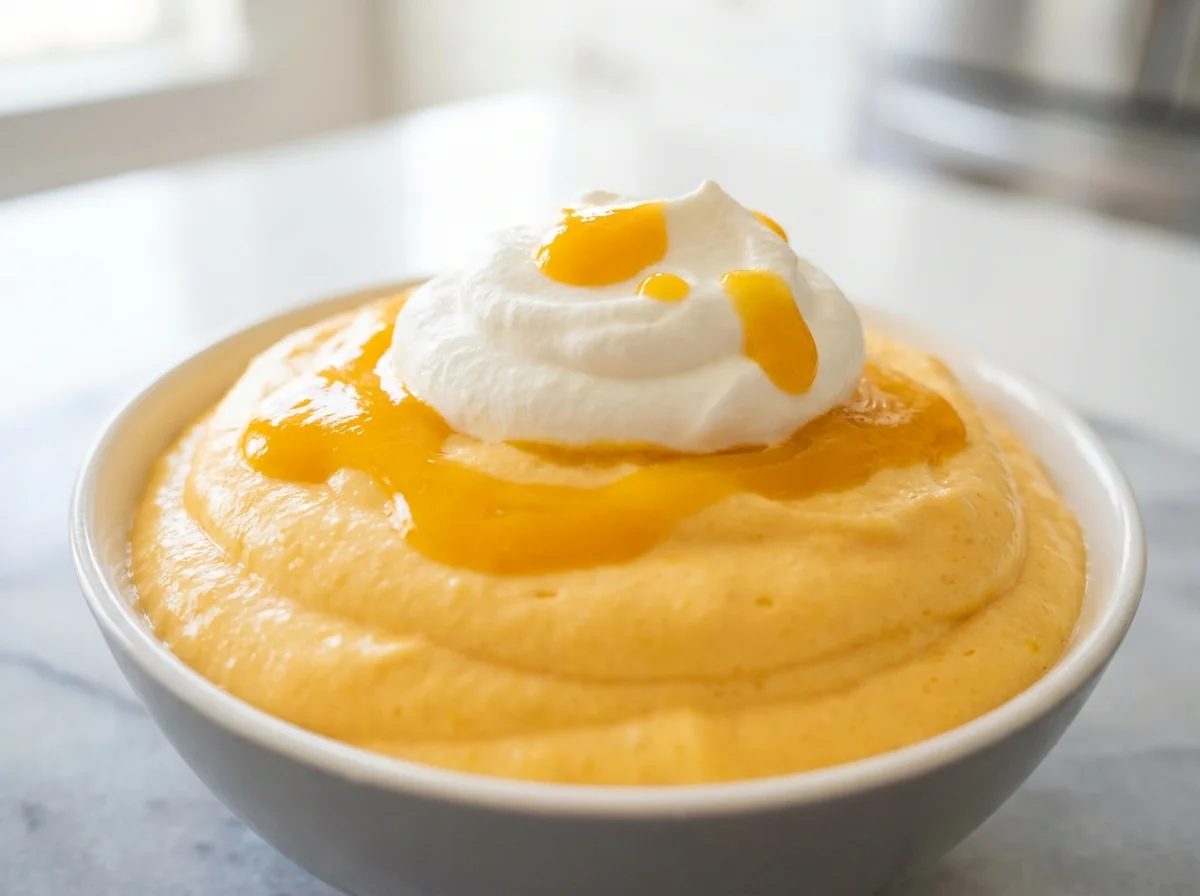
Mousse is a French word meaning foam, and it is a light, airy dessert.
This is a lighter version that replaces part of the cream with Greek yogurt, so it stays rich without being heavy.
Preparation Steps
Prepare the mango
Puree the ripe mango until completely smooth, and strain it if you want a silky texture with no fibers.
Bloom the gelatin
Sprinkle the gelatin over the cold water and leave it five minutes until it swells; this ensures even dissolving with no lumps.
Dissolve the gelatin
Dissolve the bloomed gelatin over a warm water bath or for a few seconds in the microwave until it clears, and do not boil it so it does not lose its ability to set.
Mix the base
Mix the mango puree with the yogurt, sugar, and lemon juice until smooth; the lemon balances the sweetness and brings out the mango flavor.
Combine the gelatin
Add the dissolved gelatin to the mango mixture and stir quickly until it distributes, before it starts to set.
Whip the cream
Whip the cold whipping cream to soft peaks, and do not overdo it so it does not curdle and weigh the mousse down.
Gentle folding
Fold the whipped cream into the mango mixture with a gentle motion from bottom to top, to preserve the lightness and air.
Chilling
Divide the mousse into serving cups and chill it for at least four hours until it sets lightly and its texture firms up.
Blood Sugar Impact
The glycemic index (GI) measures how quickly a food raises blood sugar, while the glycemic load (GL) measures how much a full serving raises it. Together they give the complete picture.
Glycemic Index
GI
51Low
Low0–55Medium56–69High70+
A low value (≤55) means a gradual rise in blood sugar — the most suitable range for diabetes and insulin resistance.
Glycemic Load
GL
9Low
Low0–10Medium11–19High20+
Glycemic load reflects the impact of the full serving. To lower it: take half a serving, or pair the recipe with a source of protein and fiber.
Nutritional Information
Per ServingMakes 6 servings · one serving is about 140 g of raw ingredients
Calories188 kcal9%of Daily Value*
Protein6 g12%of Daily Value*
Carbohydrates19 g7%of Daily Value*
Fat11 g14%of Daily Value*
Fiber1 g4%of Daily Value*
Sodium22 mg1%of Daily Value*
* Percent Daily Values are based on a 2,000-calorie diet per FDA food-label reference values — your daily needs may be higher or lower. Values are derived from the recipe's ingredients via the USDA database.
Troubleshooting
The most common problems when preparing Light Mango Mousse, and how to fix them:
The mousse did not set
Usually the gelatin was boiled or not well dissolved; make sure it is dissolved clear without boiling and in the correct ratio.
The gelatin clumped in the mixture
It was added too hot to a cold mixture; let it cool a little and stir quickly when adding it.
The mousse is heavy, not light
You overfolded the cream or overwhipped it; fold gently with the fewest motions.
Excessively sour taste
The mango is not ripe; choose very ripe fruit and reduce the lemon a little.
Storage and Make-Ahead
Refrigeration
Keeps covered in the fridge for up to three days, which is the best place for it to stay set.
Freezer
It can be frozen and becomes closer to mango sorbet; let it soften a little before serving.
Tested Ingredient Substitutions
Original Ingredient
Tested Substitute
Ratio
Flavor Difference
Greek yogurt
Light labneh
Same weight
A thicker texture and a more pronounced tartness
Gelatin
Plant-based agar agar
4 g instead of 8
Becomes vegetarian, and is dissolved by boiling rather than warming
Mango
Pureed strawberries or peaches
Same weight
A different flavor with the same texture
Fine sugar
Honey
30 g instead of 40
A deeper sweetness and a slightly darker color
How Much Does It Make? Scaling Guide
Ingredient
2 servings
4 servings (base)
8 servings
Mango puree
135 g
270 g
540 g
Greek yogurt
65 g
135 g
270 g
Whipping cream
50 ml
100 ml
200 ml
Gelatin
3 g
5 g
11 g
EEINA Nutrition Tip
Replacing part of the cream with Greek yogurt reduces the fat and adds protein and a pleasant tartness that balances the mango's sweetness. Choosing very ripe mango reduces the need for sugar.
Add This Recipe to Your Plan
The EEINA app saves your favorite recipes, calculates them from their real ingredients, and shows your daily numbers toward your goal. Try it free now.