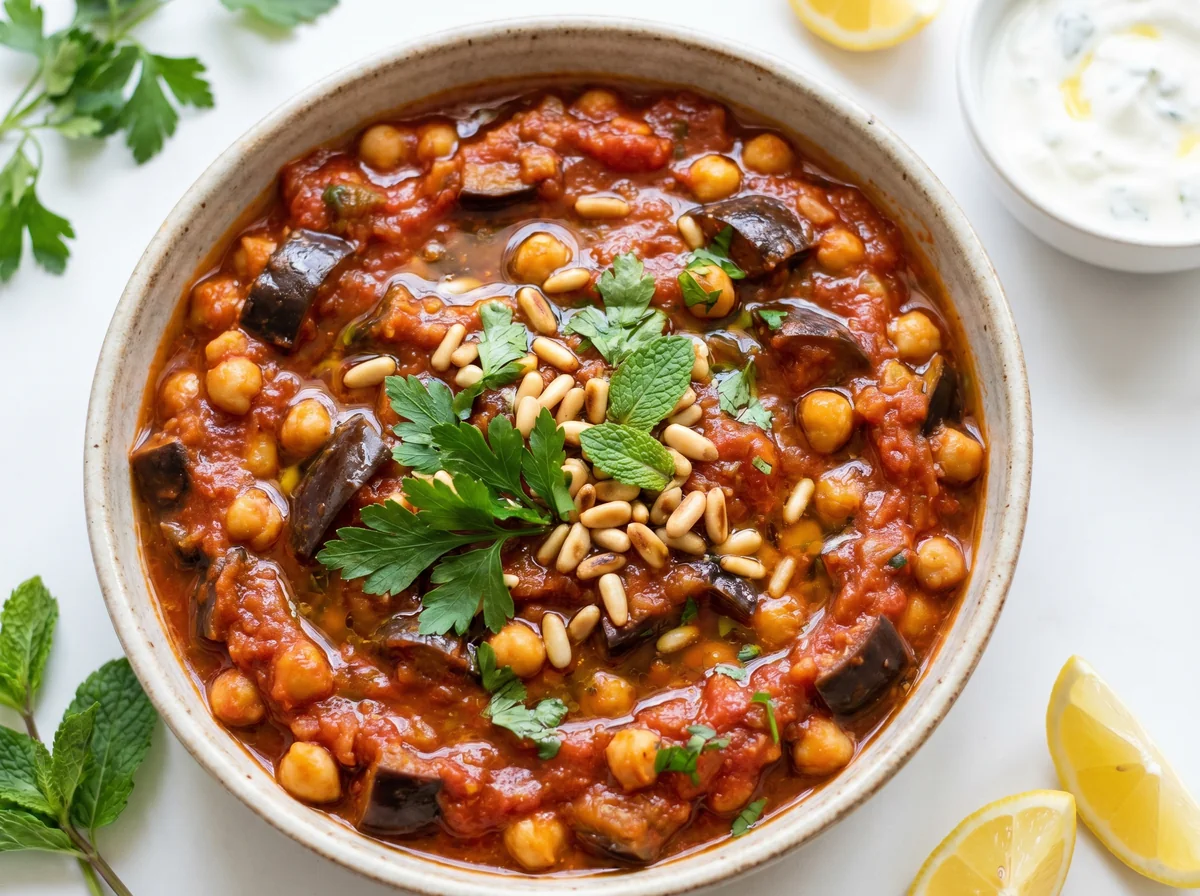
A Lebanese vegetarian dish — eggplant and chickpeas cooked in a tomato, garlic, and onion sauce, served cold (Lebanese vegetarian moussaka). Light and high in fiber, low glycemic load, and free from common allergens.
Maghmour (or the monk's moussaka) is a beloved Lebanese Levantine vegetarian dish — the vegetarian version of moussaka (without meat), from the family of olive-oil vegetable and fasting dishes. It combines eggplant and chickpeas in a tomato, garlic, and onion sauce, eaten cold or at room temperature, scooped with bread.
Its name (maghmour, meaning submerged) reflects how the eggplant is immersed in the sauce. Common during Christian fasts, on the meze table, and in summer. Its lightness, high fiber content, and refreshing flavor have made it a beloved healthy vegetarian dish, reflecting the Levantine vegetarian tradition of olive oil and tomatoes.
Preparation Steps
Cook the eggplant
Cut the eggplant into cubes and cook it (roasted, steamed, or lightly pan-fried) until tender and softened. Tender eggplant is the base of maghmour (also known as the monk's moussaka or vegetarian moussaka). Roasting is lighter than frying.
Sauté the onion and garlic
Brown the chopped onion in olive oil until softened, then add the crushed garlic generously and stir until fragrant. Abundant garlic is maghmour's distinctive flavor.
Add the tomatoes and chickpeas
Add the grated tomatoes, tomato paste, cumin, salt, and cooked chickpeas, and stir. The tomatoes and chickpeas complement the eggplant (vegetable protein, body, and acidity).
Combine the eggplant and simmer
Add the cooked eggplant to the sauce, stir gently, and let the maghmour cook over low heat until the flavors meld and the sauce thickens, about twenty minutes. Gentle simmering integrates the ingredients and enriches the flavor.
Adjust the seasoning
Taste and adjust salt and cumin. A pinch of chili or a squeeze of lemon can be added to taste. The desired texture is vegetables in a thick, not watery, tomato sauce. Allow to cool.
Serve
Spread the maghmour on a plate, drizzle with a little olive oil and parsley, and serve cold or at room temperature with bread (an olive-oil cold dish). Maghmour is a beloved Lebanese vegetarian dish (the Lebanese vegetarian moussaka) — a fasting and summer dish. Eggplant and chickpeas in a garlicky tomato sauce are a refreshing, healthy, light pleasure that reflects the Levantine vegetarian culinary tradition.
Blood Sugar Impact
The glycemic index (GI) measures how quickly a food raises blood sugar, while the glycemic load (GL) measures how much a full serving raises it. Together they give the complete picture.
Glycemic Index
GI
20Low
Low0–55Medium56–69High70+
A low value (≤55) means a gradual rise in blood sugar — the most suitable range for diabetes and insulin resistance.
Glycemic Load
GL
3Low
Low0–10Medium11–19High20+
Glycemic load reflects the impact of the full serving. To lower it: take half a serving, or pair the recipe with a source of protein and fiber.
Nutritional Information
Per ServingMakes 5 servings · one serving is about 275 g of raw ingredients
Calories168 kcal8%of Daily Value*
Protein6 g12%of Daily Value*
Carbohydrates23 g8%of Daily Value*
Fat7 g9%of Daily Value*
Fiber7 g25%of Daily Value*
Sodium125 mg5%of Daily Value*
Potassium483 mg10%of Daily Value*
Phosphorus97 mg8%of Daily Value*
* Percent Daily Values are based on a 2,000-calorie diet per FDA food-label reference values — your daily needs may be higher or lower. Values are derived from the recipe's ingredients via the USDA database.
Troubleshooting
The most common problems when preparing Lebanese Maghmour, and how to fix them:
The eggplant absorbed too much oil
Fried with too much oil. Roast the eggplant in the oven or steam it, or salt and dry it before a light pan-fry — eggplant absorbs oil hungrily. Oven roasting is far lighter and gives a smoky flavor.
Bland taste
Insufficient garlic, cumin, or tomato paste. Add more garlic (maghmour's core flavor), cumin, and tomato paste — these deliver the flavor. A squeeze of lemon at serving time brightens everything.
The maghmour is watery
The sauce did not thicken. Let the sauce cook until it thickens and coats the eggplant and chickpeas. Tomato paste helps the body. The eggplant releases water, so sufficient cooking concentrates it.
The eggplant is bitter
The eggplant is old and large, or was not salted. Choose a medium, fresh eggplant and salt it if it is bitter (draws out the bitterness). Fresh, good-quality eggplant is naturally milder.
The chickpeas are hard
Undercooked. Use well-cooked, tender chickpeas (or well-drained canned ones). Hard chickpeas ruin the texture. Tender chickpeas blend harmoniously with the eggplant and sauce.
Storage and Make-Ahead
Refrigerator (4°C)
Maghmour keeps in an airtight container in the refrigerator for 3 to 4 days, and its flavor actually improves (it is eaten cold anyway). Drizzle olive oil at serving time. Ideal for advance preparation as a cold olive-oil dish.
Advance preparation
An excellent dish for advance preparation (eaten cold and improves with rest). Prepare it and refrigerate, ready as a meze over several days. Practical for meze, fasting meals, summer, and weekly meals.
Freezer
Maghmour freezes well for two to three months in an airtight container (it handles freezing as a cooked dish). Thaw and serve cold or warm slightly. Practical for batch cooking.
Food safety
Cook the eggplant and chickpeas until fully done, cool the dish quickly, and do not leave it outside the refrigerator for more than two hours (it contains garlic). Use clean utensils.
Tested Ingredient Substitutions
Original Ingredient
Tested Substitute
Ratio
Flavor Difference
Frying the eggplant
Roasting or steaming it
—
Greatly reduces fat. Roast the eggplant in the oven until tender (smoky flavor) — far healthier than frying.
Chickpeas
White beans or omit
To taste
White beans are a protein alternative, or eggplant alone (a simpler version). Chickpeas add protein and fiber.
Vegetarian
Add minced meat (becomes moussaka)
To taste
Adding meat turns it into a meat moussaka (served hot). With olive oil it remains vegetarian and cold (maghmour, this dish).
How Much Does It Make? Scaling Guide
Servings
Eggplant
Chickpeas
Olive oil
3 (half recipe)
1 eggplant
3/4 cup
2 spoons
5 (base)
2 eggplants
1.5 cups
3 tbsp
10 (gathering)
4 eggplants
3 cups
6 tbsp
EEINA Nutrition Tip
Maghmour is among the healthiest vegetarian dishes: eggplant is fiber-rich and antioxidant-packed with low calories; chickpeas provide vegetable protein and high fiber; tomatoes deliver lycopene; garlic offers its well-known benefits; olive oil is a healthy fat; and the glycemic load is low. Excellent for weight management and heart health (vegetarian, high in fiber). Its only challenge is that eggplant absorbs oil when fried. The solution: roast or steam the eggplant instead of frying (greatly reduces fat). An outstanding nutritious, light, and refreshing vegetarian dish.
Add This Recipe to Your Plan
The EEINA app saves your favorite recipes, calculates them from their real ingredients, and shows your daily numbers toward your goal. Try it free now.
A Lebanese vegetarian dish of eggplant and chickpeas cooked in a tomato, garlic, and onion sauce, eaten cold (the Lebanese vegetarian moussaka, or monk's moussaka). Its name means 'submerged' because the eggplant is immersed in the sauce. A fasting, olive-oil dish — light, healthy, and refreshing.
What is the difference between maghmour and moussaka?
Maghmour is the vegetarian moussaka (without meat, eaten cold with olive oil), while classic moussaka (Levantine style) may include meat and is served hot. Maghmour is lighter, vegetarian, and cold (an olive-oil dish) suitable for fasting. The chickpeas are its distinguishing feature (adding protein).
Is maghmour healthy?
Yes, it is one of the healthiest vegetarian dishes: eggplant offers fiber and antioxidants, chickpeas provide vegetable protein and fiber, tomatoes deliver lycopene, olive oil is a healthy fat, and the glycemic load is low. Excellent for weight and heart health. Its only challenge is eggplant's oil absorption, so roast it instead of frying. An outstanding nutritious, light, and refreshing vegetarian dish.
Served cold or hot?
Maghmour is eaten cold or at room temperature (a cold olive-oil dish, like Levantine olive-oil vegetable dishes), and its flavor improves with rest. Served on the meze table, during fasting, and in summer, scooped with bread. This is what distinguishes it from the hot meat moussaka.
Sources: University of Sydney · Gulf GSO · Our methodology · Updated on