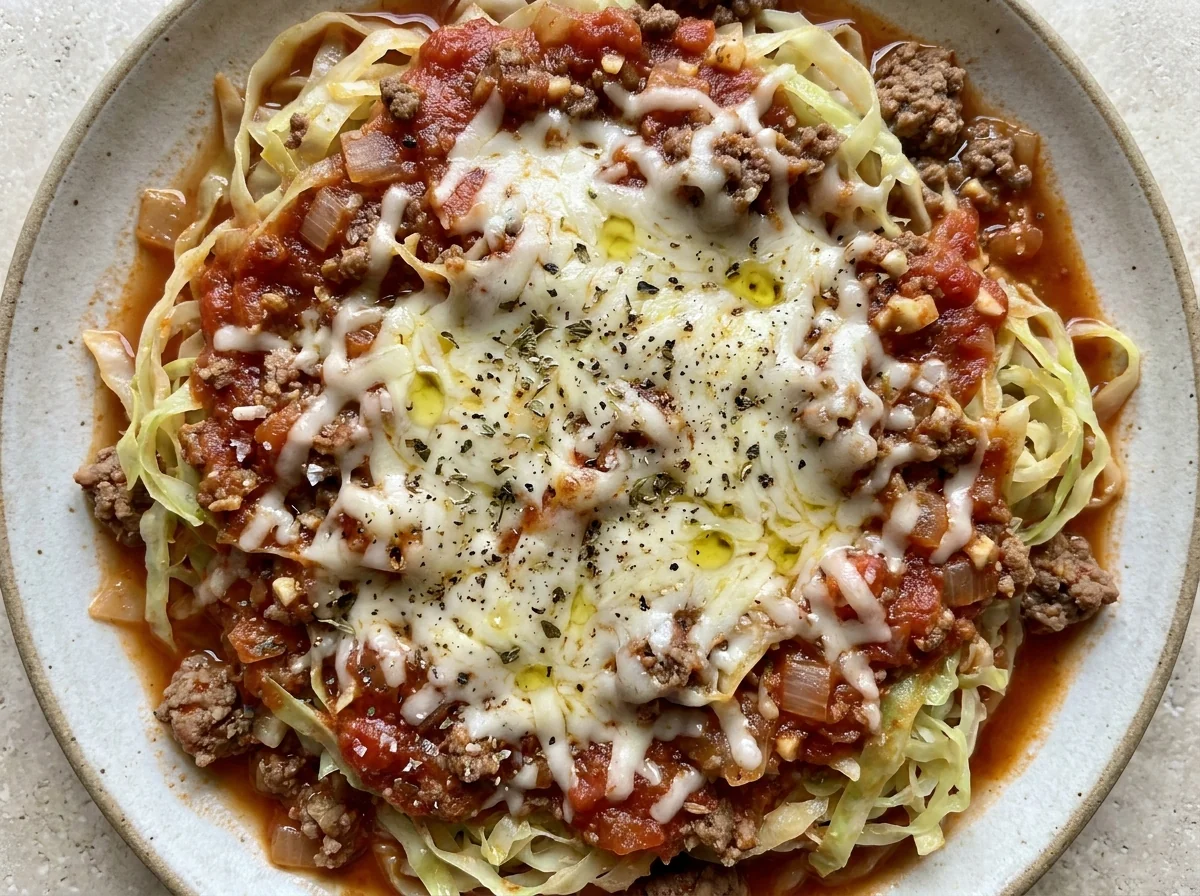
Cheesy baked pasta is a beloved Italian dish, and here we swap the pasta for shredded cabbage that softens under the sauce until it resembles noodles.
Ground beef, marinara and melted mozzarella, with far fewer carbs.
Preparation Steps
Brown the beef
Brown the ground beef in a wide skillet over medium heat, breaking it up until it loses its pink color and reaches 71°C, the safe temperature for ground beef per FSIS.
Onion and garlic
Add the onion and garlic and stir until they soften and become fragrant, since browning them with the beef builds the aromatic base of the sauce.
Marinara
Pour in the marinara and stir with the oregano, salt and pepper, then let the mixture simmer gently for two minutes for the flavors to meld.
Cabbage
Add the shredded cabbage gradually and stir until coated by the sauce, since adding it in batches prevents it from piling up before it wilts.
Covered cooking
Cover the skillet and cook over low heat for about 15 minutes until the cabbage softens and takes on a tender pasta-like texture, since the trapped steam is what softens it.
Cheese and bake
Transfer the mixture to a baking dish, scatter the mozzarella over it, and bake in a preheated oven at 190°C until the cheese melts and turns golden, since the top heat is what gives it the golden crust.
Rest and serve
Let the dish rest five minutes before serving, since resting lets the layers set so they don't fall apart when scooped.
Blood Sugar Impact
The glycemic index (GI) measures how quickly a food raises blood sugar, while the glycemic load (GL) measures how much a full serving raises it. Together they give the complete picture.
Glycemic Index
GI
20Low
Low0–55Medium56–69High70+
A low value (≤55) means a gradual rise in blood sugar — the most suitable range for diabetes and insulin resistance.
Glycemic Load
GL
4Low
Low0–10Medium11–19High20+
Glycemic load reflects the impact of the full serving. To lower it: take half a serving, or pair the recipe with a source of protein and fiber.
Nutritional Information
Per ServingMakes 4 servings · one serving is about 475 g of raw ingredients
Calories584 kcal29%of Daily Value*
Protein37 g74%of Daily Value*
Carbohydrates26 g9%of Daily Value*
Fat36 g46%of Daily Value*
Fiber6 g21%of Daily Value*
Sodium1086 mg47%of Daily Value*
Potassium1131 mg24%of Daily Value*
Phosphorus484 mg39%of Daily Value*
* Percent Daily Values are based on a 2,000-calorie diet per FDA food-label reference values — your daily needs may be higher or lower. Values are derived from the recipe's ingredients via the USDA database.
Troubleshooting
The most common problems when preparing Low-Carb Cabbage Spaghetti, and how to fix them:
The dish is watery
The cabbage released its water; cook it uncovered for a few extra minutes before adding the cheese until the liquid evaporates.
The cabbage is still firm
Extend the covered cooking by five more minutes until it softens completely before baking.
The cheese didn't turn golden
Move the dish to the top rack and run the broiler for two minutes while watching until it turns golden.
The sauce is bland
Add a pinch of salt and oregano, and let the mixture simmer a little longer to concentrate.
Storage and Make-Ahead
Refrigerator
Keep it in an airtight container for up to 4 days, and reheat in the oven or skillet until heated through.
Freezer
Freeze it well sealed for up to a month, and thaw it in the refrigerator overnight before reheating.
Tested Ingredient Substitutions
Original Ingredient
Tested Substitute
Ratio
Flavor Difference
Ground beef
Ground chicken
450 g
For a lighter version with less fat
Mozzarella cheese
Shredded cheddar cheese
200 g
For a sharper flavor and less stretchy melt
Marinara sauce
Homemade tomato sauce
500 g
For full control over the salt and sugar
Cabbage
Thinly sliced zucchini
600 g
For a softer texture and shorter cooking time
How Much Does It Make? Scaling Guide
Ingredient
2 servings
4 servings (base)
8 servings
Shredded cabbage
300 g
600 g
1200 g
Ground beef
225 g
450 g
900 g
Marinara sauce
250 g
500 g
1000 g
Mozzarella cheese
100 g
200 g
400 g
Chopped onion
55 g
110 g
220 g
EEINA Nutrition Tip
Shred the cabbage into thin, even strips so it softens uniformly and its texture comes close to spaghetti.
Add This Recipe to Your Plan
The EEINA app saves your favorite recipes, calculates them from their real ingredients, and shows your daily numbers toward your goal. Try it free now.