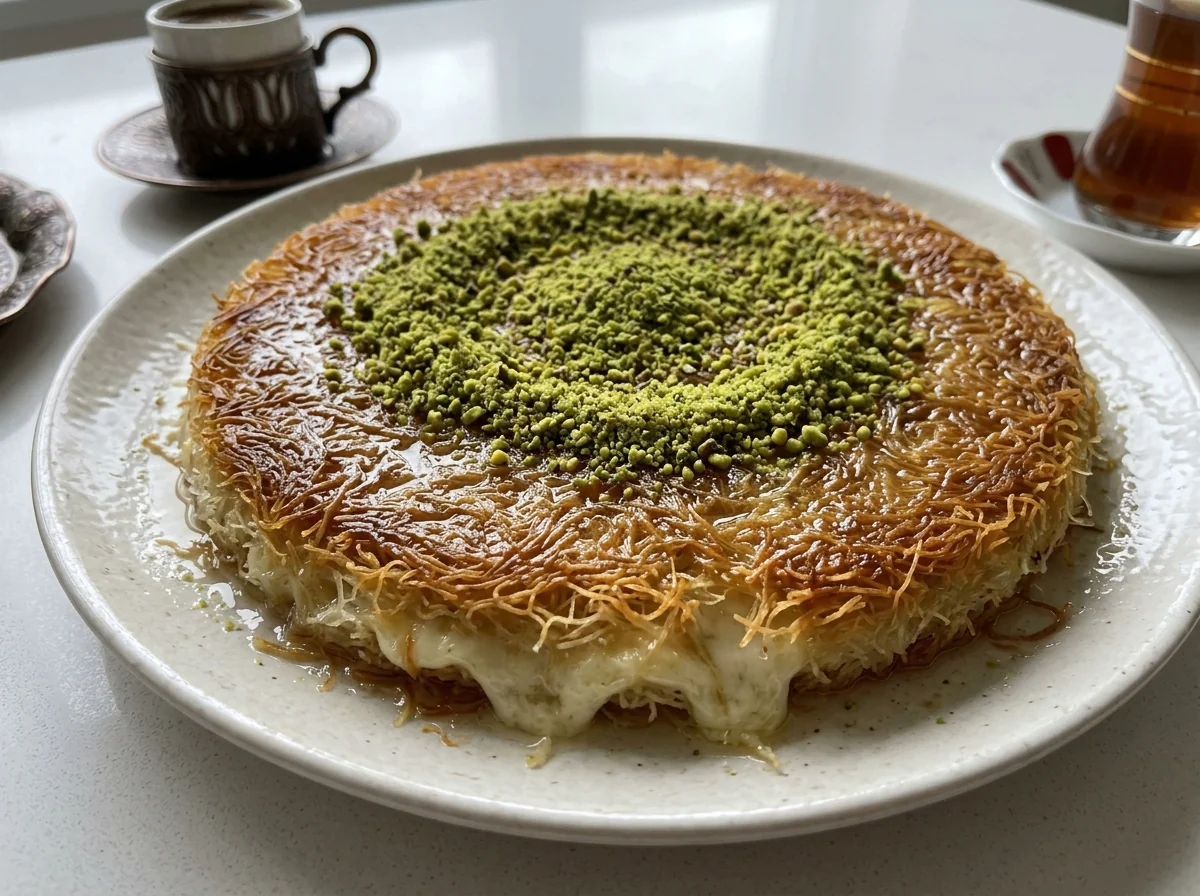
Turkish kunafa differs from Levantine and Arab styles in its use of salted akkawi cheese with butter.
It has been prepared in Istanbul since the Ottoman era and is served with tea or Turkish coffee. For suhoor it suits those who wake early and need quick energy from sugar and fat.
Preparation Steps
Shred the kunafa dough
Shred the kunafa dough with your fingers into fine, even strands. Place in a wide bowl, pour the melted butter, and knead by hand for five minutes until the strands absorb the butter.
Prepare the cheese
Soak the akkawi cheese in cold water for four hours to reduce the saltiness, then drain, squeeze, and crumble it. Mix with the ricotta and lemon juice. The akkawi provides saltiness, the ricotta provides creaminess.
Form the layers
Grease a round baking tray with butter and place half the kunafa, pressing with your hand to form a sturdy base. Spread the cheese evenly, then cover with the remaining kunafa and press.
Bake
Preheat the oven to 200°C and bake the kunafa for 25 minutes until it develops a deep golden color. Full baking is essential for a crisp crust.
Pour the syrup
As soon as the kunafa comes out of the oven, pour the cold shira over the hot kunafa. The temperature difference creates a sizzling sound and gives the kunafa an even syrup. Cold syrup over hot is the secret of a successful kunafa.
Serve
Let the kunafa rest for a quarter of an hour until it fully absorbs the syrup, then cut it and garnish with the ground Aleppo pistachios. Serve warm with masala tea or Turkish coffee.
Blood Sugar Impact
The glycemic index (GI) measures how quickly a food raises blood sugar, while the glycemic load (GL) measures how much a full serving raises it. Together they give the complete picture.
Glycemic Index
GI
65Medium
Low0–55Medium56–69High70+
A low value (≤55) means a gradual rise in blood sugar — the most suitable range for diabetes and insulin resistance.
Glycemic Load
GL
54High
Low0–10Medium11–19High20+
Glycemic load reflects the impact of the full serving. To lower it: take half a serving, or pair the recipe with a source of protein and fiber.
Nutritional Information
Per ServingMakes 6 servings · one serving is about 240 g of raw ingredients
Calories816 kcal41%of Daily Value*
Protein23 g46%of Daily Value*
Carbohydrates85 g31%of Daily Value*
Fat44 g56%of Daily Value*
Fiber2 g7%of Daily Value*
Sodium804 mg35%of Daily Value*
* Percent Daily Values are based on a 2,000-calorie diet per FDA food-label reference values — your daily needs may be higher or lower. Values are derived from the recipe's ingredients via the USDA database.
Troubleshooting
The most common problems when preparing Turkish Kunafa with Cheese (Suhoor), and how to fix them:
The kunafa is dry
Increase the syrup. Dry kunafa needs 300 ml syrup instead of 250. Pour it in stages until it absorbs.
The crust is sticking
Coat the tray with a thicker layer of butter before placing the kunafa. The dough sticks with too little oil.
The cheese is liquid after baking
Soak the cheese longer and squeeze it more. Wet cheese releases liquids into the crust and ruins the crispness.
The color is light
Raise the heat and extend the baking. An oven not properly preheated gives a pale color.
Storage and Make-Ahead
At room temperature
One day after cutting. The crust softens after a few hours.
In the refrigerator
Two days. Reheat in a 150°C oven for 10 minutes before serving.
In the freezer
One full month before baking. Bake directly from the freezer, extending the time by 10 minutes.
Tested Ingredient Substitutions
Original Ingredient
Tested Substitute
Ratio
Flavor Difference
Akkawi cheese
Low-moisture mozzarella
1:1
A sweeter flavor with less salt.
Ricotta
Cottage cheese
1:1
Similar flavor and slightly drier texture.
Aleppo pistachios
Ground toasted almonds
1:1
A different flavor but successful.
Orange blossom water
Rose water
Same quantity
Slightly different flavor.
How Much Does It Make? Scaling Guide
Ingredient
6 people
12 people
18 people
Kunafa
500 g
1000 g
1500 g
Butter
150 g
300 g
450 g
Cheese
300 g
600 g
900 g
Shira (syrup)
250 ml
500 ml
750 ml
Pistachios
50 g
100 g
150 g
EEINA Nutrition Tip
The shira (qater) must be completely cold and the kunafa completely hot. The temperature difference allows the syrup to absorb into the crust instead of sliding off. Prepare the shira the night before.
Add This Recipe to Your Plan
The EEINA app saves your favorite recipes, calculates them from their real ingredients, and shows your daily numbers toward your goal. Try it free now.
Why is Turkish kunafa different from the Arab version?
The Turkish style uses melted butter and salted cheese, while the Arab style uses ghee and soft cheese or qishta. The flavor is deeper in the Turkish version.
Is it suitable for diabetics?
No, the shira contains a high amount of sugar. Use a low-sugar syrup (Stevia) and reduce the quantity by half.
What is a substitute for akkawi cheese?
Low-moisture mozzarella with a pinch of salt, or Halloumi cheese soaked for four hours.
Do we prepare the shira from scratch?
Yes, boil sugar and water in a 1:1 ratio and add lemon juice and a drop of orange blossom water. The shira keeps for a month in the refrigerator.