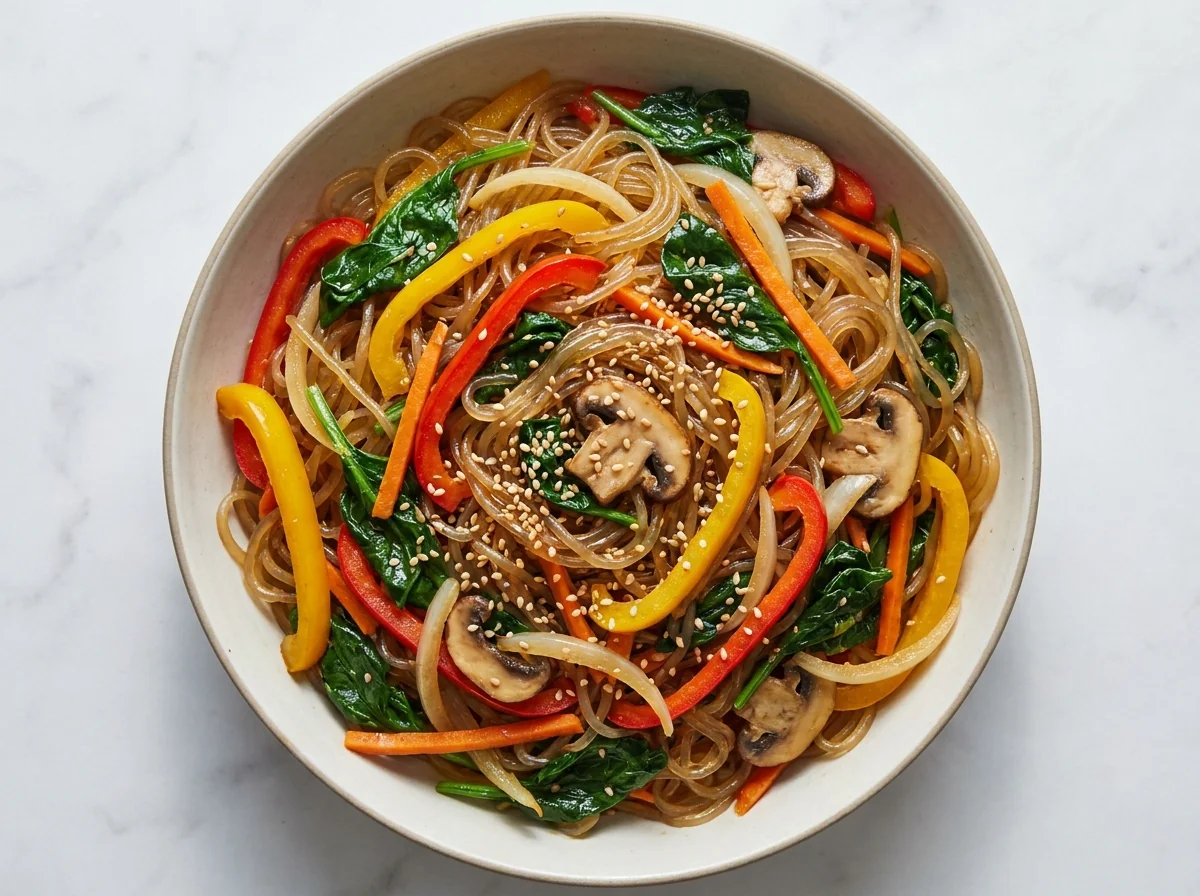
Japchae is a traditional Korean dish served at occasions and holidays such as New Year and the harvest festival.
The word japchae means mixing vegetables, and it was originally made with vegetables only before the glass noodles made from sweet potato starch were added to it.
Preparation Steps
Soak the noodles
Soak the glass noodles in hot water for 15 minutes until they soften, then drain them.
Prepare the vegetables
Wash the vegetables. Cut the bell peppers, onion, and mushrooms into thin slices, and grate the carrot or cut it into thin sticks.
Blanch the spinach
Blanch the spinach in boiling water for 30 seconds, then transfer it to cold water to set the color, squeeze it well and cut it.
Make the sauce
Mix the soy sauce, sugar, minced garlic, and half the sesame oil in a small bowl until the sugar dissolves.
Stir-fry the vegetables
Heat a little vegetable oil in a skillet, and stir-fry each type of vegetable separately (onion, carrot, pepper, mushroom) quickly until softened while keeping its crunch, then set it aside.
Cook the noodles
Cook the soaked noodles in boiling water for 6 to 7 minutes until soft and translucent, then drain them and snip them in two with scissors to make tossing easier.
The final toss
Combine the noodles, stir-fried vegetables, and spinach in a large bowl, pour the sauce over them and toss by hand until the coating is even, then add the rest of the sesame oil and the toasted sesame seeds and serve.
Blood Sugar Impact
The glycemic index (GI) measures how quickly a food raises blood sugar, while the glycemic load (GL) measures how much a full serving raises it. Together they give the complete picture.
Glycemic Index
GI
61Medium
Low0–55Medium56–69High70+
A low value (≤55) means a gradual rise in blood sugar — the most suitable range for diabetes and insulin resistance.
Glycemic Load
GL
35High
Low0–10Medium11–19High20+
Glycemic load reflects the impact of the full serving. To lower it: take half a serving, or pair the recipe with a source of protein and fiber.
Nutritional Information
Per ServingMakes 4 servings · one serving is about 250 g of raw ingredients
Calories353 kcal18%of Daily Value*
Protein4 g8%of Daily Value*
Carbohydrates62 g23%of Daily Value*
Fat10 g13%of Daily Value*
Fiber4 g14%of Daily Value*
Sodium673 mg29%of Daily Value*
* Percent Daily Values are based on a 2,000-calorie diet per FDA food-label reference values — your daily needs may be higher or lower. Values are derived from the recipe's ingredients via the USDA database.
Troubleshooting
The most common problems when preparing Vegetable Japchae, and how to fix them:
The noodles clump and stick together.
Toss them with a little sesame oil right after draining, and snip them in two before mixing.
The vegetables release water and the dish becomes wet.
Fry each type separately over high heat quickly instead of frying them together, and squeeze the spinach well.
The taste is bland.
Adjust the sauce with a slight addition of soy sauce or sesame oil at the end and toss again.
Storage and Make-Ahead
Refrigerator
Kept in an airtight container for up to 3 days, and eaten cold or after light reheating.
Serving
Served warm or at room temperature, both of which are traditional in Korean cuisine.
Tested Ingredient Substitutions
Original Ingredient
Tested Substitute
Ratio
Flavor Difference
Glass noodles
Vermicelli noodles or thin pasta
1:1
The texture changes but the idea stands, and gluten may be added if the pasta is made of wheat.
Mushrooms
Sliced zucchini or eggplant
1:1
An alternative for anyone who does not like mushrooms while keeping the vegetables varied.
Soy sauce
Gluten-free soy sauce (tamari)
1:1
An option for anyone strictly avoiding gluten.
How Much Does It Make? Scaling Guide
Ingredient
4 servings
2 servings
8 servings
Glass noodles
200 g
100 g
400 g
Spinach
150 g
75 g
300 g
Soy sauce
45 ml
22 ml
90 ml
Sesame oil
20 ml
10 ml
40 ml
EEINA Nutrition Tip
Glass noodles are a source of complex carbohydrate naturally free of gluten because they are made from sweet potato starch, which makes them a suitable alternative for anyone avoiding wheat.
Add This Recipe to Your Plan
The EEINA app saves your favorite recipes, calculates them from their real ingredients, and shows your daily numbers toward your goal. Try it free now.
The noodles themselves, made from sweet potato starch, are gluten-free, but soy sauce may contain wheat, so use tamari sauce to confirm it is free of it.
Can it be prepared in advance?
Yes, it is made hours ahead and served at room temperature, which is common in Korean cuisine.
How do I lower the calories?
Reduce the frying oil and use a non-stick skillet, and rely on the sesame oil for flavor at the end only.