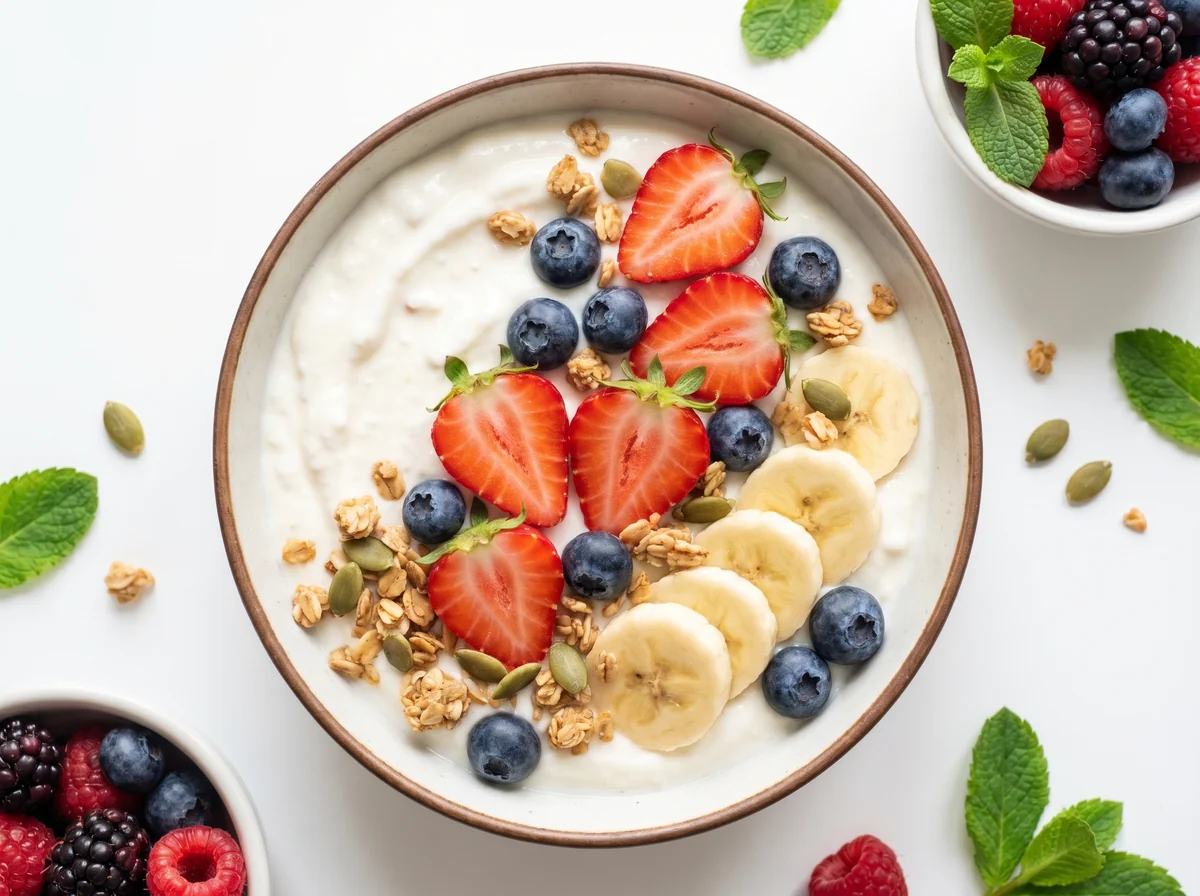
A nourishing breakfast bowl of plain kefir layered with fresh seasonal fruit, pumpkin seeds, flaxseeds and a drizzle of honey. Probiotic-rich and high in protein; low glycemic load; contains dairy.
The kefir bowl is a contemporary fusion breakfast concept — bringing together kefir (a centuries-old fermented milk drink from the Caucasus, now globally popular for its probiotic benefits) with fresh fruit, seeds and honey in a nourishing layered bowl.
Kefir (from the Turkic word meaning 'good feeling') is made by fermenting milk with kefir grains (a symbiotic culture of bacteria and yeasts), producing a tangy, probiotic-rich drink higher in protein than yogurt. The kefir bowl concept is popular in contemporary Gulf health cafes and Mediterranean wellness culture — a fast, no-cook breakfast that ticks multiple nutritional boxes: probiotics, protein, fiber, omega-3 and antioxidants in one bowl.
Preparation Steps
Chill the kefir
Use cold plain kefir straight from the refrigerator — the base of the bowl. Kefir is a fermented milk drink (or thick pourable fermented dairy), probiotic-rich (live bacteria cultures), higher in protein than regular milk, and slightly tangy. Full-fat gives a creamier bowl; low-fat is lighter.
Prepare the fruit
Wash and dice the fresh seasonal fruit. Choose fruit that is ripe and in season for the best flavor and the most nutrients. Berries (strawberries, blueberries) are excellent for their low glycemic impact and antioxidant content. Banana adds natural sweetness and potassium. Mango is a popular Gulf choice.
Toast the seeds (optional)
Lightly toast the pumpkin seeds in a dry pan for two minutes until they pop and smell nutty (optional, but improves flavor). Pumpkin seeds are an excellent source of magnesium, zinc, and plant-based protein. Ground flaxseeds add omega-3 fatty acids and fiber.
Assemble the bowl
Pour the cold kefir into serving bowls. Arrange the fruit on top, then scatter the pumpkin seeds and ground flaxseeds over it. Layer for visual appeal — a colorful bowl is more appetizing. Add a pinch of cinnamon (stabilizes blood sugar) or a few mint leaves.
Drizzle and serve
Drizzle a little honey over the top. Honey is optional — if the fruit is ripe and sweet, you may not need it at all. Serve immediately (the seeds will soften if it sits). Eat with a spoon. A quick, no-cook breakfast ready in five minutes.
Blood Sugar Impact
The glycemic index (GI) measures how quickly a food raises blood sugar, while the glycemic load (GL) measures how much a full serving raises it. Together they give the complete picture.
Glycemic Index
GI
44Low
Low0–55Medium56–69High70+
A low value (≤55) means a gradual rise in blood sugar — the most suitable range for diabetes and insulin resistance.
Glycemic Load
GL
19Medium
Low0–10Medium11–19High20+
Glycemic load reflects the impact of the full serving. To lower it: take half a serving, or pair the recipe with a source of protein and fiber.
Nutritional Information
Per ServingMakes 2 servings · one serving is about 475 g of raw ingredients
Calories348 kcal17%of Daily Value*
Protein15 g30%of Daily Value*
Carbohydrates51 g19%of Daily Value*
Fat12 g15%of Daily Value*
Fiber8 g29%of Daily Value*
Sodium495 mg22%of Daily Value*
Potassium937 mg20%of Daily Value*
Phosphorus518 mg41%of Daily Value*
* Percent Daily Values are based on a 2,000-calorie diet per FDA food-label reference values — your daily needs may be higher or lower. Values are derived from the recipe's ingredients via the USDA database.
Troubleshooting
The most common problems when preparing Kefir Bowl with Fruit and Seeds, and how to fix them:
The kefir is too sour
Plain kefir is naturally tangy (it is fermented). Add ripe sweet fruit and a little honey to balance the tartness. Some brands are milder than others — try different brands. The tartness softens with the sweet fruit and honey.
The bowl is not filling
Increase the kefir (more protein and volume) and add more seeds (more fat and fiber). Seeds and fat are satiating. Banana or a handful of granola adds filling carbohydrates if needed for a longer morning.
The seeds sink to the bottom
Thicken the kefir slightly by straining it for thirty minutes (like labneh, thicker kefir). Or use a thicker full-fat kefir brand. Thicker kefir holds the seeds on top and makes a prettier bowl.
The flaxseeds are hard and unpleasant
Use pre-ground flaxseeds (milled flax), not whole seeds. Whole flaxseeds are not digested and their omega-3 benefit is lost. Milled flax disperses into the bowl and provides the full nutritional benefit.
Storage and Make-Ahead
Assemble fresh
The kefir bowl is best assembled fresh just before eating (seeds soften and fruit releases juice over time). It takes five minutes — assemble at breakfast time. Meal prep can prepare the fruit and toast the seeds in advance.
Prep components ahead
Wash and dice the fruit the night before (store in the refrigerator in a sealed container). Toast the seeds in advance and store in a jar at room temperature. At breakfast, just pour the kefir and assemble in two minutes.
Plain kefir
Plain kefir keeps sealed in the refrigerator until its use-by date (typically one to two weeks). Use cold, fresh kefir. Once opened, use within five to seven days. Kefir is a live product — the live bacteria cultures are its health benefit.
Assembled bowl
If you must prepare ahead, assemble without seeds and honey (add just before eating). An assembled bowl can sit refrigerated for up to four hours — the kefir keeps the fruit fresh. Add seeds and honey at eating time for best texture.
Tested Ingredient Substitutions
Original Ingredient
Tested Substitute
Ratio
Flavor Difference
Kefir
Plain labneh thinned with water, or full-fat plain yogurt
Same volume
Labneh is strained kefir essentially — thicker and less tangy; yogurt is the closest widely available substitute; both contain probiotics (if live-culture) but different bacterial strains than kefir
Pumpkin seeds
Sunflower seeds or sesame seeds
Same amount
All are nutritious seeds; pumpkin seeds have the best magnesium and zinc content; sesame contains sesame allergen — check for allergies
Honey
Medjool dates (1, pitted and chopped) or no sweetener
1 date
Dates are a beloved Gulf natural sweetener with more fiber than honey; no sweetener is best for people with diabetes (rely on ripe fruit)
Berries
Sliced mango or pomegranate seeds
Same amount
Mango is popular in the Gulf and higher in natural sugar (higher GI than berries); pomegranate seeds are antioxidant-rich and lower glycemic — excellent swap
How Much Does It Make? Scaling Guide
Ingredient
2 servings
4 servings
6 servings
Plain kefir
500 ml
1000 ml
1500 ml
Chopped strawberries
150 g
300 g
450 g
Blueberries
100 g
200 g
300 g
Sliced banana
120 g
240 g
360 g
Pumpkin seeds
30 g
60 g
90 g
Honey
20 g
40 g
60 g
Chia seeds
10 g
20 g
30 g
EEINA Nutrition Tip
This bowl is a nutritional standout: kefir provides probiotics (beneficial gut bacteria), high-quality protein and calcium; pumpkin seeds deliver magnesium, zinc and plant protein; flaxseeds add omega-3 fatty acids (ALA) and soluble fiber; berries are antioxidant powerhouses with a low glycemic impact. The combination gives a low glycemic load breakfast that supports gut health, stable blood sugar and satiety. For people with diabetes: excellent choice — use low-sugar fruit (berries, not overripe banana) and minimal honey. A genuinely functional breakfast, not just a trend.
Add This Recipe to Your Plan
The EEINA app saves your favorite recipes, calculates them from their real ingredients, and shows your daily numbers toward your goal. Try it free now.
Kefir is a fermented milk drink made with kefir grains (a symbiotic culture of bacteria and yeasts). It is probiotic-rich (diverse live beneficial bacteria, more so than most yogurts), higher in protein than regular milk, tangy and slightly effervescent. Its benefits include supporting gut microbiome diversity, immune function and calcium absorption. People who are mildly lactose-intolerant often tolerate kefir better than milk (the fermentation reduces lactose).
Is this bowl suitable for people with diabetes?
Yes, an excellent choice: low glycemic load, the kefir protein and seed fat slow sugar absorption, and berries are low-glycemic fruits. Tips: use low-sugar fruit (berries over banana or mango), use minimal or no honey, choose plain (unsweetened) kefir. The seeds add fiber that further flattens the glucose response. Dr. Mona recommends this bowl specifically for blood sugar management.
Does kefir taste very sour?
Plain kefir is tangy (similar to plain yogurt but slightly more tart and thinner). The tartness is pleasant when paired with sweet ripe fruit and a drizzle of honey. Some brands are milder than others. If you find it too sour, try a different brand, strain it slightly (thicker = milder), or increase the fruit and honey.
Why grind flaxseeds?
Whole flaxseeds pass through the digestive tract intact — their hard shell is not broken down, so their omega-3 (ALA), fiber and lignans are not absorbed. Ground (milled) flaxseeds release all their nutritional content. Always use ground or milled flax for the health benefit, not whole. Pre-ground flax is available at most supermarkets.