Cheese made from milk and acid is the oldest cheese-making the human knew.
Hot milk and a squeeze of lemon separate into curds and whey within a minute. Italy knows it as ricotta, India as paneer, and our lands as homemade cheese, and it is the easiest gateway to cheese-making in any kitchen.
Preparation Steps
Heat the milk to just below boiling
In a heavy pot, heat the milk over medium heat, stirring to guard its bottom, until it froths to the verge of boiling, then lower the heat to its lowest.
Pour in the lemon and witness the separation
Pour in the lemon juice in two additions with a gentle stir between them, and within a minute the oldest kitchen magic happens: the milk separates before your eyes into white curds floating above and a clear yellow whey beneath. Turn off the heat and cover for ten minutes, in which the beautiful divorce completes.
Scoop the curds into the cheesecloth
With a slotted spoon, transfer the curds gently into a cheesecloth-lined strainer. Gentle scooping keeps their grains tender; violent pouring crushes them.
Salt and strain to your liking
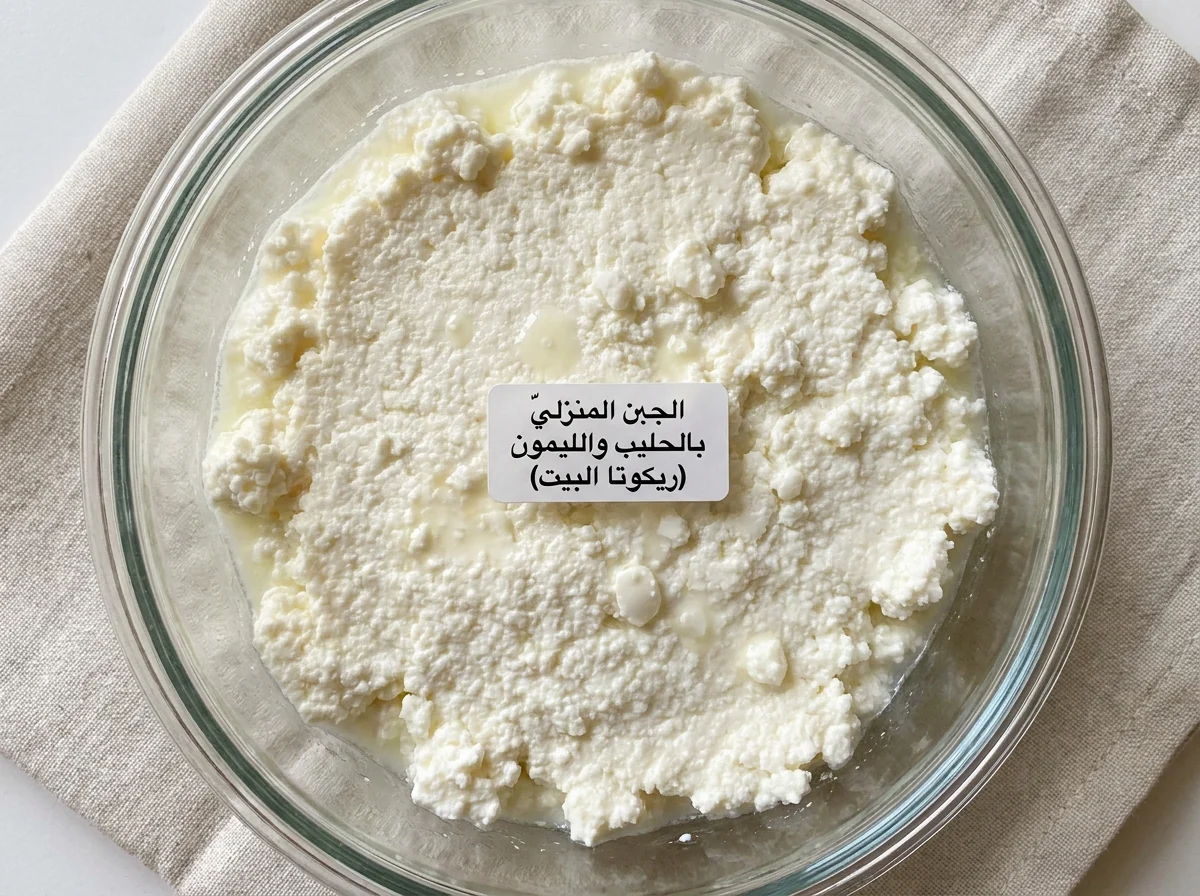
Sprinkle the salt and strain: a quarter hour for a moist, creamy ricotta fit for toast and fillings, and two hours with a light weight for a white cheese block that slices. Two consistencies from one pot.
Bottle the week's cheese
In an airtight tub in the fridge. Fresh cheese from two ingredients that serves ricotta toast, pie fillings, pastries, and all the cheese pies at half the store price.
Blood Sugar Impact
The glycemic index (GI) measures how quickly a food raises blood sugar, while the glycemic load (GL) measures how much a full serving raises it. Together they give the complete picture.
Glycemic Index
GI
38Low
Low0–55Medium56–69High70+
A low value (≤55) means a gradual rise in blood sugar — the most suitable range for diabetes and insulin resistance.
Glycemic Load
GL
6Low
Low0–10Medium11–19High20+
Glycemic load reflects the impact of the full serving. To lower it: take half a serving, or pair the recipe with a source of protein and fiber.
Nutritional Information
Per ServingMakes 6 servings · one serving is about 345 g of raw ingredients
Calories206 kcal10%of Daily Value*
Protein10 g20%of Daily Value*
Carbohydrates17 g6%of Daily Value*
Fat10 g13%of Daily Value*
Fiber0 g0%of Daily Value*
Sodium340 mg15%of Daily Value*
Potassium450 mg10%of Daily Value*
Phosphorus281 mg22%of Daily Value*
* Percent Daily Values are based on a 2,000-calorie diet per FDA food-label reference values — your daily needs may be higher or lower. Values are derived from the recipe's ingredients via the USDA database.
Troubleshooting
The most common problems when preparing Homemade Milk-and-Lemon Cheese (Home Ricotta), and how to fix them:
The milk refused to separate
Ultra-high-temperature, ultra-processed milk sometimes resists, or the heat was insufficient. Fresh ordinary pasteurized milk is the friend of the craft, and an extra spoon of lemon with a minute of heat settle it.
Little cheese came out of two liters
This is its natural yield: about 300 grams from two liters, and the leftover whey is a prize, not a loss: for dough and soups in place of water.
The lemon taste shows in it
Too much juice, or the curds were not rinsed. A gentle cold-water rinse over the cheesecloth erases the excess acidity.
It came out rubbery and dry
Violent boiling after the acid, or excessive pressing. The heat goes off with the separation, and straining suffices without hand-squeezing.
Storage and Make-Ahead
In the fridge
Five days in an airtight tub. A fresh cheese short-lived by its honest nature.
In the freezer
A month for cooking and filling consistency. It loses its fresh creaminess and stays for cooked dishes.
The leftover whey
Two days chilled. For dough, smoothies, and soups in place of water.
Tested Ingredient Substitutions
Original Ingredient
Tested Substitute
Ratio
Flavor Difference
The lemon juice
White vinegar
45 ml
A faster separation with a sharper acidity, while lemon is more fragrant
Full-fat milk
Adding a cup of cooking cream to it
to taste
A rich, luxurious ricotta for hosting
The creamy consistency
Straining two hours with a weight
to taste
A white cheese block to slice for breakfast
The salt
A pinch of herbs with it (za'atar and garlic)
to taste
A seasoned cheese ready to spread
How Much Does It Make? Scaling Guide
Ingredient
~300 g cheese
150 g
600 g
Milk
2 L
1 L
4 L
Lemon
60 ml
30 ml
120 ml
EEINA Nutrition Tip
Scoop the curds with a slotted spoon and do not pour the whole pot into the strainer. Pouring crushes the tender grains so it comes out as a firm, rubbery cheese; gentle scooping keeps them cloud-like, and this is the difference between creamy ricotta and a pressed block.
Add This Recipe to Your Plan
The EEINA app saves your favorite recipes, calculates them from their real ingredients, and shows your daily numbers toward your goal. Try it free now.
Italian ricotta is originally made from re-cooked whey, and this full-milk version is richer, easier, and is what the stores sell as ricotta anyway: the naming is lenient and the cheese wins.
How many recipes does it serve in our library?
Ricotta toast, pie and samosa fillings, pastries, and palak paneer. One pot stocks a week of cooking.
Which is cheaper: making or buying it?
Two liters of milk give 300 grams at half the price of a ricotta tub, and the side whey is a gain that does not enter the store's accounting at all.
Why does it fail with one milk and not another?
Some ultra-processed milk has broken-down proteins that will not curdle. Ordinary fresh pasteurized milk from the fridge is the craft's winning bet.