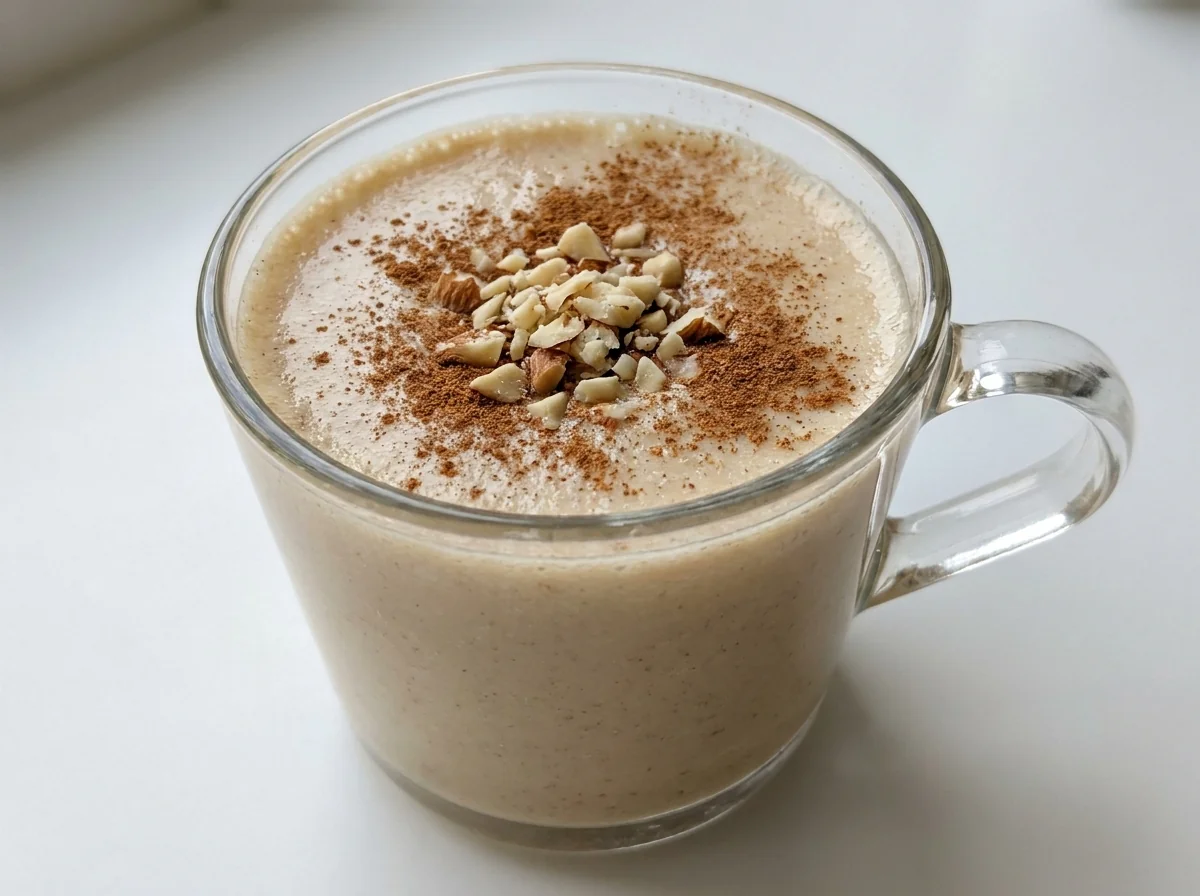
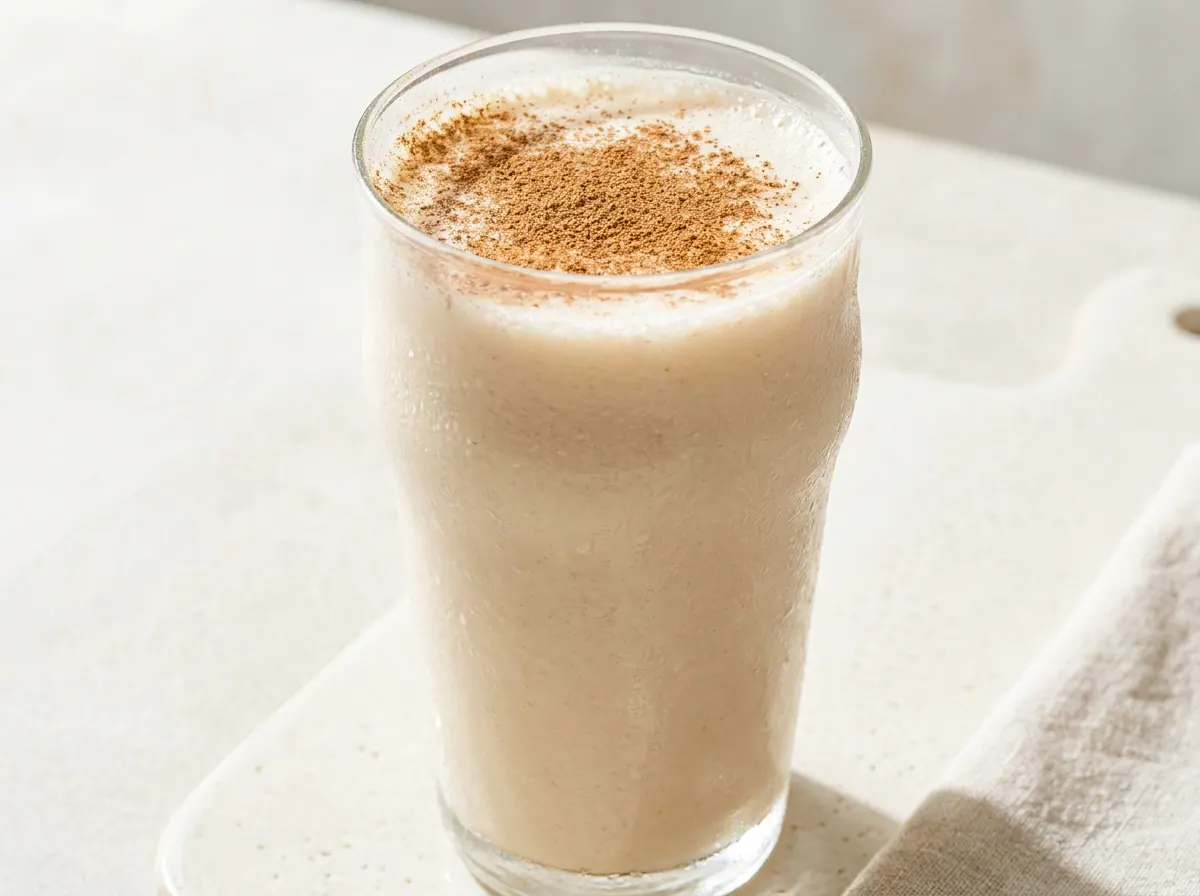
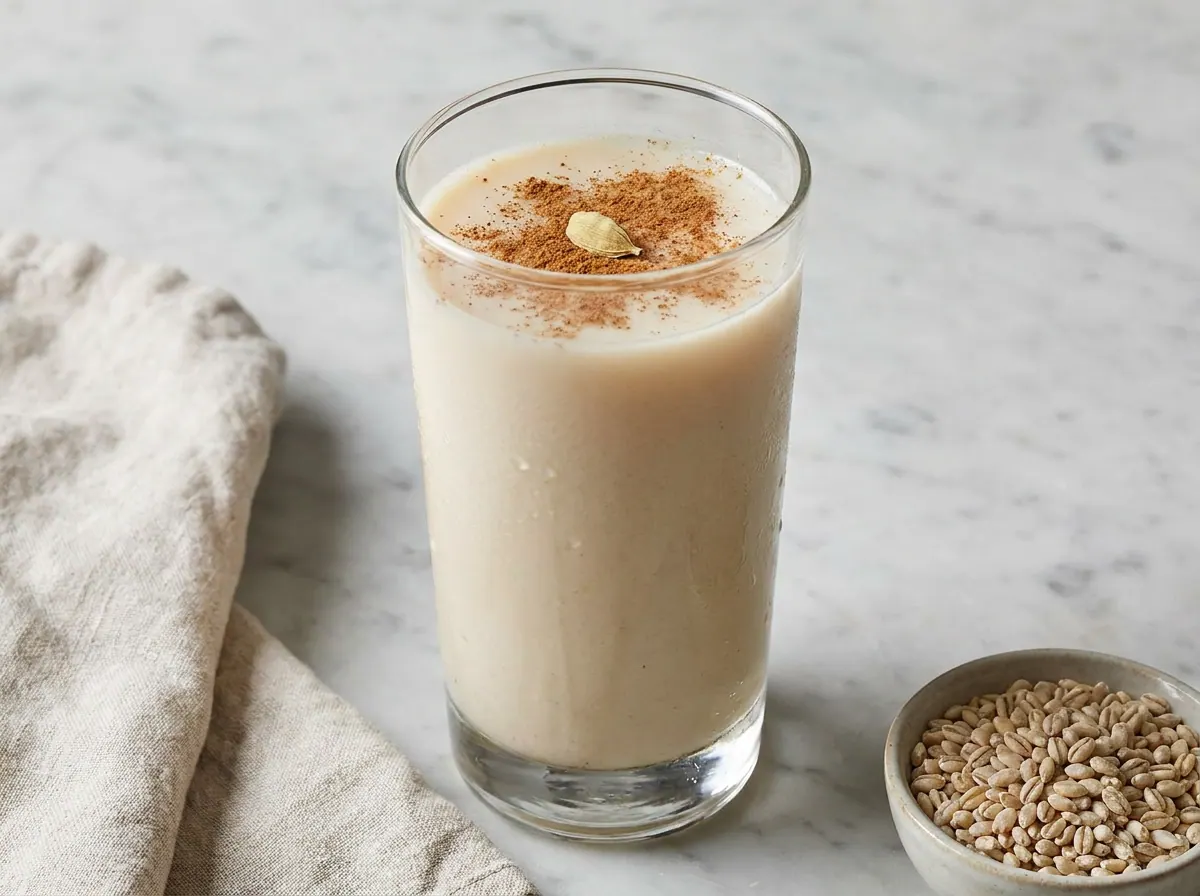
Hijazi almond coffee is a warm drink from the cuisine of Mecca, Medina, and Jeddah, called coffee for the custom of serving it in gatherings rather than for containing coffee beans.
We build it on blanched, peeled, ground almonds added to sweetened milk thickened with rice flour, and dust it with cinnamon to come out creamy and aromatic, served hot on evenings and occasions.
Preparation Steps
Blanching the almonds
Put the almonds in hot water and let them boil for two minutes until the skin softens, as a short blanch loosens the skin easily without cooking the kernel.
Peeling and grinding
Drain the almonds and peel them, then grind them coarsely rather than perfectly fine, because leaving some texture gives the coffee a pleasant feel in the mouth.
Heating the milk
Put seven eighths of the milk with the sugar in a pot over medium heat and stir until the sugar dissolves and it nears a boil, as stirring keeps the milk from sticking to the bottom.
Dissolving the rice flour
Dissolve the rice flour in the remaining cold milk, then add it gradually with continuous stirring for two minutes, because dissolving it cold prevents it from clumping in the hot milk.
Adding the almonds and serving
Add the ground almonds and stir over low heat until you reach the desired thick consistency, and serve it hot with a sprinkle of cinnamon; it is an almond and milk drink that contains no coffee despite its name.
Blood Sugar Impact
The glycemic index (GI) measures how quickly a food raises blood sugar, while the glycemic load (GL) measures how much a full serving raises it. Together they give the complete picture.
Glycemic Index
GI
53Low
Low0–55Medium56–69High70+
A low value (≤55) means a gradual rise in blood sugar — the most suitable range for diabetes and insulin resistance.
Glycemic Load
GL
23High
Low0–10Medium11–19High20+
Glycemic load reflects the impact of the full serving. To lower it: take half a serving, or pair the recipe with a source of protein and fiber.
Nutritional Information
Per ServingMakes 4 servings · one serving is about 320 g of raw ingredients
Calories485 kcal24%of Daily Value*
Protein16 g32%of Daily Value*
Carbohydrates49 g18%of Daily Value*
Fat26 g33%of Daily Value*
Fiber5 g18%of Daily Value*
Sodium108 mg5%of Daily Value*
Potassium618 mg13%of Daily Value*
Phosphorus401 mg32%of Daily Value*
* Percent Daily Values are based on a 2,000-calorie diet per FDA food-label reference values — your daily needs may be higher or lower. Values are derived from the recipe's ingredients via the USDA database.
Troubleshooting
The most common problems when preparing Hijazi Almond Coffee, and how to fix them:
The flour clumps
We added the rice flour straight into the hot milk; always dissolve it in cold milk first, then add it gradually while stirring.
The consistency is too runny
The thickening is not complete; leave it over low heat, stirring for a few extra minutes until it thickens.
The consistency is too thick
Too much thickening or rice flour; add a little hot milk and stir until you reach the desired consistency.
Storage and Make-Ahead
Serve immediately
It is best served hot as soon as the consistency is complete, because it sets when it cools.
Store later
It keeps in the refrigerator for up to two days, and we reheat it over low heat with a little milk and stirring to restore the consistency.
Tested Ingredient Substitutions
Original Ingredient
Tested Substitute
Ratio
Flavor Difference
milk
unsweetened almond milk
1000 ml
A lactose-free plant-based option that keeps the almond flavor.
rice flour
cornstarch
30 g
An alternative thickener that gives a similar smooth consistency.
sugar
honey
70 g
A natural sweetener with an aromatic touch, added after lowering the heat.
ground cinnamon
ground cardamom
2 g
An alternative Hijazi flavor familiar in warm drinks.
How Much Does It Make? Scaling Guide
Ingredient
2 cups
4 cups (base)
8 cups
Almonds
75 g
150 g
300 g
Milk
500 ml
1000 ml
2000 ml
Rice flour
20 g
40 g
80 g
Sugar
40 g
80 g
160 g
Ground cinnamon
1 g
2 g
4 g
EEINA Nutrition Tip
We grind the almonds coarsely rather than perfectly fine, as the light texture gives the coffee a rich feel, and we stir the rice flour constantly so it does not clump.
Add This Recipe to Your Plan
The EEINA app saves your favorite recipes, calculates them from their real ingredients, and shows your daily numbers toward your goal. Try it free now.