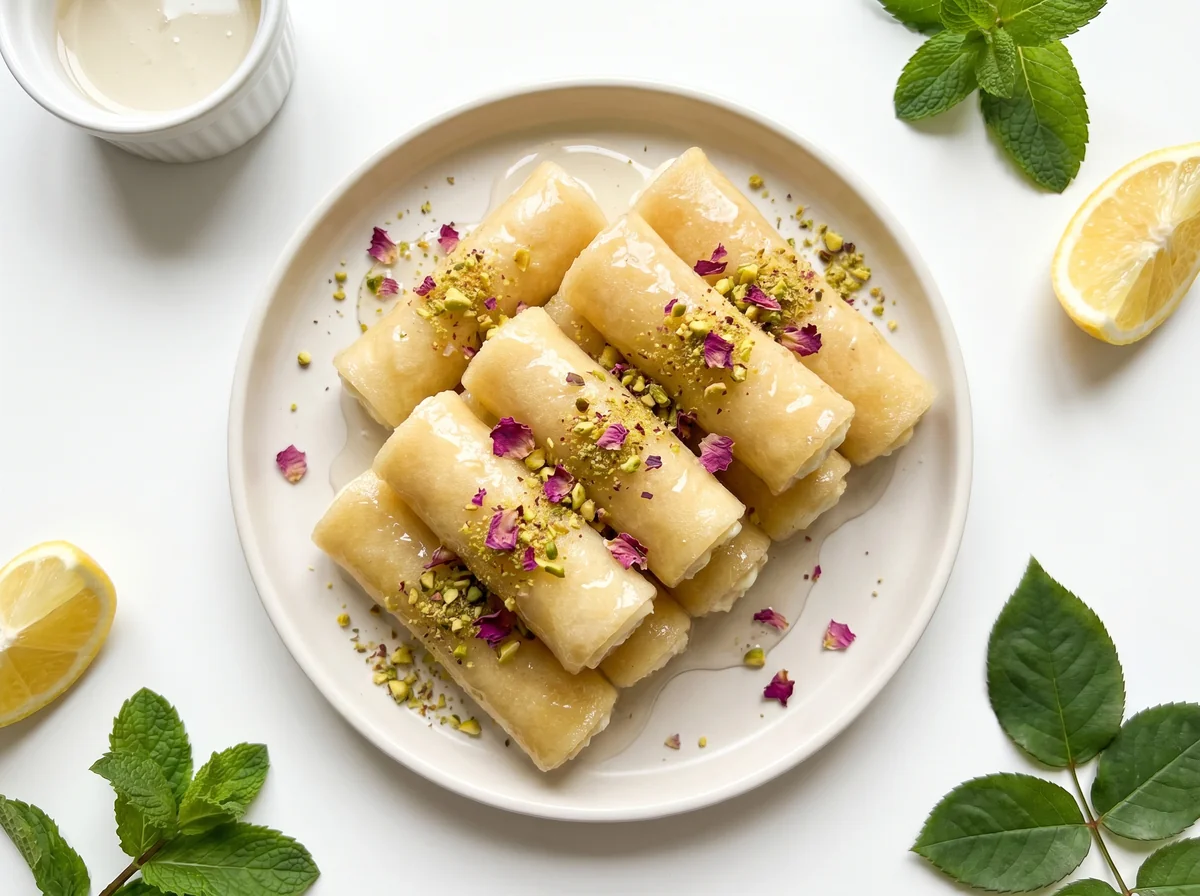
An elegant Levantine dessert — a stretchy dough of melted cheese and semolina spread thin, rolled around clotted cream, drizzled with sugar syrup and topped with pistachios. A festive sweet with relatively low glycemic load, contains gluten, dairy, and tree nuts.
Halawet el-Jibn is a refined Levantine dessert originating from Damascus and Hama, distinguished by its uniquely elastic dough of cheese and semolina rolled around clotted cream (ashta).
The combination of sweet, stretchy cheese dough, cold creamy filling, fragrant syrup, and pistachios makes it one of the most luxurious sweets in Levantine hospitality. Served at weddings, special occasions, and Damascene pastry shops, making it is an art that requires mastering the melting of the cheese and stretching the dough while it is still hot before it sets.
Preparation Steps
Make the syrup
Boil the sugar and water together, add lemon juice, and simmer until slightly thickened, then stir in the orange-blossom water. Set aside to cool. The syrup is used both in the dough and for drizzling, and its coolness balances the heat of the warm dough.
Melt the cheese with semolina
In a non-stick pot over low heat, combine the shredded cheese with the water, sugar, and a little syrup, stirring constantly until the cheese melts and becomes stringy. Add the semolina gradually, stirring until a glossy, elastic, cohesive dough forms that pulls away from the pot. The semolina binds the dough while the cheese gives it its signature stretch.
Spread the dough
Pour the hot dough onto a surface greased with syrup (or parchment paper), and spread it with the back of a spoon moistened with syrup into a thin rectangular sheet (about half a centimetre). Work quickly while it is hot and pliable — the dough firms up as it cools.
Fill and roll
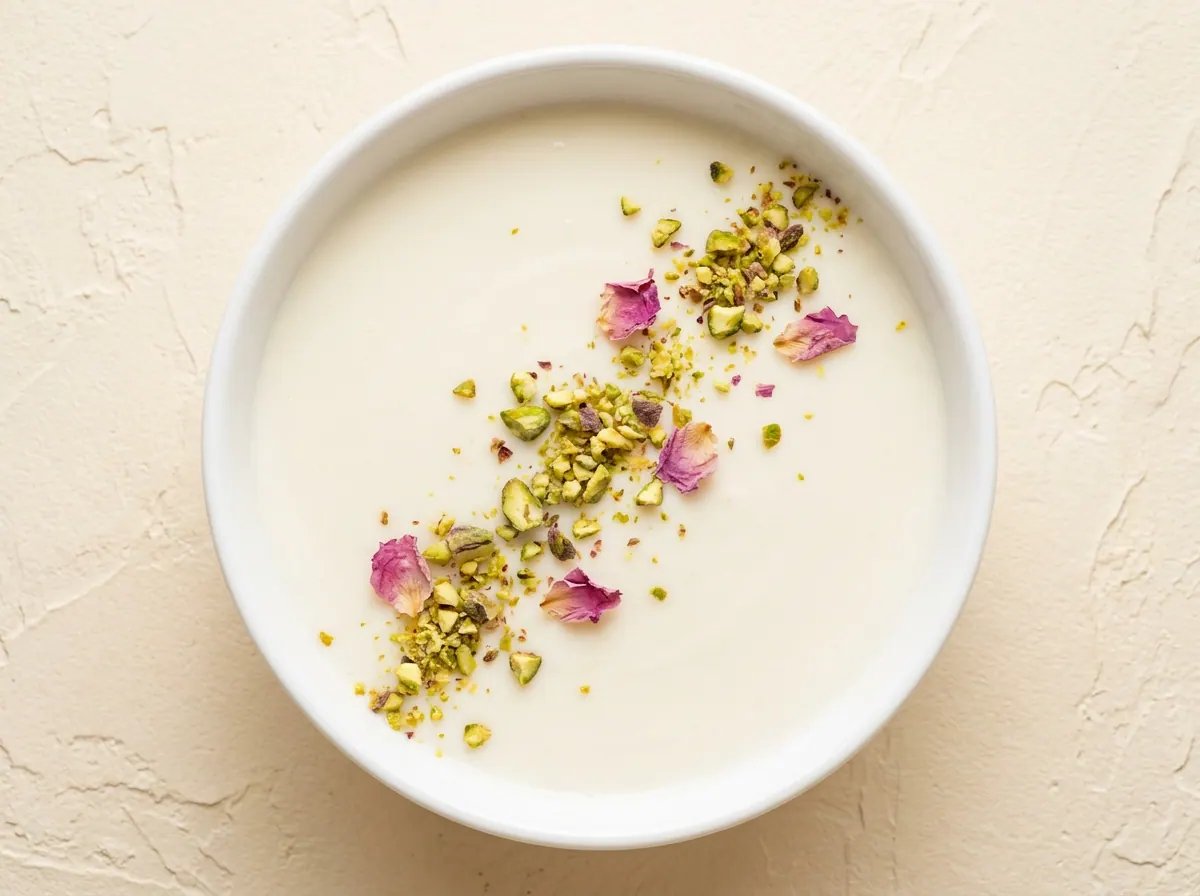
Spoon the clotted cream (ashta) in a line along one edge of the dough, then roll the dough firmly around it into a tight cylinder. The cold, thick cream rolls neatly inside the warm, pliable cheese dough without leaking out.
Slice
Cut the cylinder into pieces about two fingers long, using a knife moistened with syrup to prevent sticking. Arrange the pieces on a serving plate with the open end facing up to show the cream. Slice immediately after rolling while the dough is still pliable.
Garnish and serve
Drizzle or lightly spoon syrup over the pieces, scatter crushed pistachios over the exposed cream, and add a sprinkle of rose water. Serve chilled. Halawet el-Jibn is a refined Damascene dessert combining the stretch of cheese dough with the smoothness of cold cream and the crunch of pistachios — a classic for occasions and celebrations.
Blood Sugar Impact
The glycemic index (GI) measures how quickly a food raises blood sugar, while the glycemic load (GL) measures how much a full serving raises it. Together they give the complete picture.
Glycemic Index
GI
60Medium
Low0–55Medium56–69High70+
A low value (≤55) means a gradual rise in blood sugar — the most suitable range for diabetes and insulin resistance.
Glycemic Load
GL
21High
Low0–10Medium11–19High20+
Glycemic load reflects the impact of the full serving. To lower it: take half a serving, or pair the recipe with a source of protein and fiber.
Nutritional Information
Per ServingMakes 10 servings · one serving is about 115 g of raw ingredients
Calories270 kcal14%of Daily Value*
Protein10 g20%of Daily Value*
Carbohydrates36 g13%of Daily Value*
Fat10 g13%of Daily Value*
Fiber1 g4%of Daily Value*
Sodium132 mg6%of Daily Value*
* Percent Daily Values are based on a 2,000-calorie diet per FDA food-label reference values — your daily needs may be higher or lower. Values are derived from the recipe's ingredients via the USDA database.
Troubleshooting
The most common problems when preparing Halawet al-Jibn (Cheese Rolls in Syrup), and how to fix them:
The dough does not stretch or tears
The cheese is unsuitable or did not melt properly. Use a cheese that melts and stretches (unsalted mozzarella or soaked Akkawi), and melt it well with the water and sugar before adding the semolina. Un-melted cheese will not produce the right stretch.
The dough set before I could spread it
It cooled too quickly. Work fast while it is hot and pliable — halawet el-jibn dough firms up as it cools. If it has set, return it to a low flame with a drizzle of syrup to soften.
The cream leaked out during rolling
The cream was too runny or too much was used. Use cold, thick clotted cream (ashta) and add a moderate line of it, then roll the dough firmly. Cold, thick cream rolls without running.
Halawet el-Jibn tastes salty
The cheese was salty and not soaked. Unsalted mozzarella, or Akkawi soaked in water changed several times, will give a sweet, balanced flavour. Salty cheese ruins the sweet.
The dough sticks to everything
This is normal since it is elastic and hot. Keep the surface, spoon, and knife moistened with syrup throughout — the syrup prevents sticking and makes spreading and slicing easier.
Storage and Make-Ahead
Refrigerator (4°C)
Store in a sealed container in the refrigerator for up to two days (contains cream and cheese). Serve chilled. The dough may firm up slightly in the cold, so take it out a few minutes before serving.
Freezer
Not recommended for freezing — the texture of both the cream and cheese dough changes on thawing. Prepare and serve within two days.
Advance preparation
Prepare the syrup and cream in advance. Make the cheese dough and roll it close to serving time (it must be spread while hot). Add the pistachios at the moment of serving to keep them crunchy.
Texture note
Halawet el-Jibn is best fresh on the day it is made, when the cheese dough is at its most elastic and tender. The cold cream contrasts beautifully with the soft dough.
Tested Ingredient Substitutions
Original Ingredient
Tested Substitute
Ratio
Flavor Difference
Unsalted mozzarella
Akkawi cheese soaked to remove salt
Same quantity
Both melt and stretch; Akkawi is traditional but needs soaking, mozzarella is more convenient
Clotted cream (ashta)
Homemade cream (milk and starch) or store-bought clotted cream
Same quantity
Homemade is more economical; make sure it is cold and thick so it does not leak during rolling
Full amount of syrup
Drizzle syrup instead of dipping
To taste
Reduces sugar while keeping the sweetness; halawet el-jibn does not need heavy syrup
How Much Does It Make? Scaling Guide
Number of servings
Cheese
Semolina
Cream
5 (half recipe)
125 g
0.25 cup
0.5 cup
10 (base)
250 g
0.5 cup
1 cup
20 (gathering)
500 g
1 cup
2 cups
EEINA Nutrition Tip
Halawet el-Jibn is lighter than many Levantine celebration sweets: the cheese and cream add protein and calcium, there is no frying, and its glycemic load is relatively low compared to knafeh and baklava dripping with syrup. It remains a special-occasion sweet. To lighten it: drizzle rather than dip in syrup, and use reduced-fat cream. A moderate portion of two pieces is enough.
Add This Recipe to Your Plan
The EEINA app saves your favorite recipes, calculates them from their real ingredients, and shows your daily numbers toward your goal. Try it free now.
A cheese that melts, stretches, and is not salty: unsalted mozzarella (easiest) or Akkawi soaked to remove the salt. Cheese that does not melt will not give the dough its signature stretch, and a salty cheese will ruin the sweet.
Why do I need to work quickly while it is hot?
The cheese dough is elastic and pliable when hot, and it firms up and stiffens as it cools. All the spreading, rolling, and slicing must happen while it is warm and soft. If it has cooled, return it to low heat with a little syrup to soften.
Is halawet el-jibn healthy?
Lighter than many hospitality sweets: the cheese and cream add protein and calcium, there is no frying, and the glycemic load is relatively low (less syrup than knafeh). It remains a special-occasion sweet to enjoy in moderation.
What is the difference between it and knafeh?
Knafeh is a shredded pastry in ghee stuffed with cheese, baked, and drenched in syrup. Halawet el-jibn is a dough made from the cheese itself and semolina, rolled around cream without baking and with lighter syrup, so it is softer and lower in sugar and fat.