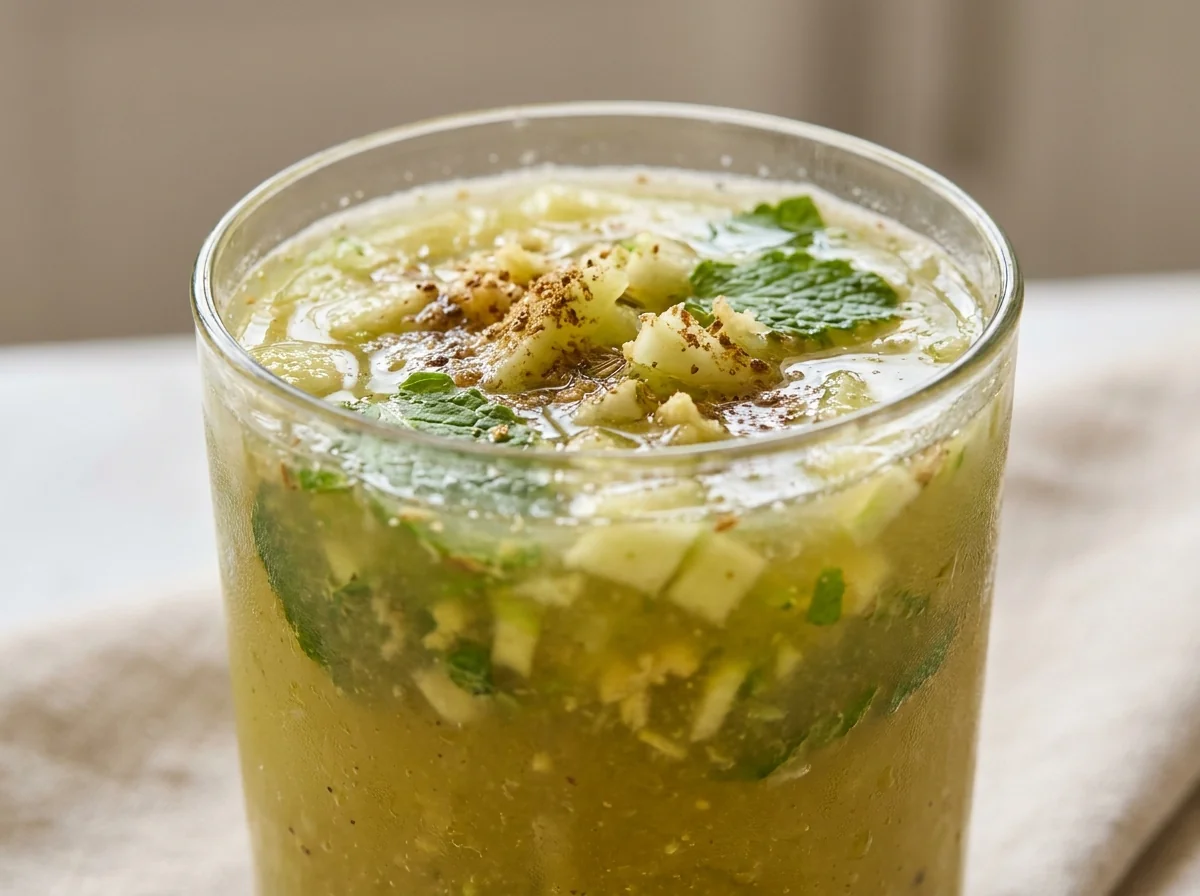
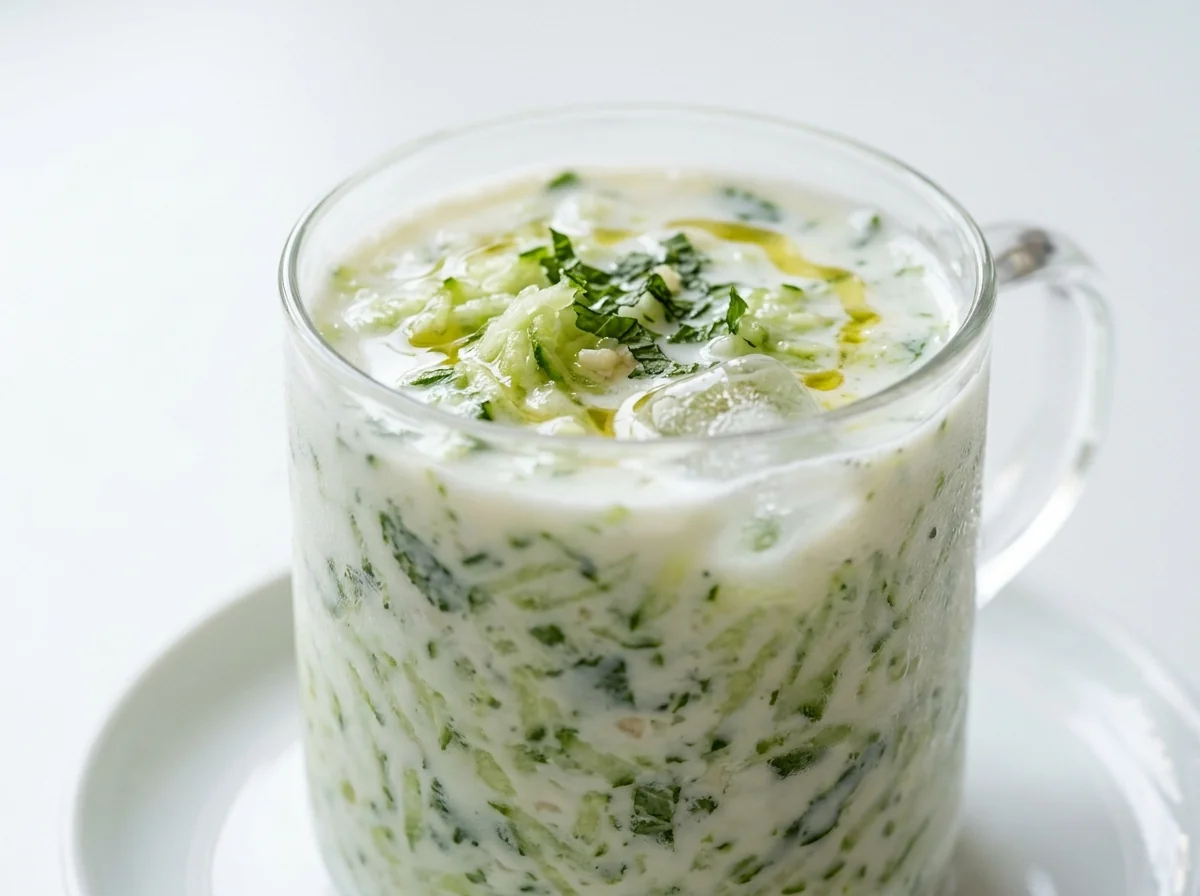
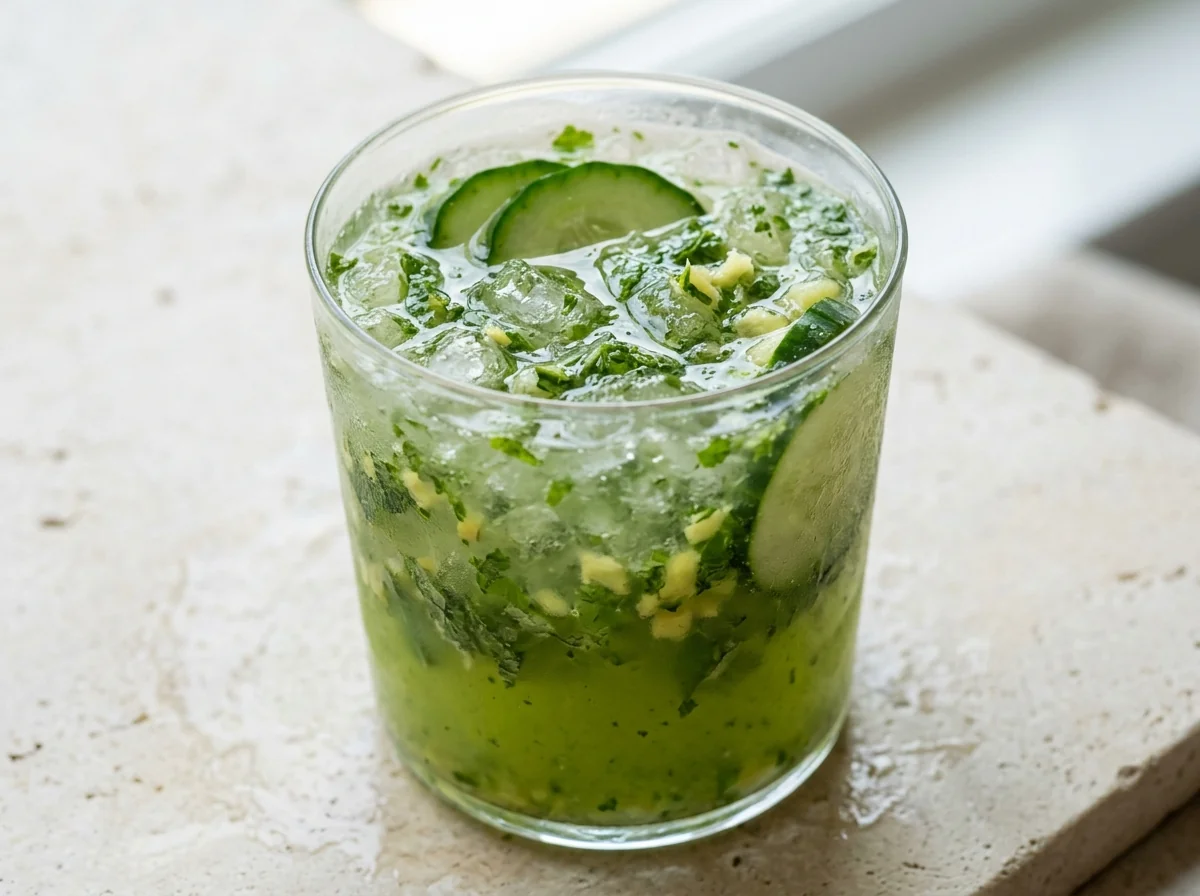
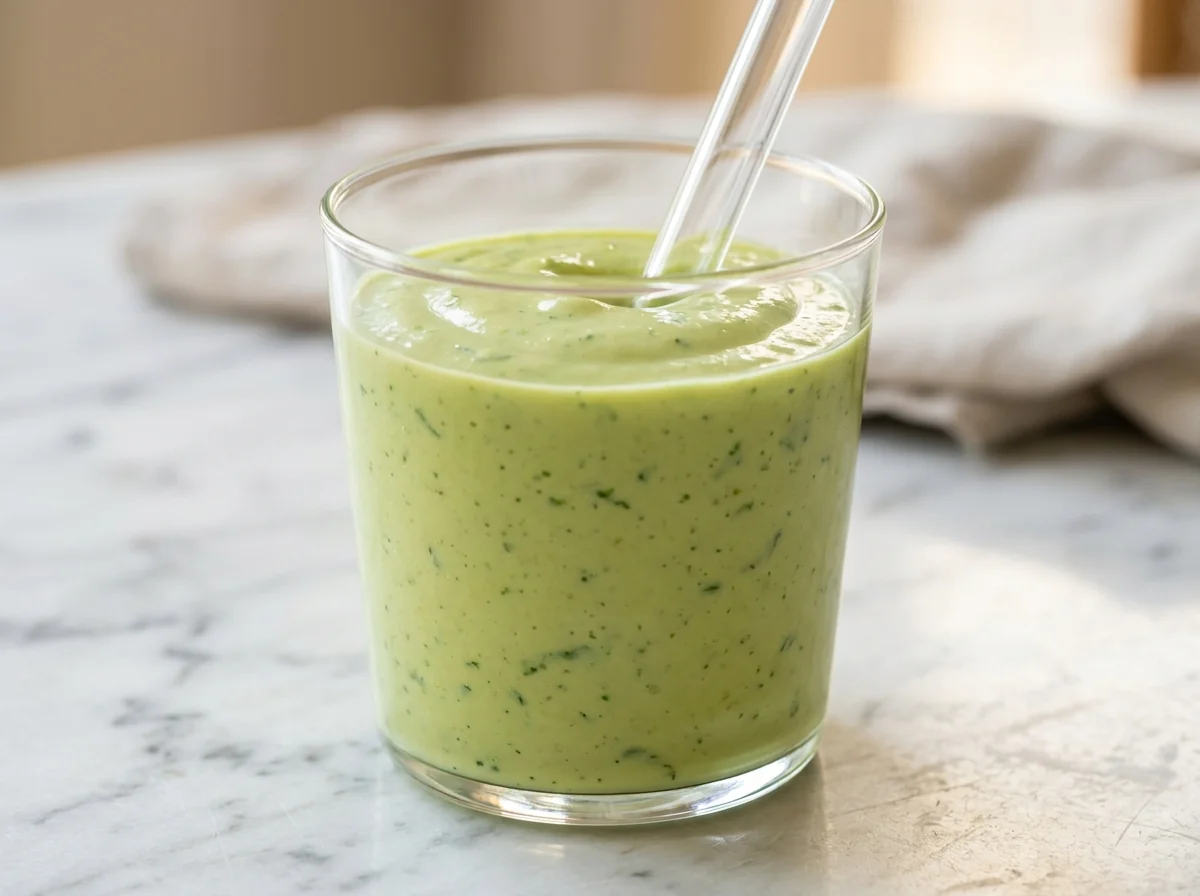
A concentrated syrup of raw sour mango we cook with warm spices into a thick paste, then dilute with water and ice into a refreshing drink that balances tartness, saltiness, and sweetness.
It is present on summer tables across the Gulf and the Indian Ocean region, where raw mango is known as bosli.
Preparation Steps
Steaming the mango
Steam the raw mango pieces or boil them in a little water until they soften completely, as steaming softens the sour pulp and makes it easy to mash without losing its distinctive tartness.
Mashing with the spices
Mash the cooked pulp with the cumin, black salt, pepper, fennel, ginger, and mint until it becomes a smooth paste, then strain it, so the spices distribute evenly throughout the mixture.
Thickening the concentrate
Dissolve the sugar in the water over heat, then add the strained mango pulp and cook for four to five minutes until it thickens slightly and becomes syrupy, so we get a thick sour concentrate that we let cool.
Diluting and serving
Dilute about three tablespoons of the concentrate with a cup of water and ice and stir well, so the refreshing sour spiced taste opens up into a drink that breaks the summer thirst.
Blood Sugar Impact
The glycemic index (GI) measures how quickly a food raises blood sugar, while the glycemic load (GL) measures how much a full serving raises it. Together they give the complete picture.
Glycemic Index
GI
61Medium
Low0–55Medium56–69High70+
A low value (≤55) means a gradual rise in blood sugar — the most suitable range for diabetes and insulin resistance.
Glycemic Load
GL
24High
Low0–10Medium11–19High20+
Glycemic load reflects the impact of the full serving. To lower it: take half a serving, or pair the recipe with a source of protein and fiber.
Nutritional Information
Per ServingMakes 8 servings · one serving is about 365 g of raw ingredients
Calories163 kcal8%of Daily Value*
Protein1 g2%of Daily Value*
Carbohydrates41 g15%of Daily Value*
Fat0 g0%of Daily Value*
Fiber2 g7%of Daily Value*
Sodium302 mg13%of Daily Value*
* Percent Daily Values are based on a 2,000-calorie diet per FDA food-label reference values — your daily needs may be higher or lower. Values are derived from the recipe's ingredients via the USDA database.
Troubleshooting
The most common problems when preparing Green Mango Sharbat (Aam Panna), and how to fix them:
The drink tastes bitter
The raw mango skin carries bitterness, so we make sure to peel it completely before cooking.
The concentrate is coarse, not smooth
We did not strain the pulp after mashing, so we pass it through a strainer before thickening so it becomes smooth.
Storage and Make-Ahead
The concentrate
Kept in an airtight bottle in the refrigerator for one to two months.
After diluting
Drunk the same day over ice to keep its freshness.
Tested Ingredient Substitutions
Original Ingredient
Tested Substitute
Ratio
Flavor Difference
sugar
honey
200 g
An alternative with a deeper floral flavor and a reduced amount since honey is sweeter.
black salt
regular sea salt
4 g
An available alternative that loses the distinctive sulfurous flavor but performs the salt-balancing role.
ground fennel
ground anise
2 g
An alternative with a close flavor for those who cannot find fennel.
raw mango
frozen green mango
500 g
An out-of-season alternative cooked directly without thawing.
How Much Does It Make? Scaling Guide
Ingredient
for 4 cups
for 8 cups (base)
for 16 cups
Raw green mango
250 g
500 g
1000 g
Sugar
125 g
250 g
500 g
Roasted cumin
3 g
5 g
10 g
Grated ginger
5 g
10 g
20 g
Water to dilute
700 ml
1400 ml
2800 ml
Ice
200 g
400 g
800 g
EEINA Nutrition Tip
We use firm, very sour raw mango, as it is the basis of the refreshing taste; ripe mango, on the other hand, gives a sweet drink with dull sharpness.
Add This Recipe to Your Plan
The EEINA app saves your favorite recipes, calculates them from their real ingredients, and shows your daily numbers toward your goal. Try it free now.