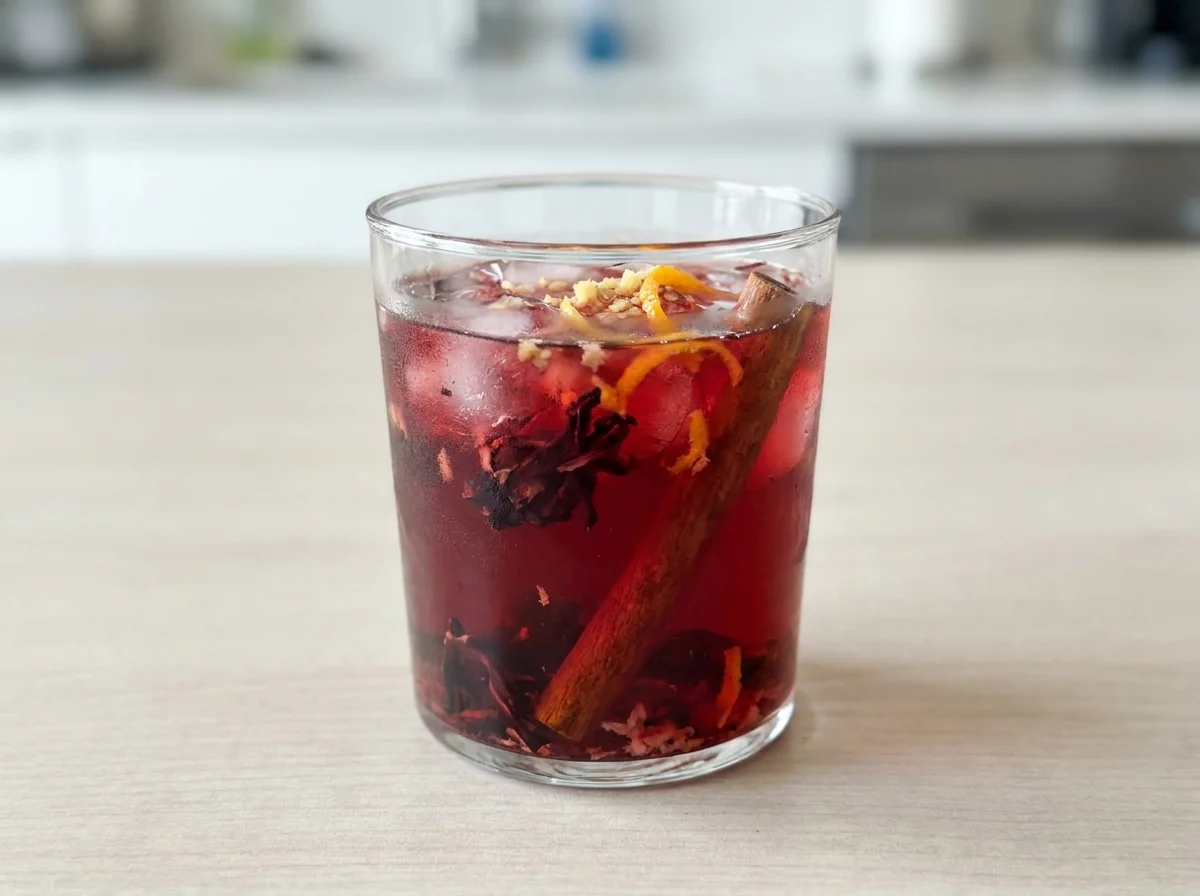
Hibiscus is a familiar drink on our Arab tables, and here we combine it with green tea, ginger, and cinnamon to produce an iced drink that sets it apart from plain hibiscus.
The note of cinnamon and zest gives the drink an aromatic warmth that balances the acidity of the flowers.
Preparation Steps
Boiling the base
Boil the water, then add the hibiscus flowers, grated ginger, and cinnamon stick, and leave it over low heat for about five minutes until the water turns bright red.
Steeping the green tea
Move the pot slightly off the heat until the temperature settles, then add the green tea because boiling water makes it bitter, and steep it for only two to three minutes.
Steeping the orange zest
Add the orange zest, cover the pot, and steep the mixture for fifteen minutes, so the drink absorbs a light citrus note that balances the acidity of the hibiscus.
Straining
Strain the drink from the flowers, leaves, and zest so it does not gain bitterness or acidity as it stands, and let it come to lukewarm.
Chilling and serving
Chill the drink in the refrigerator, then pour it over the ice cubes and serve it cold, refreshing with a striking ruby color.
Blood Sugar Impact
The glycemic index (GI) measures how quickly a food raises blood sugar, while the glycemic load (GL) measures how much a full serving raises it. Together they give the complete picture.
Glycemic Index
GI
0Low
Low0–55Medium56–69High70+
A low value (≤55) means a gradual rise in blood sugar — the most suitable range for diabetes and insulin resistance.
Glycemic Load
GL
0Low
Low0–10Medium11–19High20+
Glycemic load reflects the impact of the full serving. To lower it: take half a serving, or pair the recipe with a source of protein and fiber.
Nutritional Information
Per ServingMakes 4 servings · one serving is about 325 g of raw ingredients
Calories1 kcal0%of Daily Value*
Protein0 g0%of Daily Value*
Carbohydrates0 g0%of Daily Value*
Fat0 g0%of Daily Value*
Fiber0 g0%of Daily Value*
Sodium0 mg0%of Daily Value*
* Percent Daily Values are based on a 2,000-calorie diet per FDA food-label reference values — your daily needs may be higher or lower. Values are derived from the recipe's ingredients via the USDA database.
Troubleshooting
The most common problems when preparing Green Hibiscus Iced Tea, and how to fix them:
The drink is bitter
We steeped the green tea too long or added it to boiling water, so shorten the steep to two minutes and lower the heat first.
The acidity is strong
Hibiscus flowers are tangy, so dilute with additional water or sweeten a little until the sharpness evens out.
The color is pale
We shortened the boiling time, so leave the hibiscus over the heat until the water turns bright red before adding the rest of the ingredients.
Storage and Make-Ahead
The refrigerator
It keeps strained in a sealed container for up to two days, and we always keep it strained so it does not gain bitterness.
Serving
We add the ice at serving time, not before, so the melting does not dilute the flavor of the drink.
Tested Ingredient Substitutions
Original Ingredient
Tested Substitute
Ratio
Flavor Difference
green tea
white tea
4 g
A milder alternative with less bitterness for those who prefer a smoother taste
orange zest
lemon zest
4 g
Gives a fresher acidity with a different citrus note
cinnamon stick
ground cinnamon
1 g
An available alternative, and we strain it well so its texture does not remain in the drink
fresh ginger
dried ginger
2 g
An option available year-round with a slightly milder kick
How Much Does It Make? Scaling Guide
Ingredient
2 cups
4 cups (base)
8 cups
Dried hibiscus flowers
6 g
12 g
24 g
Green tea leaves
2 g
4 g
8 g
Grated ginger
2 g
4 g
8 g
Cinnamon stick
1/2 stick
1 stick
2 sticks
Orange zest
2 g
4 g
8 g
Water
500 ml
1000 ml
2000 ml
Ice cubes
120 g
240 g
480 g
EEINA Nutrition Tip
Add the green tea after the water temperature settles, not while it is boiling, as very hot boiling water extracts excess bitterness from the tea.
Add This Recipe to Your Plan
The EEINA app saves your favorite recipes, calculates them from their real ingredients, and shows your daily numbers toward your goal. Try it free now.
Hibiscus alone is familiar, and combining it with green tea, ginger, and cinnamon gives it layers of flavor that set it apart and a deeper aromatic note.
When do I add the green tea?
After the water temperature settles and for a short time only, because boiling water and long steeping make the tea bitter.
Can I serve it hot?
Yes, skip the ice and serve it warm after straining, so it works as a warm drink on cold evenings.