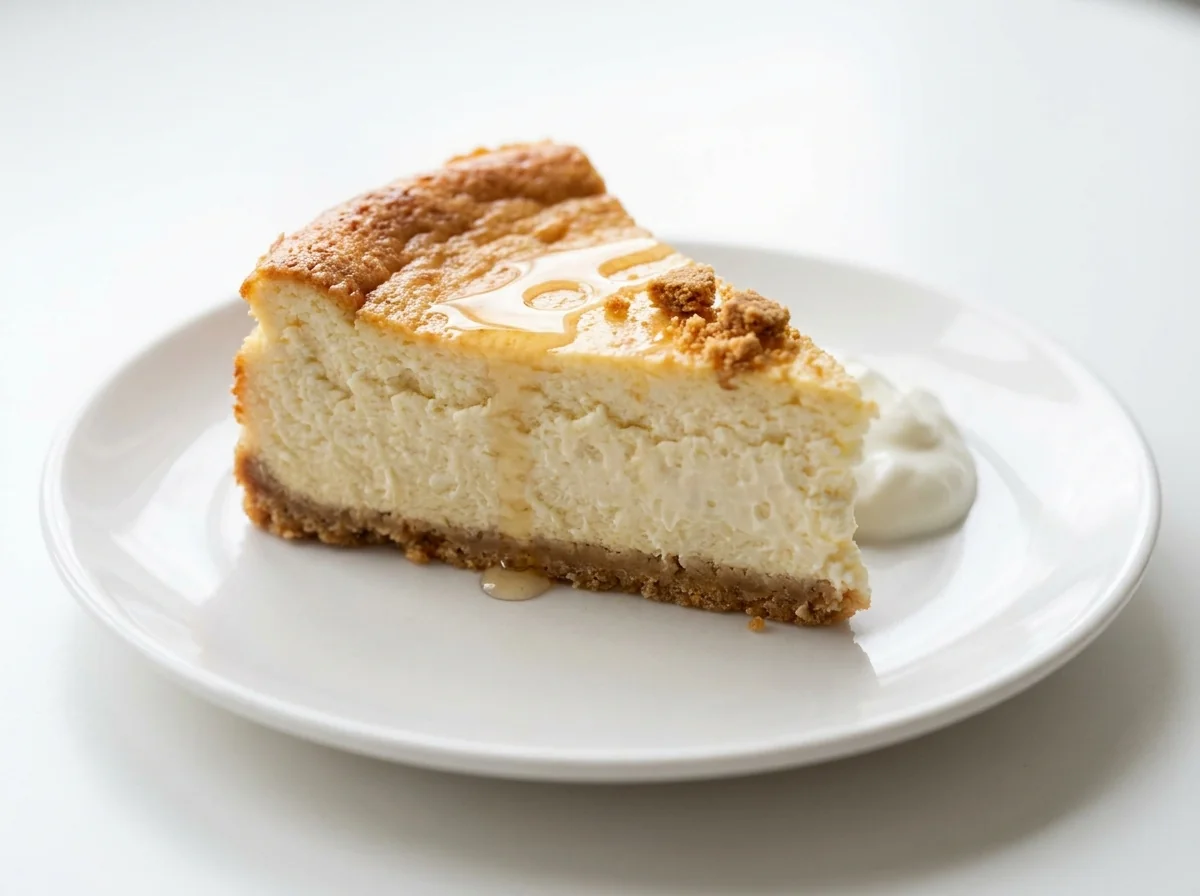
A lighter version of cheesecake that replaces most of the full-fat cheese with Greek yogurt, keeping the creamy texture and distinctive tangy taste with more protein, and we adjusted it to suit local tastes.
Preparation Steps
Prepare the oven
Preheat the oven to 175°C and prepare a small round pan.
The crust
Mix the crushed biscuits with the melted butter and press firmly into the bottom of the pan, because good packing keeps the crust from crumbling when sliced.
The filling
Beat the yogurt, cream cheese, honey, cornstarch, lemon juice, vanilla, and salt until completely smooth, as the starch sets the filling and prevents it from cracking.
Pour
Pour the filling over the crust and smooth the surface.
Bake
Bake for fifty minutes in the middle of the oven until the edges set and the center stays slightly soft, since the slight softness in the center disappears as it cools.
Cool
Cool the cheesecake at room temperature for an hour, then refrigerate it uncovered for six to eight hours until set before slicing.
Blood Sugar Impact
The glycemic index (GI) measures how quickly a food raises blood sugar, while the glycemic load (GL) measures how much a full serving raises it. Together they give the complete picture.
Glycemic Index
GI
59Medium
Low0–55Medium56–69High70+
A low value (≤55) means a gradual rise in blood sugar — the most suitable range for diabetes and insulin resistance.
Glycemic Load
GL
16Medium
Low0–10Medium11–19High20+
Glycemic load reflects the impact of the full serving. To lower it: take half a serving, or pair the recipe with a source of protein and fiber.
Nutritional Information
Per ServingMakes 8 servings · one serving is about 100 g of raw ingredients
Calories241 kcal12%of Daily Value*
Protein8 g16%of Daily Value*
Carbohydrates27 g10%of Daily Value*
Fat11 g14%of Daily Value*
Fiber0 g0%of Daily Value*
Sodium479 mg21%of Daily Value*
Potassium159 mg3%of Daily Value*
Phosphorus150 mg12%of Daily Value*
* Percent Daily Values are based on a 2,000-calorie diet per FDA food-label reference values — your daily needs may be higher or lower. Values are derived from the recipe's ingredients via the USDA database.
Troubleshooting
The most common problems when preparing Greek Yogurt Cheesecake, and how to fix them:
The surface is cracked
You baked it too long; take it out while the center is still slightly soft, as it firms up while cooling.
The filling is watery after cooling
You cut back the cornstarch or did not chill it enough; stick to the amount and chill it a full night.
The crust crumbles when sliced
You did not pack it well; press it firmly with the back of a spoon before adding the filling.
Storage and Make-Ahead
Refrigerator
Keep it covered in the refrigerator for up to four days.
Freezer
Freeze it in wrapped slices for up to a month, and thaw in the refrigerator before serving.
Tested Ingredient Substitutions
Original Ingredient
Tested Substitute
Ratio
Flavor Difference
Cream cheese
Firm silken tofu
120 g
A plant-based alternative that keeps the texture creamy.
Honey
Maple syrup
120 g
An alternative with the same sweetness.
Cornstarch
Almond flour
16 g
For those who prefer avoiding starch, with acceptable set.
Biscuit crust
No crust
0 g
Pour the filling alone for a lighter mousse-like version.
How Much Does It Make? Scaling Guide
Ingredient
Two servings
Four servings
Eight servings (base)
Greek yogurt
90 g
180 g
360 g
Cream cheese
30 g
60 g
120 g
Honey
30 g
60 g
120 g
Cornstarch
2 g
4 g
8 g
EEINA Nutrition Tip
Let the cheesecake sit a full night in the refrigerator before slicing, as the long chill is what gives it the clean, firm texture.
Add This Recipe to Your Plan
The EEINA app saves your favorite recipes, calculates them from their real ingredients, and shows your daily numbers toward your goal. Try it free now.