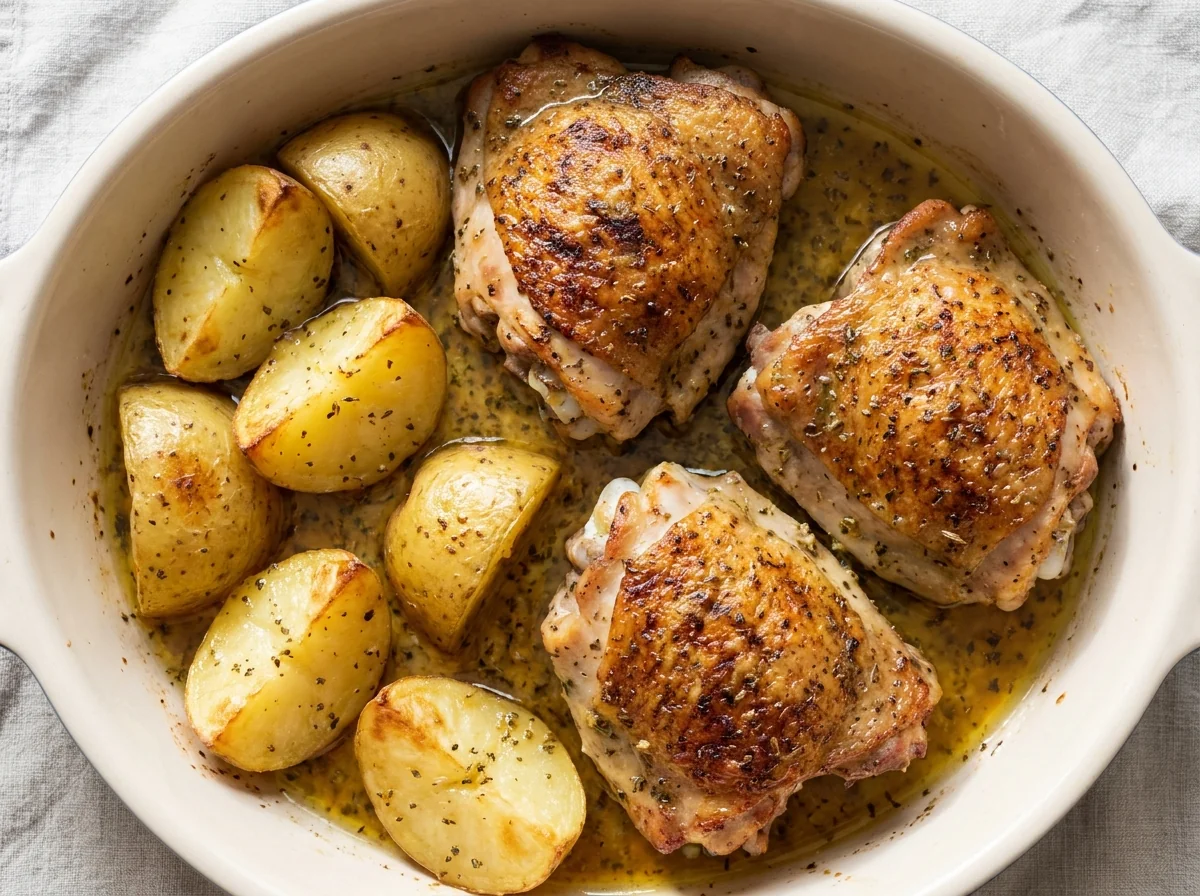
Kotopoulo lemonato is one of the most famous Sunday dishes in Greek homes: chicken and potatoes roasted in a single tray with lemon juice, olive oil, oregano, and garlic.
The inherited rule is to place the potatoes with the chicken in the same tray so they soak up its juices and the lemon flavor, turning it into a complete family meal with the least effort and fewest dishes.
Preparation Steps
Prepare the lemon mixture
Heat the oven to 190°C. In a bowl, whisk the lemon juice, olive oil, garlic, oregano, salt, pepper, and mustard until combined.
Arrange the chicken and potatoes in the tray
Spread the chicken thighs and potato quarters in a wide oven tray in a single layer, pour the lemon mixture over them, and toss by hand until every piece is coated. Add the water or stock to the bottom of the tray.
Roast the dish in the oven
Roast the tray for forty-five minutes, then turn the potatoes, raise the heat to 210°C, and continue for fifteen minutes until the chicken skin browns and the potatoes turn golden.
Check doneness and rest the dish
Make sure the internal temperature at the deepest point of the chicken has reached 74°C, then let the tray rest for five minutes before serving. Spoon the tray juices over the potatoes when serving.
Blood Sugar Impact
The glycemic index (GI) measures how quickly a food raises blood sugar, while the glycemic load (GL) measures how much a full serving raises it. Together they give the complete picture.
Glycemic Index
GI
72High
Low0–55Medium56–69High70+
A low value (≤55) means a gradual rise in blood sugar — the most suitable range for diabetes and insulin resistance.
Glycemic Load
GL
21High
Low0–10Medium11–19High20+
Glycemic load reflects the impact of the full serving. To lower it: take half a serving, or pair the recipe with a source of protein and fiber.
Nutritional Information
Per ServingMakes 4 servings · one serving is about 445 g of raw ingredients
Calories450 kcal22%of Daily Value*
Protein33 g66%of Daily Value*
Carbohydrates33 g12%of Daily Value*
Fat20 g26%of Daily Value*
Fiber4 g14%of Daily Value*
Sodium473 mg21%of Daily Value*
Potassium1146 mg24%of Daily Value*
Phosphorus387 mg31%of Daily Value*
* Percent Daily Values are based on a 2,000-calorie diet per FDA food-label reference values — your daily needs may be higher or lower. Values are derived from the recipe's ingredients via the USDA database.
Troubleshooting
The most common problems when preparing Greek Lemon Chicken and Potatoes (Baked), and how to fix them:
The chicken came out dry
Chicken breast or too long a roasting time is the cause. Use bone-in, skin-on thighs as they stay tender, and do not exceed an internal temperature of 74°C.
The potatoes stayed raw inside
The pieces are too large or piled on top of each other. Cut the potatoes into even quarters and spread them in a single layer so they cook evenly.
The tray liquid dried up and the bottom browned
The water evaporated before cooking was complete. Add half a cup of hot water to the bottom and continue roasting, as the liquid is needed to cook the potatoes and make the sauce.
The lemon flavor is faint
Use fresh lemon juice, not bottled, and add a splash of raw lemon juice when serving to refresh the flavor.
Storage and Make-Ahead
Immediately
Served hot from the tray with the juices spooned over the potatoes.
In the fridge
Keeps in an airtight container for up to three days, and is reheated in the oven to restore the potatoes' crispness.
Freezing
The chicken freezes for up to two months, but the potatoes' texture changes after freezing.
Tested Ingredient Substitutions
Original Ingredient
Tested Substitute
Ratio
Flavor Difference
Chicken thighs
Bone-in chicken legs
1:1
A close substitute that stays tender in long roasting
Potatoes
Sweet potato
1:1
Sweeter flavor and higher fiber
Oregano
Dried thyme
1:1
An available herb substitute with a close flavor
Mustard
Omit it
~
Optional to begin with and does not affect the dish
How Much Does It Make? Scaling Guide
Ingredient
4 servings
2 servings
8 servings
Chicken
800 g
400 g
1600 g
Potatoes
700 g
350 g
1400 g
Lemon juice
80 ml
40 ml
160 ml
Olive oil
60 ml
30 ml
120 ml
EEINA Nutrition Tip
You must make sure the chicken's internal temperature reaches 74°C at the deepest point per food safety guidelines, as this is the accepted standard for killing bacteria in poultry. Extra virgin olive oil is a source of the monounsaturated fats recommended by nutrition sources within the Mediterranean dietary pattern.
Add This Recipe to Your Plan
The EEINA app saves your favorite recipes, calculates them from their real ingredients, and shows your daily numbers toward your goal. Try it free now.
Yes, but it dries out faster in long roasting. If you use it, add it twenty minutes after the potatoes, or stick with bone-in thighs as Greek homes do for a more tender result.
Why are the potatoes placed with the chicken in one tray?
So the potatoes soak up the chicken juices and the lemon mixture; this is the inherited rule in the original Greek dish that gives it its distinctive flavor.
How do I ensure crispy chicken skin?
Raise the heat in the last fifteen minutes to 210°C uncovered, and make sure the surface is not submerged in liquid.
How is it made into a complete meal?
With a green salad or a Greek salad of tomato and cucumber and a cup of yogurt to raise the protein and fiber.