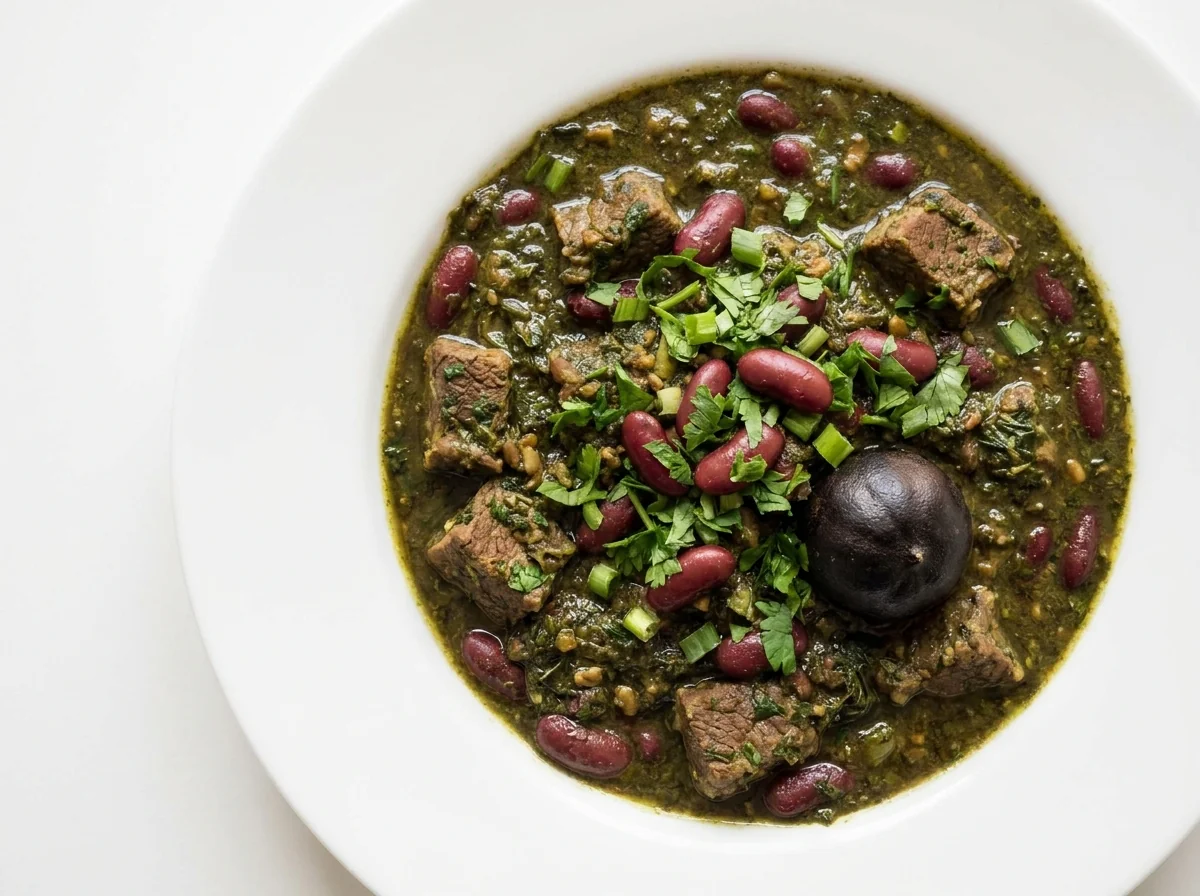
Ghormeh Sabzi is one of the most time-honored Persian dishes and is considered one of Iran's national dishes.
Its name combines two words: ghormeh, meaning sautéed, and sabzi, meaning green herbs. Its base is plenty of herbs sautéed until they darken, along with meat, red kidney beans, and dried black lime, which gives it its distinctive tartness, and it is traditionally served with Persian rice.
Preparation Steps
Sauté the green herbs until darkened
In a wide pan, heat two-thirds of the olive oil and stir the parsley, coriander, green onion, and dried fenugreek leaves over medium heat for ten to fifteen minutes until they darken and turn fragrant. This step is the soul of the dish, and the name Ghormeh Sabzi itself means sautéed herbs.
Brown the onion and meat with turmeric
In a deep pot, heat the remaining oil and stir the chopped onion until it softens and turns golden, then add the cubed meat, turmeric, salt, and pepper and brown on all sides until the color changes.
Add the herbs, beans, and water
Add the sautéed herbs and boiled red kidney beans to the meat, cover with hot water, bring to a boil, then lower the heat.
Pierce the black lime and add it
Pierce the dried black limes with the tip of a knife or a fork and add them to the pot. Piercing lets their tart flavor seep into the broth instead of floating empty on top.
Simmer over low heat until thickened
Cover the pot and simmer over low heat for about an hour and a half until the meat is tender, the broth darkens, and it thickens. Adjust the salt and tartness at the end of cooking.
Serve
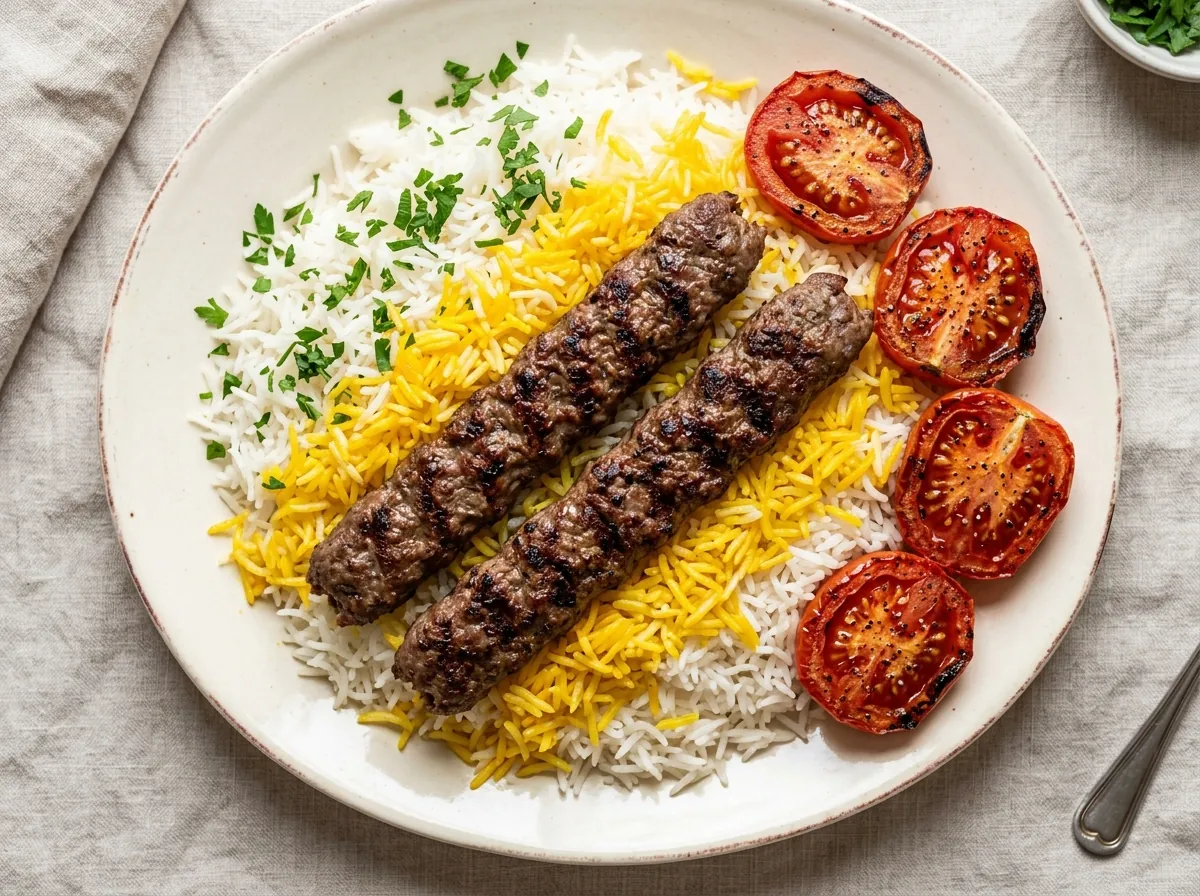
Serve hot with white rice in the Persian style.
Blood Sugar Impact
The glycemic index (GI) measures how quickly a food raises blood sugar, while the glycemic load (GL) measures how much a full serving raises it. Together they give the complete picture.
Glycemic Index
GI
14Low
Low0–55Medium56–69High70+
A low value (≤55) means a gradual rise in blood sugar — the most suitable range for diabetes and insulin resistance.
Glycemic Load
GL
2Low
Low0–10Medium11–19High20+
Glycemic load reflects the impact of the full serving. To lower it: take half a serving, or pair the recipe with a source of protein and fiber.
Nutritional Information
Per ServingMakes 4 servings · one serving is about 280 g of raw ingredients
Calories401 kcal20%of Daily Value*
Protein24 g48%of Daily Value*
Carbohydrates17 g6%of Daily Value*
Fat26 g33%of Daily Value*
Fiber5 g18%of Daily Value*
Sodium498 mg22%of Daily Value*
* Percent Daily Values are based on a 2,000-calorie diet per FDA food-label reference values — your daily needs may be higher or lower. Values are derived from the recipe's ingredients via the USDA database.
Troubleshooting
The most common problems when preparing Persian Ghormeh Sabzi Herb Stew, and how to fix them:
A bitter taste in the dish
The amount of fenugreek was too large. Fenugreek leaves are strong, and a teaspoon is enough; using too much makes the stew bitter.
The broth is light in color
The herbs were not sautéed enough. Sauté them over medium heat until they truly darken before adding them, as they are the source of the deep color.
The tartness is weak
The black lime was not pierced or was added too late. Pierce it and add it early so its flavor seeps into the broth throughout cooking.
The meat is still tough
The cooking time was short. Simmer it over low heat until fully done and tender, as beef needs slow cooking.
Storage and Make-Ahead
Immediately
Serve hot with white rice in the Persian style.
In the refrigerator
Keeps for three days in an airtight container, and its flavor improves the next day.
Freezing
Freezes well for up to three months, and is reheated over low heat after thawing.
Tested Ingredient Substitutions
Original Ingredient
Tested Substitute
Ratio
Flavor Difference
Beef
Cubed lamb
1:1
A common traditional choice in the Persian version
Meat
Omit entirely and increase the beans
~
It becomes a vegetarian stew of herbs and beans
Dried black lime
Fresh lemon juice
~
A substitute when unavailable, added at the end of cooking, with a lighter flavor
Dried fenugreek leaves
Omit them
~
The flavor stays acceptable though it loses its distinctive touch
How Much Does It Make? Scaling Guide
Ingredient
4 servings
2 servings
8 servings
Beef
400 g
200 g
800 g
Parsley
150 g
75 g
300 g
Red kidney beans
200 g
100 g
400 g
Dried black lime (loomi)
4 pieces
2 pieces
8 pieces
EEINA Nutrition Tip
Red kidney beans are a legume rich in fiber and plant protein, and fiber helps slow the absorption of sugar into the blood. Make sure the beef is fully cooked (internal temperature 71 degrees Celsius) per food safety guidelines.
Add This Recipe to Your Plan
The EEINA app saves your favorite recipes, calculates them from their real ingredients, and shows your daily numbers toward your goal. Try it free now.
It is a lime that is boiled then dried until it blackens, known as Loomi (dried black lime). It gives the stew its distinctive deep tartness, and it is pierced before being added so its flavor comes out.
Why is it called Ghormeh Sabzi?
The name combines ghormeh, meaning sautéed, and sabzi, meaning herbs, so it literally means sautéed herbs, which is the most important step in the dish.
Can it be made without meat?
Yes, by omitting the meat and increasing the beans it becomes a vegetarian stew that relies on the herbs, beans, and black lime.
What is it served with?
It is traditionally served with white rice, and can be rounded out with a side of green salad.