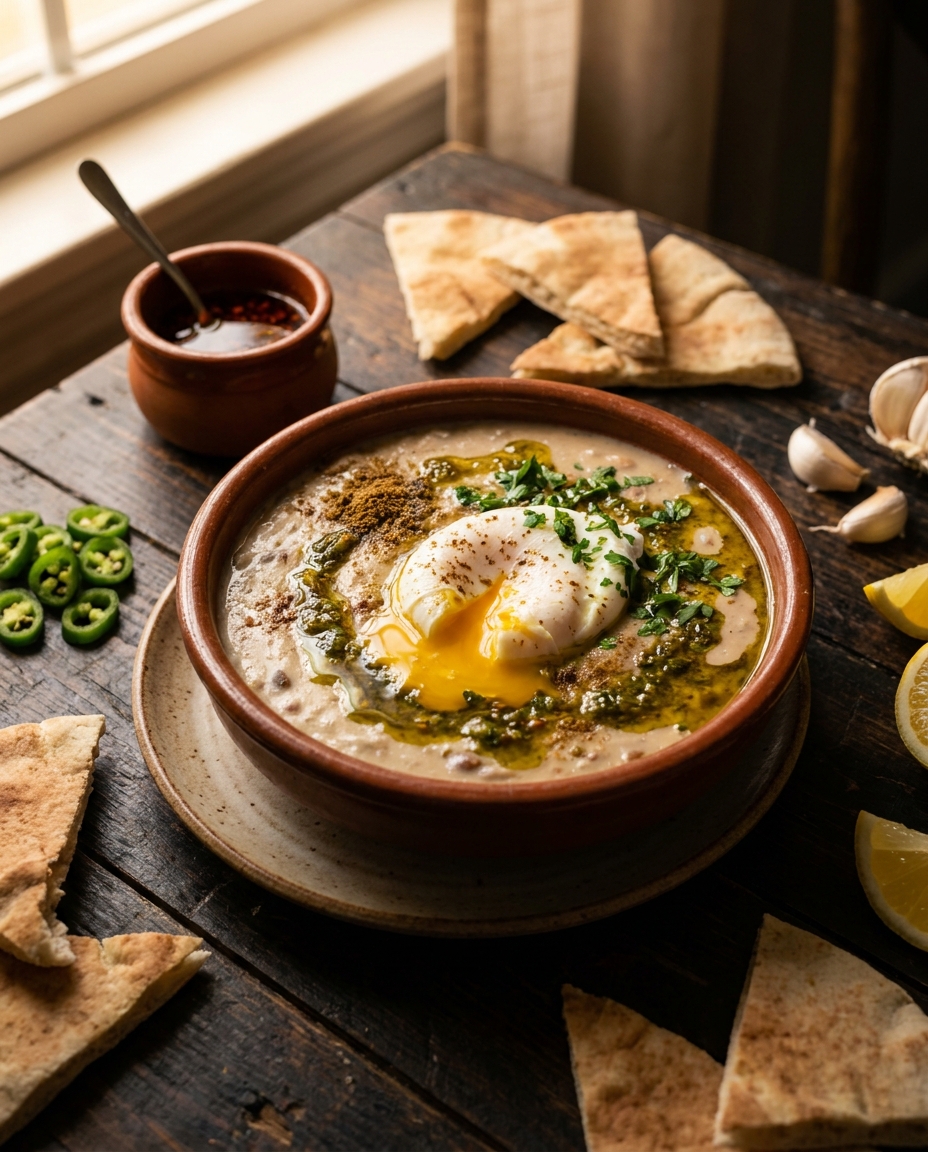
Eating from the pan is a relatively modern Gulf custom, but the idea of fava beans with scrambled eggs is older.
The hot oil fried with garlic and shatta gives the dish its delicious kick. Gulf suhoor loves heat in the dish, because something lukewarm only opens the appetite after long hours of fasting.
Preparation Steps
Mash the beans
In a wide pan, warm the beans with 1/4 cup water and mash half the beans with the back of a spoon. Add the cumin and salt and stir for two minutes over low heat.
Fry the eggs
Push the beans to one side of the pan and add a spoon of oil. Crack the eggs carefully into the empty space and break the yolks, cooking for two minutes until the whites set while the yolks stay runny.
Prepare the hot oil
In a small pan, warm the oil with the garlic and hot pepper for thirty seconds only. The heat releases the aroma and infuses the oil with the spice.
Bring it all together
Bring the beans back to the center of the pan and stir them with the eggs. Remove from the heat, add the lemon juice, and pour the hot oil over the top.
Serve
Garnish with parsley and serve straight from the pan with warm bread.
Blood Sugar Impact
The glycemic index (GI) measures how quickly a food raises blood sugar, while the glycemic load (GL) measures how much a full serving raises it. Together they give the complete picture.
Glycemic Index
GI
42Low
Low0–55Medium56–69High70+
A low value (≤55) means a gradual rise in blood sugar — the most suitable range for diabetes and insulin resistance.
Glycemic Load
GL
20High
Low0–10Medium11–19High20+
Glycemic load reflects the impact of the full serving. To lower it: take half a serving, or pair the recipe with a source of protein and fiber.
Nutritional Information
Per ServingMakes 2 servings · one serving is about 310 g of raw ingredients
Calories487 kcal24%of Daily Value*
Protein26 g52%of Daily Value*
Carbohydrates58 g21%of Daily Value*
Fat18 g23%of Daily Value*
Fiber11 g39%of Daily Value*
Sodium1015 mg44%of Daily Value*
* Percent Daily Values are based on a 2,000-calorie diet per FDA food-label reference values — your daily needs may be higher or lower. Values are derived from the recipe's ingredients via the USDA database.
Troubleshooting
The most common problems when preparing Fava Beans with Hot Oil and Eggs, and how to fix them:
The hot oil is bitter
The garlic burned. Strain it and prepare a fresh batch with fresh garlic and a shorter time.
The yolk is set hard
Remove from the heat earlier; we like the yolk runny because it coats the beans with a soft creaminess.
The shatta is too strong
Use a smaller spoon or swap it for a sweet chili sauce.
The dish is dry
Add a spoon of hot water and stir. Fava beans dry out fast over heat.
Storage and Make-Ahead
Immediately
Serve hot straight away; the egg does not keep well in this recipe.
Reheating
Keep only the beans in the refrigerator for a day, and fry the egg fresh at the last moment.
Tested Ingredient Substitutions
Original Ingredient
Tested Substitute
Ratio
Flavor Difference
Local ghee
Olive oil
1:1
A healthier, less rich version.
Arabic shatta
Chopped fresh red chili
10 g
Same heat with a vegetable note.
Whole egg
Egg whites only
2 whites
A low-fat version for athletes.
How Much Does It Make? Scaling Guide
Ingredient
2 people
4 people
6 people
Foul medames
400 g
800 g
1200 g
Eggs
2 eggs
4 eggs
6 eggs
Ghee or oil
25 ml
50 ml
75 ml
Chili paste (shatta)
5 g
10 g
15 g
EEINA Nutrition Tip
Warm the hot oil for only thirty seconds with the garlic and hot pepper. Longer heat burns the garlic and turns it bitter. Pour the oil over the lukewarm beans while it is hot but not boiling.
Add This Recipe to Your Plan
The EEINA app saves your favorite recipes, calculates them from their real ingredients, and shows your daily numbers toward your goal. Try it free now.
Ghee clarified from sheep or cow butter, simmered on low heat until the milk solids separate and only the golden fat remains. It has a strong aroma and a rich flavor.
How many calories per plate?
About 430 calories per serving. Most of them come from the beans and the egg.
Is it good for athletes?
Yes, the complete protein from the egg and the fiber from the beans feed the muscles and extend fullness.
Is it suitable for children?
Yes, remove the shatta and choose fresh eggs. Children love the soft scrambled texture with the beans.