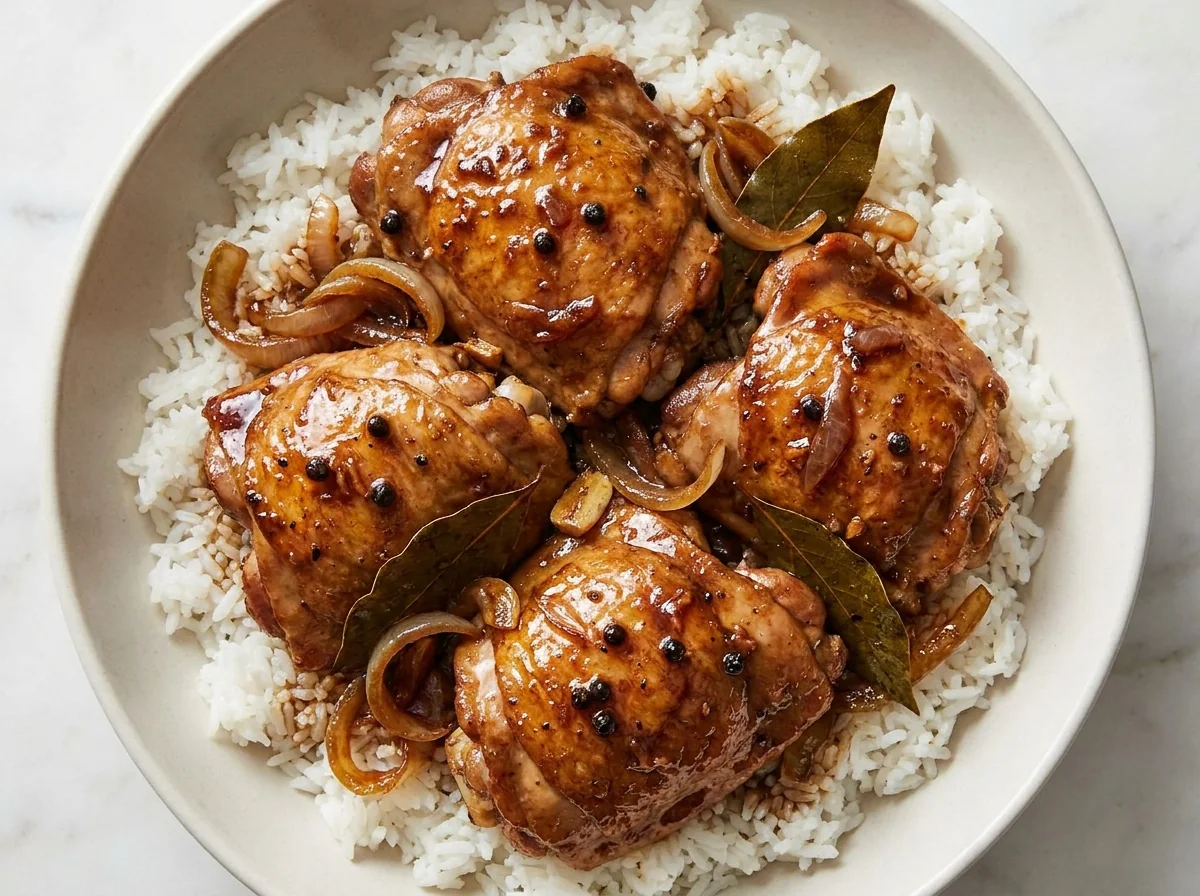
Adobo is one of the most famous dishes of Filipino cuisine and many consider it an unofficial national dish. Its name is taken from a Spanish word meaning the marinade, but the method is an old Filipino one that predates the arrival of the Spanish: cooking meat in vinegar and salt to keep it safe in the hot climate.
Over time soy sauce entered, so adobo became chicken or meat cooked in vinegar, soy sauce, garlic, bay leaves, and pepper until the sauce thickens, and it is served over white rice. Every Filipino home has its own version.
Preparation Steps
Marinate the chicken
In a bowl, mix the chicken thighs with the soy sauce and crushed garlic and leave them to marinate for at least twenty minutes to absorb the flavor.
Brown the chicken
Drain the chicken from the marinade and keep the liquid aside. In a wide pot, heat the oil and brown the chicken pieces over medium-high heat until golden on both sides, then set them aside.
Sauté the onion and garlic
In the same fat, stir the onion for two minutes until it softens, and add the remaining garlic from the marinade until fragrant.
Add the vinegar without stirring
Return the chicken to the pot and add the vinegar, marinade liquid, bay leaves, peppercorns, and water. Let the liquid boil without stirring for five minutes until the sharpness of the vinegar cooks off, as this is a key step in the adobo dish.
Simmer over low heat
Lower the heat, cover the pot, and let the chicken simmer over low heat for about twenty-five minutes, stirring once or twice, until the chicken is tender and fully done.
Thicken the sauce and serve
Uncover and raise the heat slightly until the sauce thickens and glazes the chicken for a few minutes, and serve hot over white rice.
Blood Sugar Impact
The glycemic index (GI) measures how quickly a food raises blood sugar, while the glycemic load (GL) measures how much a full serving raises it. Together they give the complete picture.
Glycemic Index
GI
66Medium
Low0–55Medium56–69High70+
A low value (≤55) means a gradual rise in blood sugar — the most suitable range for diabetes and insulin resistance.
Glycemic Load
GL
31High
Low0–10Medium11–19High20+
Glycemic load reflects the impact of the full serving. To lower it: take half a serving, or pair the recipe with a source of protein and fiber.
Nutritional Information
Per ServingMakes 4 servings · one serving is about 465 g of raw ingredients
Calories512 kcal26%of Daily Value*
Protein45 g90%of Daily Value*
Carbohydrates48 g17%of Daily Value*
Fat13 g17%of Daily Value*
Fiber1 g4%of Daily Value*
Sodium1019 mg44%of Daily Value*
Potassium619 mg13%of Daily Value*
Phosphorus423 mg34%of Daily Value*
* Percent Daily Values are based on a 2,000-calorie diet per FDA food-label reference values — your daily needs may be higher or lower. Values are derived from the recipe's ingredients via the USDA database.
Troubleshooting
The most common problems when preparing Filipino Chicken Adobo, and how to fix them:
The vinegar taste is too sharp
The liquid was stirred before it boiled. Add the vinegar then leave it to boil for five minutes without stirring until its sharpness cooks off before you start stirring.
The sauce is too thin
Uncover and raise the heat at the end of cooking until part of the liquid evaporates and the sauce thickens and coats the chicken.
The chicken is dry
The heat was high or the cooking was too long. Use low heat after boiling, and bone-in thighs stay more tender than breasts.
The dish is salty
The amount of soy sauce was too much or its type was concentrated. Reduce the soy a little and make up for it with water, and do not add extra salt.
Storage and Make-Ahead
Immediately
Served hot over white rice.
In the refrigerator
Keeps in a sealed container for three days, and its flavor increases the next day.
Freezing
Freezes for up to two months, and is reheated after thawing in the refrigerator.
Tested Ingredient Substitutions
Original Ingredient
Tested Substitute
Ratio
Flavor Difference
Chicken thighs
Chicken breast
1:1
Lower in fat, and needs a shorter cooking time so it does not dry out
Cane vinegar
White vinegar or apple cider vinegar
1:1
White vinegar is very close, and apple cider vinegar is milder in acidity
Soy sauce
Low-sodium soy sauce
1:1
To reduce the salt while keeping the flavor
White rice
Brown rice
1:1
More fiber and a lower glycemic index
How Much Does It Make? Scaling Guide
Ingredient
4 servings
2 servings
8 servings
Chicken
800 g
400 g
1600 g
Vinegar
120 ml
60 ml
240 ml
Soy sauce
60 ml
30 ml
120 ml
EEINA Nutrition Tip
Whole black peppercorns release their flavor slowly during slow cooking without making the dish spicy, unlike ground pepper. Make sure the chicken is fully cooked to an internal temperature of 74 degrees Celsius per food safety guidelines.
Add This Recipe to Your Plan
The EEINA app saves your favorite recipes, calculates them from their real ingredients, and shows your daily numbers toward your goal. Try it free now.
Letting the vinegar boil without stirring for a few minutes evaporates its sour sharpness and leaves a balanced flavor. Early stirring keeps the taste sharp.
Can it be cooked without soy sauce?
Yes, the white version of adobo is cooked with vinegar and salt only without soy, and it is close to the older method.
What is the best chicken cut for it?
Bone-in thighs and legs are best because they withstand cooking and stay tender, while breasts dry out faster.
What is it served with?
Traditionally over white rice, and a side of boiled vegetables or green salad can accompany it for a fuller meal.