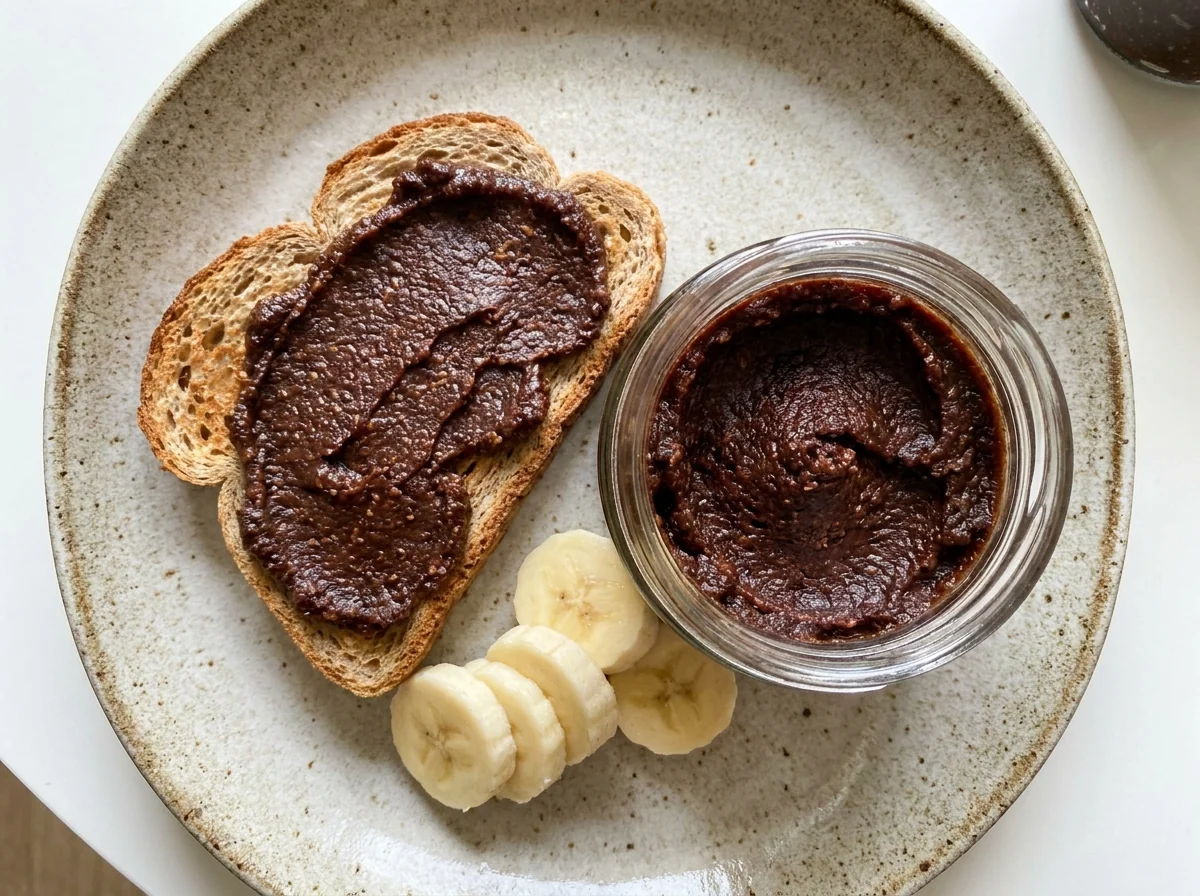
Date chocolate spread is a homemade alternative to commercial jars of hazelnut chocolate: dates sweeten, raw cacao deepens the flavor, and peanut butter provides the richness.
Three ingredients make a chocolate spread with no added sugar and no palm oil, and the recipe has spread widely in Arabic and international healthy content.
Preparation Steps
Soak the dates and blend into a paste
Soak the dates in hot water for a quarter of an hour and drain, then blend in the processor for a minute until they form a smooth paste. The dates are the base of this spread and the source of all its sugar.
Add the cacao and the fat and pour the milk in a stream
Add the raw cacao, peanut butter, vanilla, and a pinch of salt, and blend while pouring the warm milk in a gradual stream until the mixture turns into a glossy dark chocolate cream that slowly slides off the spoon. For a shine like commercial jars, add the coconut oil.
Taste and adjust the balance
The sweetness of the dates offsets the bitterness of the cacao: if you find the taste bitter, add a soaked date, and if you find it sweet, add a pinch of cacao. This adjustability is its first advantage over the store-bought product.
Fill an airtight jar
Pack it into an airtight jar and store it in the refrigerator. It spreads on toast, pancakes, and crepes, and bananas are dipped in it.
Blood Sugar Impact
The glycemic index (GI) measures how quickly a food raises blood sugar, while the glycemic load (GL) measures how much a full serving raises it. Together they give the complete picture.
Glycemic Index
GI
47Low
Low0–55Medium56–69High70+
A low value (≤55) means a gradual rise in blood sugar — the most suitable range for diabetes and insulin resistance.
Glycemic Load
GL
9Low
Low0–10Medium11–19High20+
Glycemic load reflects the impact of the full serving. To lower it: take half a serving, or pair the recipe with a source of protein and fiber.
Nutritional Information
Per ServingMakes 12 servings · one serving is about 40 g of raw ingredients
Calories117 kcal6%of Daily Value*
Protein2 g4%of Daily Value*
Carbohydrates22 g8%of Daily Value*
Fat4 g5%of Daily Value*
Fiber3 g11%of Daily Value*
Sodium305 mg13%of Daily Value*
* Percent Daily Values are based on a 2,000-calorie diet per FDA food-label reference values — your daily needs may be higher or lower. Values are derived from the recipe's ingredients via the USDA database.
Troubleshooting
The most common problems when preparing Date and Cacao Chocolate Spread, and how to fix them:
It came out bitter
There was too much cacao for the dates. Blend in two soaked dates and the taste evens out, and note that raw cacao is more bitter than sweetened.
It thickened too much in the jar
The refrigerator's cold firms it, and this is natural. Knead in a spoonful of warm milk before spreading, or heat it for a few seconds in the microwave.
Oil separated on top
Oil separation of peanut butter is natural in products free of industrial stabilizers. One stir mixes it back together.
The children compared it to the commercial jar and rejected it
Do not present it as a copy of the famous product but by its new name: homemade date chocolate. A direct comparison with a high-sugar product is unfair to it.
Storage and Make-Ahead
In the refrigerator
Two weeks in an airtight jar, always using a dry spoon.
At room temperature
Not recommended, because the milk in its composition shortens its life outside refrigeration.
In the freezer
Two months in small containers, moved to the refrigerator the night before use and stirred to come back.
Tested Ingredient Substitutions
Original Ingredient
Tested Substitute
Ratio
Flavor Difference
Peanut butter
Tahini
1:1
A safe alternative for peanut allergy with a sesame flavor (watch for sesame)
Milk
Almond or oat milk
1:1
A fully plant-based version
Raw cacao
Regular unsweetened cacao
1:1
What matters is that it is free of sugar
Coconut oil
Omit it
~
The shine decreases and the taste does not change
How Much Does It Make? Scaling Guide
Ingredient
~450 g jar
225 g
2 jars
Dates
300 g
150 g
600 g
Cacao
30 g
15 g
60 g
Peanut butter
60 g
30 g
120 g
EEINA Nutrition Tip
Pour the milk warm in a thin stream while the processor runs. Cold milk added all at once clumps the cacao into bitter lumps, while the warm gradual stream dissolves it into the date paste until it becomes one glossy cream.
Add This Recipe to Your Plan
The EEINA app saves your favorite recipes, calculates them from their real ingredients, and shows your daily numbers toward your goal. Try it free now.
The commercial jar's ingredients start with sugar, then palm oil, then a small percentage of hazelnut, while this one is dates, then cacao, then peanut butter: the sweetening from whole fruit and the fats from a known seed.
Do children actually accept it?
Yes, when presented the right way: on warm pancakes or as a dip for bananas. It is best presented by its new name rather than as a copy of another product.
How many spoonfuls make a reasonable serving?
One tablespoon on toast or pancakes. Dates and peanut butter are concentrated energy counted as a sweetener.
Where does it fit in our library?
A spread for banana crepes, French toast rolls, date pancakes, and a dip for children's fruit.