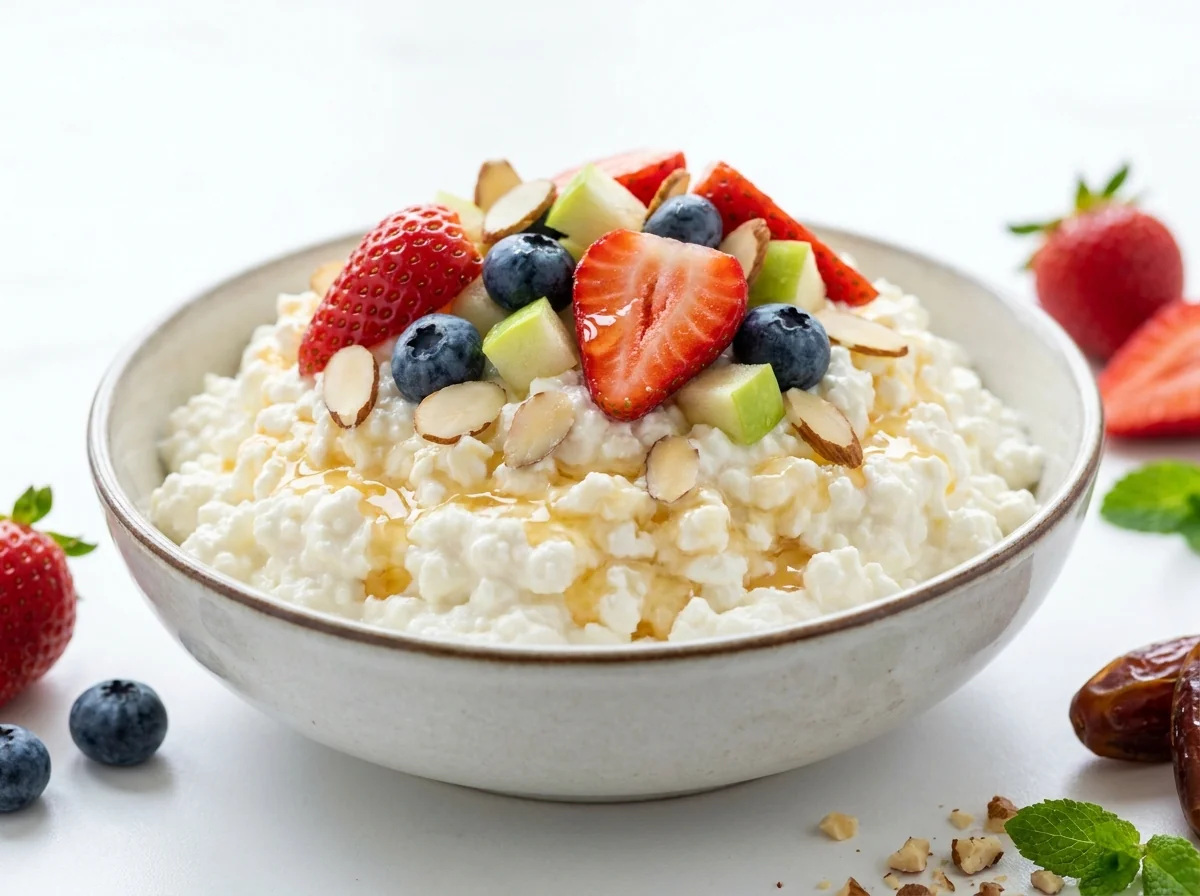
A high-protein, no-cook cottage cheese and fruit salad ready in 10 minutes — creamy cottage cheese topped with seasonal berries, apple, toasted almonds, honey, and cinnamon.
A high-protein meal featured among the breakfast and lunch options recommended by the Harvard Healthy Eating Plate.
Cottage cheese provides slow-digesting casein protein (keeps you full for 4–5 hours), while the fruit adds fiber and vitamin C. A complete meal with zero cooking.
Preparation Steps
Choose the cottage cheese
Use 2% fat cottage cheese — a balanced choice between calories and texture. Fat-free (0%) tends to be watery.
Wash the fruit
Rinse the blueberries and strawberries thoroughly, then pat them dry with a kitchen towel. Wet skins water down the texture.
Dice the apple
Peel the apple (optional — the skin adds fiber) and cut it into small cubes. Sprinkle with 5 ml lemon juice to prevent browning if you are preparing ahead.
Toast the almonds
In a dry skillet, toast the almonds for 2 minutes over medium heat until golden (watch closely — they burn quickly). Let cool, then chop into small pieces.
Assemble the salad
In a large bowl, spread the cottage cheese as a base. Arrange the fruit on top in sections — strawberries on one side, blueberries on another, apple on the third.
Add the finishing touches
Scatter the toasted almonds and cinnamon over the fruit. Drizzle the honey in a thin stream. Garnish with fresh mint leaves.
Serve
Serve immediately, or keep covered in the refrigerator for up to 4 hours. Stir gently before eating to distribute the flavors.
Blood Sugar Impact
The glycemic index (GI) measures how quickly a food raises blood sugar, while the glycemic load (GL) measures how much a full serving raises it. Together they give the complete picture.
Glycemic Index
GI
36Low
Low0–55Medium56–69High70+
A low value (≤55) means a gradual rise in blood sugar — the most suitable range for diabetes and insulin resistance.
Glycemic Load
GL
8Low
Low0–10Medium11–19High20+
Glycemic load reflects the impact of the full serving. To lower it: take half a serving, or pair the recipe with a source of protein and fiber.
Nutritional Information
Per ServingMakes 2 servings · one serving is about 285 g of raw ingredients
Calories259 kcal13%of Daily Value*
Protein17 g34%of Daily Value*
Carbohydrates27 g10%of Daily Value*
Fat11 g14%of Daily Value*
Fiber5 g18%of Daily Value*
Sodium396 mg17%of Daily Value*
Potassium366 mg8%of Daily Value*
Phosphorus270 mg22%of Daily Value*
* Percent Daily Values are based on a 2,000-calorie diet per FDA food-label reference values — your daily needs may be higher or lower. Values are derived from the recipe's ingredients via the USDA database.
Troubleshooting
The most common problems when preparing Cottage Cheese Fruit Salad for Weight Loss, and how to fix them:
The cottage cheese is watery
You used 0% fat. Choose 2% instead, or strain the low-fat variety through a sieve for 10 minutes.
The apple turned brown
It oxidized. Sprinkle lemon juice over it immediately after cutting.
The salad tastes flat
It needs sweetness. Add 5 g more honey, or swap for a more aromatic variety (manuka).
The taste is too sweet
The fruit is overly ripe. Choose a slightly tart green apple (Granny Smith).
Storage and Make-Ahead
Refrigerator
4 hours (the apple begins to oxidize after that).
For travel
Keep the cottage cheese in one container and the fruit in another. Combine at serving time.
Not suitable for freezing
Cottage cheese becomes grainy and the fruit loses its texture.
Tested Ingredient Substitutions
Original Ingredient
Tested Substitute
Ratio
Flavor Difference
Cottage cheese
Plain Greek yogurt
1:1
Higher acidity, similar protein content
Honey
date molasses
1:1
Traditional Saudi alternative
Almonds
Pumpkin seeds
1:1
Nut-free option, rich in omega-3
Fruit
Seasonal fruit (pomegranate, mango)
1:1
Seasonal variety
How Much Does It Make? Scaling Guide
Ingredient
2 servings
4 servings
6 servings
Cottage cheese
250 g
500 g
750 g
Fruit
280 g
560 g
840 g
Almonds
20 g
40 g
60 g
EEINA Nutrition Tip
Casein in cottage cheese is the slowest-digesting form of protein, providing longer satiety compared to whey. It is ideal for weight loss because it reduces hunger between meals.
Add This Recipe to Your Plan
The EEINA app saves your favorite recipes, calculates them from their real ingredients, and shows your daily numbers toward your goal. Try it free now.
Estimate: ~220–250 calories per serving. ~17 g protein keeps you full for a long time.
Suitable for children?
Excellent — they love the colors. Chop the almonds finely for very young children (choking hazard).
Does it actually help with weight loss?
It is a good meal in a weight-loss plan — the high protein reduces hunger and the calories are moderate. But cottage cheese alone does not cause weight loss; a comprehensive plan does.
Safe during pregnancy?
Safe — choose pasteurized cottage cheese (what you find in supermarkets is always pasteurized).