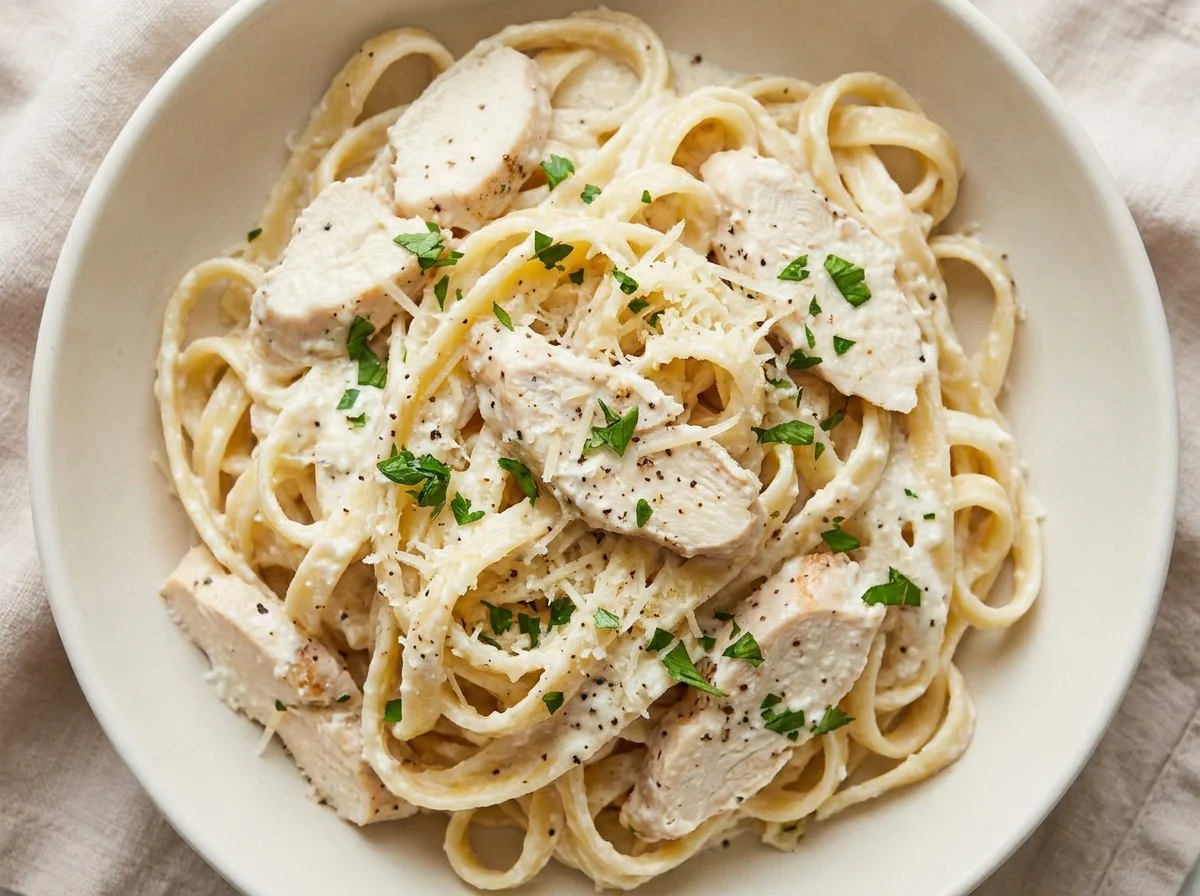
We are always looking for a way to enjoy a creamy Alfredo dish without the heavy cream, and we found that blended cottage cheese gives us the same velvety texture with much higher protein.
This is our light version, which has become the favorite dinner on our busy nights.
Preparation Steps
The pasta
Boil the pasta in salted water until it is cooked and stays firm; reserve a cup of the cooking water before draining, because it helps us adjust the texture of the sauce later.
The chicken
Season the chicken slices with a little salt and pepper, then sauté them in the olive oil over medium heat until they brown and their internal temperature reaches 74 degrees, which ensures they are safely cooked.
The Alfredo sauce
Blend the cottage cheese, parmesan, milk, and garlic in a blender until you get a completely smooth texture, as blending the cottage cheese turns it into a creamy sauce with no grains.
Combining
Pour the sauce into a wide pan over very low heat, add the pasta and chicken and toss gently, thin it with the cooking water when needed, and avoid high heat so the sauce does not break.
Serving
Adjust the salt and pepper, garnish with the parsley and a little parmesan, and serve right away while it is hot, because the sauce thickens as it cools.
Blood Sugar Impact
The glycemic index (GI) measures how quickly a food raises blood sugar, while the glycemic load (GL) measures how much a full serving raises it. Together they give the complete picture.
Glycemic Index
GI
45Low
Low0–55Medium56–69High70+
A low value (≤55) means a gradual rise in blood sugar — the most suitable range for diabetes and insulin resistance.
Glycemic Load
GL
23High
Low0–10Medium11–19High20+
Glycemic load reflects the impact of the full serving. To lower it: take half a serving, or pair the recipe with a source of protein and fiber.
Nutritional Information
Per ServingMakes 4 servings · one serving is about 325 g of raw ingredients
Calories780 kcal39%of Daily Value*
Protein59 g118%of Daily Value*
Carbohydrates53 g19%of Daily Value*
Fat36 g46%of Daily Value*
Fiber2 g7%of Daily Value*
Sodium1200 mg52%of Daily Value*
Potassium848 mg18%of Daily Value*
Phosphorus844 mg68%of Daily Value*
* Percent Daily Values are based on a 2,000-calorie diet per FDA food-label reference values — your daily needs may be higher or lower. Values are derived from the recipe's ingredients via the USDA database.
Troubleshooting
The most common problems when preparing High-Protein Cottage Cheese Alfredo, and how to fix them:
The sauce curdled and turned grainy
We raised the heat too much; lower it to the minimum and thin it with warm cooking water while stirring continuously.
The sauce is too thick
Add two spoonfuls of cooking water gradually until you reach the texture you want without diluting the flavor.
The cottage cheese flavor is noticeable
Add a spoonful of parmesan and a roasted garlic clove; they balance the taste and give a savory depth.
The chicken is dry
Sauté it over medium, not high, heat and remove it as soon as it reaches 74 degrees, as overcooking robs it of its moisture.
Storage and Make-Ahead
Refrigerator
Keep the sauce in an airtight container for up to 4 days, and reheat it over low heat with a splash of milk.
Freezer
Freeze the sauce on its own for up to two months, then thaw it in the refrigerator and blend it again to restore its texture.
Tested Ingredient Substitutions
Original Ingredient
Tested Substitute
Ratio
Flavor Difference
cottage cheese
low-fat ricotta cheese
same weight, 450 g
Blend it well as it is denser; a smoother texture and slightly higher fat.
wheat pasta
high-protein pasta
same weight, 250 g
Higher protein and suitable for gluten-free with its dedicated type.
chicken breast
turkey slices
same weight, 400 g
Cook them to 74 degrees as well; lean protein with a different flavor.
parmesan
grated pecorino cheese
same weight, 50 g
Reduce the salt as it is saltier; a sharper flavor.
How Much Does It Make? Scaling Guide
Ingredient
2 servings
4 servings (base)
8 servings
Pasta
125 g
250 g
500 g
cottage cheese
225 g
450 g
900 g
Milk
60 ml
120 ml
240 ml
chicken breast
200 g
400 g
800 g
EEINA Nutrition Tip
Let the pasta cool a little before combining it with the sauce, as direct high heat is the number one reason cottage cheese sauce curdles.
Add This Recipe to Your Plan
The EEINA app saves your favorite recipes, calculates them from their real ingredients, and shows your daily numbers toward your goal. Try it free now.
No, after blending it turns into a creamy sauce that takes on the flavor of the garlic and parmesan, and you cannot distinguish the cottage cheese taste in it.
Can we make the sauce ahead?
Yes, blend it and keep it in the refrigerator, then reheat it over low heat with a splash of milk before combining it with the pasta.