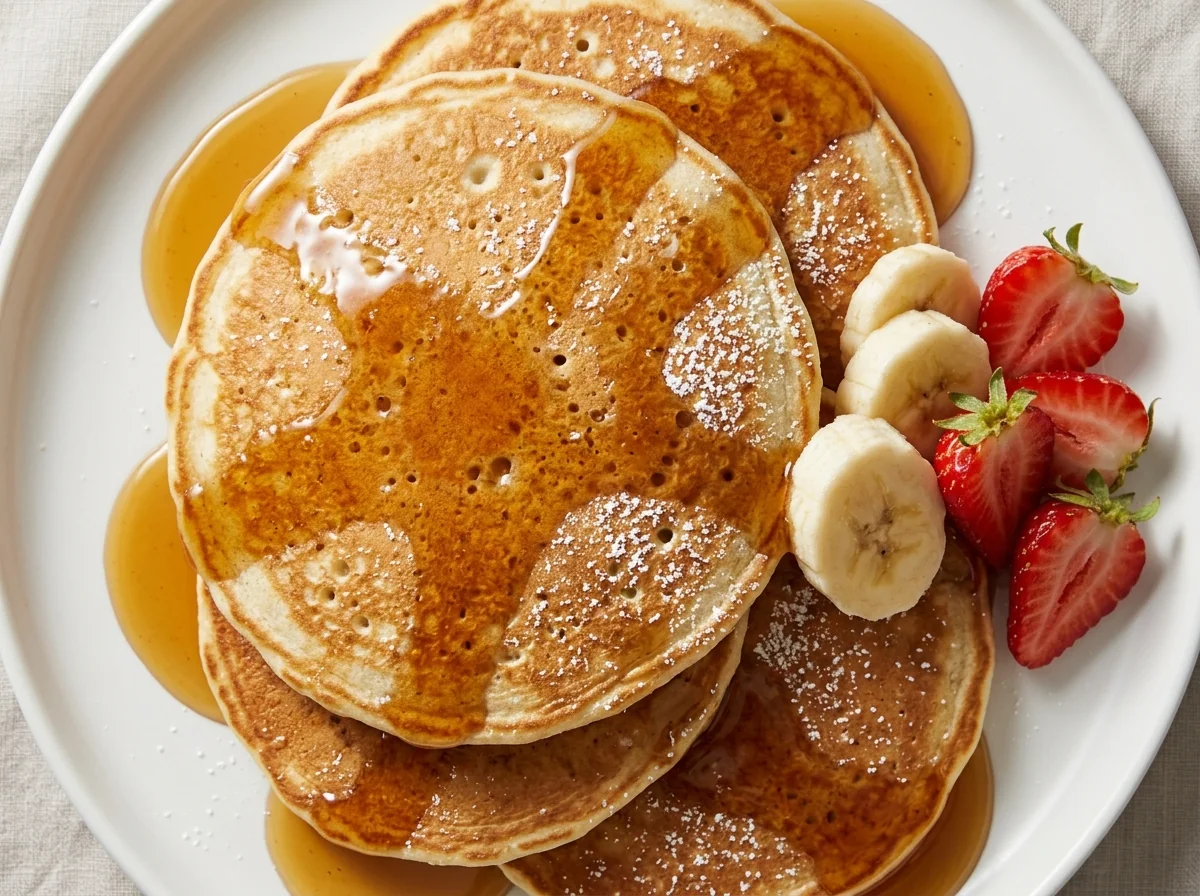
A light morning pancake with three touches of baking powder, poured into a hot pan wiped with butter, and flipped when small bubbles appear. Serve with syrup, maple syrup, jam, or fresh fruits.
Pancakes are among the most popular breakfast dishes in Western homes, and Arab kitchens have adopted them as a quick breakfast for children.
The name is Latin, composed of 'pan' (the pan) and 'cake' (the disc), so it is a disc baked in a pan.
Preparation Steps
Prepare the batter
In a deep bowl, mix the milk, egg, flour, sugar, salt, and baking powder together with a hand whisk until the batter is fully combined. Cover it and let it rest for 5 minutes so the ingredients react.
Heat the pan
Place a non-stick pan over medium heat and let it heat well. This step is crucial so the pancake doesn't stick and the bubbles form correctly.
Wipe the pan with butter
Wipe the pan with an amount of butter equal to about half a teaspoon, and spread it on the surface with a paper towel. Repeat the wiping between batches as needed.
Pour the batter
Pour about a soup ladle of the batter for each pancake disc. Leave 3 cm between each disc because the batter will spread a little.
Watch the bubbles and flip
When small bubbles start to appear on the surface of the pancake and it browns from below (after about two minutes), flip it with a wide spatula and continue cooking the other side for 30-40 seconds.
Serve the pancakes
Arrange the pancake discs on a serving platter and cover with a kitchen towel to keep them warm. Serve them with maple syrup, jam, sugar syrup, or fresh fruit slices and a sprinkle of powdered sugar for garnish.
Blood Sugar Impact
The glycemic index (GI) measures how quickly a food raises blood sugar, while the glycemic load (GL) measures how much a full serving raises it. Together they give the complete picture.
Glycemic Index
GI
66Medium
Low0–55Medium56–69High70+
A low value (≤55) means a gradual rise in blood sugar — the most suitable range for diabetes and insulin resistance.
Glycemic Load
GL
22High
Low0–10Medium11–19High20+
Glycemic load reflects the impact of the full serving. To lower it: take half a serving, or pair the recipe with a source of protein and fiber.
Nutritional Information
Per ServingMakes 6 servings · one serving is about 75 g of raw ingredients
Calories197 kcal10%of Daily Value*
Protein6 g12%of Daily Value*
Carbohydrates35 g13%of Daily Value*
Fat3 g4%of Daily Value*
Fiber1 g4%of Daily Value*
Sodium274 mg12%of Daily Value*
Potassium120 mg3%of Daily Value*
Phosphorus370 mg30%of Daily Value*
* Percent Daily Values are based on a 2,000-calorie diet per FDA food-label reference values — your daily needs may be higher or lower. Values are derived from the recipe's ingredients via the USDA database.
Troubleshooting
The most common problems when preparing Classic Pancake Recipe, and how to fix them:
The pancake sticks to the pan
The pan wasn't hot enough, or the butter layer dried out. Heat the pan for 90 seconds over medium heat before pouring the batter.
The pancake comes out flat without rising
The baking powder is expired or inactive. Replace with a new package, and check the expiry date.
Storage and Make-Ahead
Airtight container in the refrigerator
Stays fresh for two days; reheat in the toaster before serving.
Plastic bag in the freezer
Keeps for up to one month; reheat in the toaster directly.
Tested Ingredient Substitutions
Original Ingredient
Tested Substitute
Ratio
Flavor Difference
Milk
Plant milk or water
1:1
Gives an acceptable result with a lighter flavor.
White flour
Whole wheat flour
1:1
Gives a nuttier flavor and higher nutritional value.
EEINA Nutrition Tip
Don't over-mix the batter. A few strokes are enough. A slightly lumpy batter produces more tender pancakes, because over-mixing activates the gluten and toughens it.
Add This Recipe to Your Plan
The EEINA app saves your favorite recipes, calculates them from their real ingredients, and shows your daily numbers toward your goal. Try it free now.