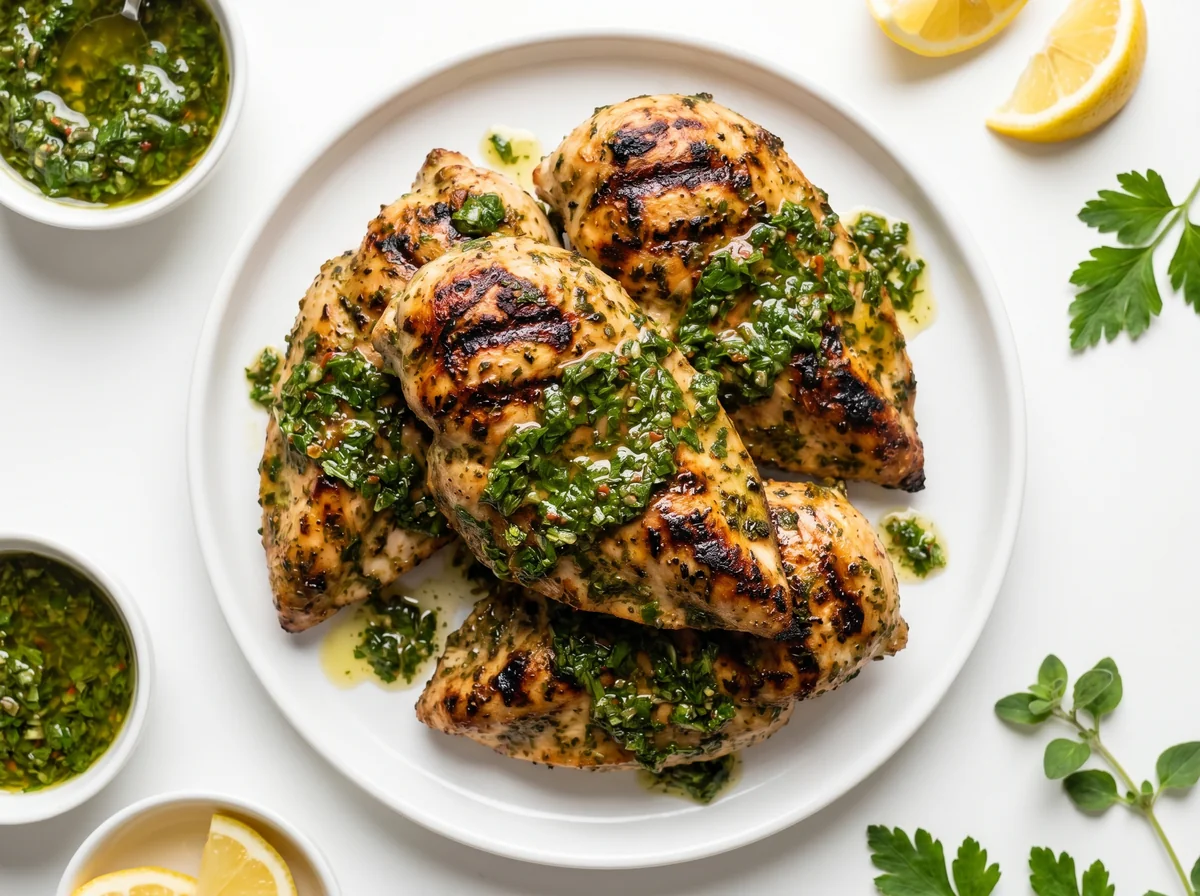
Grilled chicken breast smothered in Argentine chimichurri sauce — parsley, garlic, oregano, olive oil, and red wine vinegar. A high-protein dinner with almost zero carbohydrates and bold, herby flavour.
Chimichurri is Argentina's famous green sauce, the classic companion to grilled meats over open coals.
The EEINA version grills lean chicken breast and smothers it in fresh chimichurri, producing a high-protein dish that is fragrant and virtually carb-free.
Preparation Steps
Make the chimichurri
Combine the parsley, garlic, oregano, red wine vinegar, olive oil, chili flakes, and a pinch of salt in a bowl. Leave for ten minutes to let the flavours meld. Chimichurri should have a coarse, chunky texture — not a smooth paste.
Season the chicken
Butterfly the chicken breasts to an even thinness, coat them with some of the sauce, salt, and pepper, and leave for ten minutes. Flattening ensures quick, even cooking.
Grill the chicken
Heat a ridged grill pan or barbecue over medium-high heat and grill the chicken for four to five minutes per side until grill marks appear and it is cooked through (74°C internally).
Rest
Leave the chicken to rest for three minutes after grilling so the juices redistribute before serving.
Drizzle and serve
Squeeze lemon over the chicken, spoon the fresh chimichurri sauce generously on top, and serve with a green salad or grilled vegetables. A fragrant, low-carb dinner.
Blood Sugar Impact
The glycemic index (GI) measures how quickly a food raises blood sugar, while the glycemic load (GL) measures how much a full serving raises it. Together they give the complete picture.
Glycemic Index
GI
7Low
Low0–55Medium56–69High70+
A low value (≤55) means a gradual rise in blood sugar — the most suitable range for diabetes and insulin resistance.
Glycemic Load
GL
0Low
Low0–10Medium11–19High20+
Glycemic load reflects the impact of the full serving. To lower it: take half a serving, or pair the recipe with a source of protein and fiber.
Nutritional Information
Per ServingMakes 4 servings · one serving is about 225 g of raw ingredients
Calories303 kcal15%of Daily Value*
Protein35 g70%of Daily Value*
Carbohydrates7 g3%of Daily Value*
Fat15 g19%of Daily Value*
Fiber3 g11%of Daily Value*
Sodium79 mg3%of Daily Value*
Potassium698 mg15%of Daily Value*
Phosphorus344 mg28%of Daily Value*
* Percent Daily Values are based on a 2,000-calorie diet per FDA food-label reference values — your daily needs may be higher or lower. Values are derived from the recipe's ingredients via the USDA database.
Troubleshooting
The most common problems when preparing Argentinian Chimichurri Chicken, and how to fix them:
The chicken is dry
The slices were too thick or it was over-cooked. Butterfly them to an even thinness, grill for 4 to 5 minutes per side only until they reach 74°C, and let them rest for 3 minutes before slicing so the juices return.
The chimichurri turned into a smooth paste
It was blended too long. Authentic chimichurri has a coarse, hand-chopped texture. Chop everything by hand or use only a very brief pulse in a blender — hand-chopping preserves both the texture and the fresh flavour.
The flavour is too sharp from the vinegar
The vinegar ratio is too high. Balance it with more olive oil and a squeeze of lemon, and leave the sauce to rest for 10 minutes so the sharpness mellows and the flavours integrate.
No grill marks appearing
The pan was not hot enough or the chicken surface was wet. Heat the ridged pan well, pat the chicken dry, and do not move the slice for at least 4 minutes until the marks have formed.
Storage and Make-Ahead
Refrigerator (4°C)
Grilled chicken: 3 days in an airtight container. Chimichurri: one week in a sealed jar covered with a layer of oil (to preserve the colour).
Freezer (-18°C)
Raw marinated chicken or grilled chicken freezes for two months. Chimichurri can be frozen in ice-cube trays for portion-sized use.
Advance preparation
Make the chimichurri in advance (the flavour improves) and marinate the chicken. Grilling takes only 10 minutes at serving time.
Reheating
Reheat the chicken in a pan for two minutes, or serve it cold over a salad, and add the chimichurri fresh. Do not leave it out of the refrigerator for more than two hours [2].
Tested Ingredient Substitutions
Original Ingredient
Tested Substitute
Ratio
Flavor Difference
Chicken breast
Lean beef steak or fish
Same weight
Grilled beef is the traditional Argentinian partner for chimichurri
Parsley
Coriander or a mix of parsley and coriander
Same quantity
Coriander gives a deeper flavour; parsley is the authentic choice
Red wine vinegar
Apple cider vinegar or lemon juice
Same quantity
A slightly different acidity; either works well
Chili flakes
Omit or use a pinch of paprika
—
For children and sensitive stomachs — reduces the heat
How Much Does It Make? Scaling Guide
Servings
Chicken
Parsley
Olive oil
Vinegar
2 (single × 2)
300 g
1/2 cup
1 1/2 spoons
1 spoon
4 (base)
600 g
1 cup
3 spoons
2 spoons
6 (family)
900 g
1 1/2 cups
4 1/2 spoons
3 spoons
8 (hosting)
1 kg 200 g
2 cups
6 spoons
4 spoons
EEINA Nutrition Tip
One of the finest dishes for people with diabetes and heart conditions: carbohydrates are virtually zero, protein is high, and the fats come from heart-healthy olive oil. Chimichurri adds flavour without any sugar. Serve with a salad or grilled vegetables and no starchy sides to keep the glycaemic load of the meal at its lowest.
Add This Recipe to Your Plan
The EEINA app saves your favorite recipes, calculates them from their real ingredients, and shows your daily numbers toward your goal. Try it free now.
Is chimichurri chicken suitable for people with diabetes?
Yes — one of the best dishes for them: carbohydrates are virtually zero (around 3 g), GI is very low, protein is high, and fats are healthy. Serve with a salad or vegetables and no starchy sides.
What is chimichurri?
An Argentine raw green sauce made from parsley, garlic, oregano, olive oil, and vinegar — the classic accompaniment to grilled meats. It has a coarse, fresh texture and is made on the day or shortly before serving.
Can it be used with beef or fish?
Yes — chimichurri traditionally accompanies grilled steak in Argentina, and it also pairs beautifully with grilled fish, prawns, and roasted vegetables. It is a versatile sauce.
Sources: USDA · University of Sydney · Our methodology · Updated on