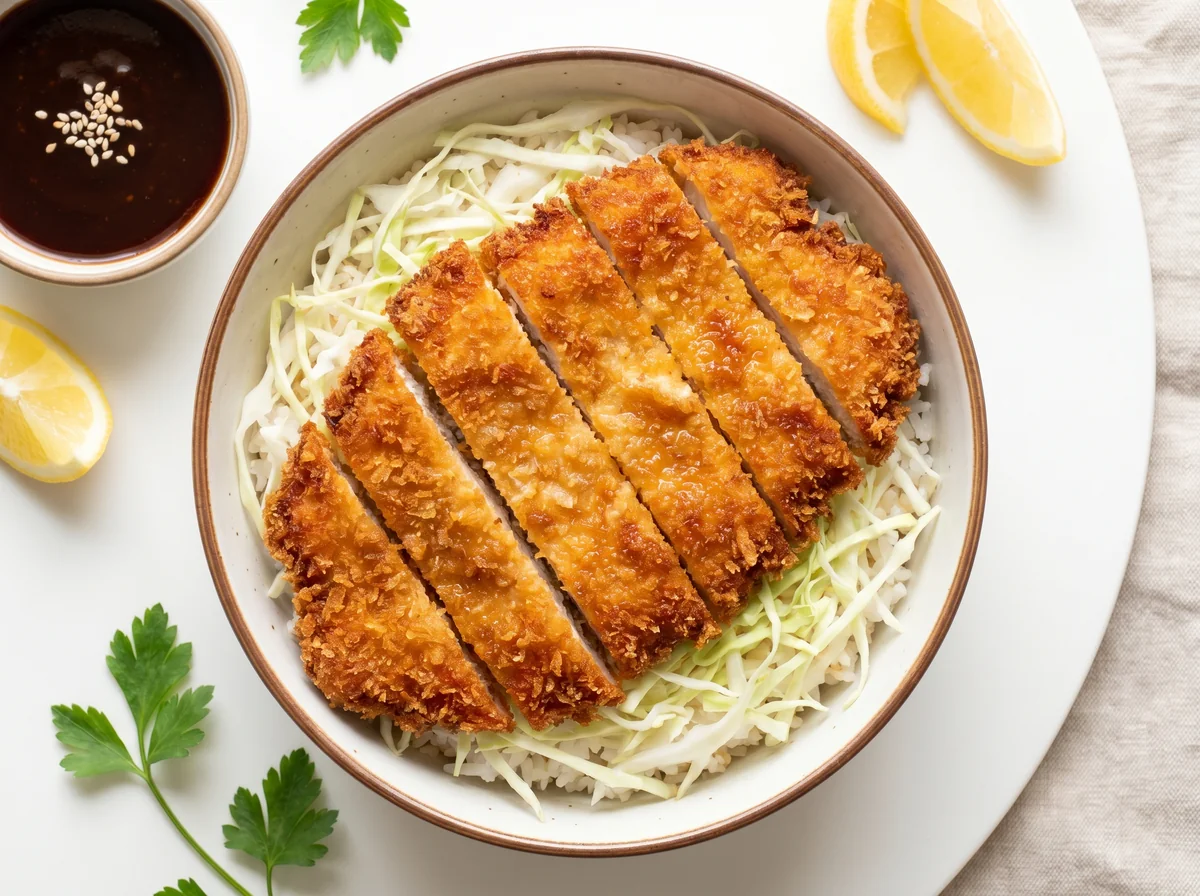
Chicken breast coated in panko breadcrumbs then baked or pan-fried until crispy, served over rice with vegetables and soy sauce. A beloved Japanese dish high in protein with a lighter baked option.
Katsu is a beloved Japanese dish — chicken coated in crunchy panko.
We offer a baked option instead of deep-frying to cut the fat while keeping the crunch, served over brown rice and vegetables for a balanced meal.
Preparation Steps
Set up the coating stations
Season the chicken slices with salt and pepper, then set up three shallow dishes: flour, beaten egg, and panko breadcrumbs. An organised station makes coating faster and neater.
Coat the chicken
Coat each slice in flour, then egg, then panko, pressing firmly so it adheres well. Panko gives that signature Japanese crunch.
Cook
Arrange the chicken on a baking tray and spray with oil. Bake at 200°C, turning once, until golden, crispy, and cooked through (74°C). Alternatively pan-fry in a little oil. Baking is a lighter choice than deep-frying.
Make the sauce
Whisk together the soy sauce, rice vinegar, sugar, sesame oil, and grated ginger until the sweet-savoury dipping sauce is smooth.
Slice and serve
Slice the katsu into strips and serve over brown rice with edamame, cucumber, and spring onion, with the sauce on the side. A balanced, crispy Japanese bowl.
Blood Sugar Impact
The glycemic index (GI) measures how quickly a food raises blood sugar, while the glycemic load (GL) measures how much a full serving raises it. Together they give the complete picture.
Glycemic Index
GI
70High
Low0–55Medium56–69High70+
A low value (≤55) means a gradual rise in blood sugar — the most suitable range for diabetes and insulin resistance.
Glycemic Load
GL
15Medium
Low0–10Medium11–19High20+
Glycemic load reflects the impact of the full serving. To lower it: take half a serving, or pair the recipe with a source of protein and fiber.
Nutritional Information
Per ServingMakes 4 servings · one serving is about 195 g of raw ingredients
Calories292 kcal15%of Daily Value*
Protein33 g66%of Daily Value*
Carbohydrates23 g8%of Daily Value*
Fat7 g9%of Daily Value*
Fiber1 g4%of Daily Value*
Sodium821 mg36%of Daily Value*
* Percent Daily Values are based on a 2,000-calorie diet per FDA food-label reference values — your daily needs may be higher or lower. Values are derived from the recipe's ingredients via the USDA database.
Troubleshooting
The most common problems when preparing Crispy Japanese Chicken Katsu, and how to fix them:
Surface did not brown
Heat too low or time too short. Raise the heat in the final minutes or use the overhead grill, watching closely.
Dry inside
Overbaked. Stick to the time and use a thermometer — pull it out as soon as it is done, as residual heat will finish the cooking.
Taste is flat with no depth
Not enough salt or spices. Season well and taste, then add fresh herbs or a squeeze of lemon (acid) to lift all the flavours.
Storage and Make-Ahead
Refrigerator (4°C)
Three days in an airtight container after cooling. Reheat thoroughly before serving.
Freezer (-18°C)
One to two months in individual portions. Thaw in the refrigerator before reheating.
Prep ahead
Prepare and chop the ingredients in advance and store in the refrigerator — assembly and cooking takes only minutes at serving time.
Reheating
Over low heat with a splash of water or in a medium oven until hot. Do not leave cooked food out of the refrigerator for more than two hours [2].
Tested Ingredient Substitutions
Original Ingredient
Tested Substitute
Ratio
Flavor Difference
Chicken
Turkey or firm tofu
Same weight
A leaner or plant-based alternative
Wheat component
Gluten-free alternative (rice / lentil / whole wheat depending on the dish)
Same quantity
For those with gluten sensitivity
Oil / fat
Extra-virgin olive oil
Same quantity
Monounsaturated fats that are better for the heart
Salt
Herbs, spices, and lemon juice
To taste
Reduces sodium while keeping plenty of flavour
How Much Does It Make? Scaling Guide
Servings
Ratio
2 (single × 2)
1/2 the quantities
4 (base)
Quantities as listed
6 (family)
1 1/2 times the quantities
8 (hosting)
Double the quantities
EEINA Nutrition Tip
Baking the katsu instead of deep-frying significantly reduces the fat while keeping the crunch. Serve over brown rice with plenty of vegetables, and keep the rice portion moderate to manage the glycaemic load.
Add This Recipe to Your Plan
The EEINA app saves your favorite recipes, calculates them from their real ingredients, and shows your daily numbers toward your goal. Try it free now.
With caution — its glycaemic index is low and the protein and fibre slow sugar absorption. Stick to a moderate portion, serve with vegetables or a salad, and avoid large amounts of white starchy sides.
How do I store leftovers?
In an airtight container in the refrigerator for a few days, or in the freezer in individual portions (except salads and seafood which have a shorter shelf life). Reheat fully once only.
Can I adapt it to my diet?
Yes — refer to the substitutions table: you can swap the protein, make it dairy-free or gluten-free, or reduce the salt and fat without losing the flavour.
Sources: USDA · University of Sydney · Gulf GSO · Our methodology · Updated on