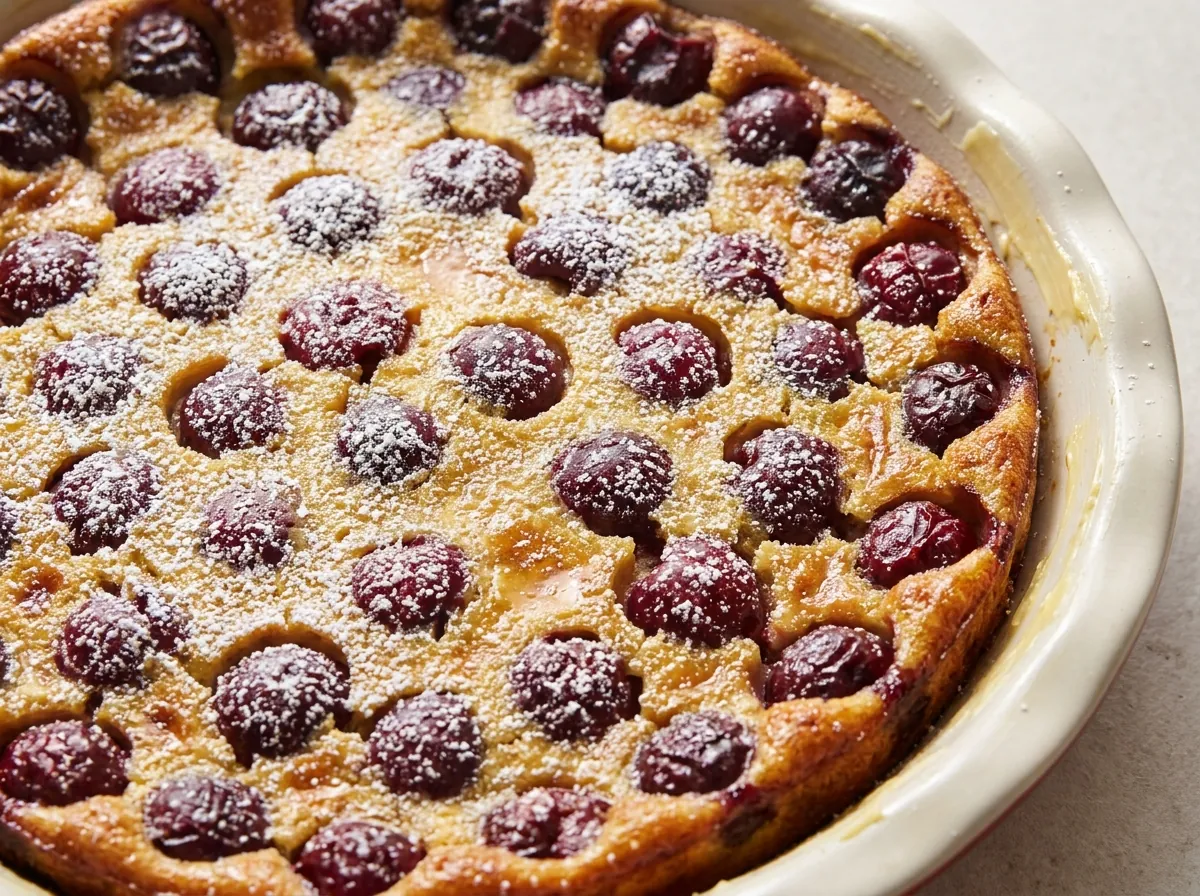
A simple French country dessert from the Limousin region, combining seasonal fruit with a light custard batter that bakes quickly.
Preparation Steps
Prepare the oven and dish
Heat the oven to 180 degrees Celsius and grease a round dish well with butter so the tart does not stick, because the greased surface makes it easy to remove after baking.
Arrange the cherries
Spread the pitted cherries in the bottom of the dish in a single even layer, as this ensures the cherries run through every slice when serving.
Whisk the eggs and sugar
Whisk the eggs with the sugar and salt until the mixture turns pale and more fluid, a sign that the sugar has dissolved and blended in.
Add the flour
Sift the flour over the mixture and fold it in gently until it disappears, taking care that there are no lumps, because they show up as white spots in the custard.
Thin the batter with milk
Add the milk and vanilla gradually while stirring until you get a smooth liquid batter resembling the consistency of thin pancake batter.
Pour and bake
Pour the batter over the cherries gently and bake about 40 minutes until the surface puffs and turns golden, which is the sign that the custard is set inside.
Cool and serve
Let the tart settle until it is warm or slightly cooled so its puff deflates and its texture sets, then dust the powdered sugar just before serving.
Blood Sugar Impact
The glycemic index (GI) measures how quickly a food raises blood sugar, while the glycemic load (GL) measures how much a full serving raises it. Together they give the complete picture.
Glycemic Index
GI
55Low
Low0–55Medium56–69High70+
A low value (≤55) means a gradual rise in blood sugar — the most suitable range for diabetes and insulin resistance.
Glycemic Load
GL
16Medium
Low0–10Medium11–19High20+
Glycemic load reflects the impact of the full serving. To lower it: take half a serving, or pair the recipe with a source of protein and fiber.
Nutritional Information
Per ServingMakes 6 servings · one serving is about 170 g of raw ingredients
Calories208 kcal10%of Daily Value*
Protein7 g14%of Daily Value*
Carbohydrates31 g11%of Daily Value*
Fat6 g8%of Daily Value*
Fiber2 g7%of Daily Value*
Sodium128 mg6%of Daily Value*
Potassium266 mg6%of Daily Value*
Phosphorus124 mg10%of Daily Value*
* Percent Daily Values are based on a 2,000-calorie diet per FDA food-label reference values — your daily needs may be higher or lower. Values are derived from the recipe's ingredients via the USDA database.
Troubleshooting
The most common problems when preparing Cherry Clafoutis, and how to fix them:
The surface does not puff
Make sure the oven is hot before placing it in. The puffing happens with high direct heat then shrinks naturally after removal.
The bottom is watery
Very juicy cherries release water, so dry them with a paper towel before arranging and reduce the milk slightly if needed.
The custard is dense like cake
You reduced the amount of milk or added too much flour, as the correct consistency is a thin liquid before baking.
Storage and Make-Ahead
Refrigerator
Keep covered for up to three days, and it is best served at room temperature or slightly warm.
Freezing
Not preferred because the custard loses its smooth texture and becomes watery after thawing.
Tested Ingredient Substitutions
Original Ingredient
Tested Substitute
Ratio
Flavor Difference
Cherries
Blueberries or sliced peaches
Same volume
Alternative seasonal fruit with a texture that holds up to baking
White flour
Almond flour
Half the amount
Gives an almond flavor with a more tender texture, and is gluten-free
Whole milk
Unsweetened plant milk
Same volume
For the dairy-free version with a slight loss of richness
White sugar
Coconut sugar
Same volume
A darker color and a light caramel flavor
How Much Does It Make? Scaling Guide
Ingredient
2 servings
4 servings (base)
8 servings
Cherries
200 g
400 g
800 g
Milk
150 ml
300 ml
600 ml
Flour
35 g
70 g
140 g
Sugar
30 g
60 g
120 g
EEINA Nutrition Tip
In authentic clafoutis the cherry pits are sometimes left in to lend a faint almond flavor, but removing them is safer when serving to children.
Add This Recipe to Your Plan
The EEINA app saves your favorite recipes, calculates them from their real ingredients, and shows your daily numbers toward your goal. Try it free now.