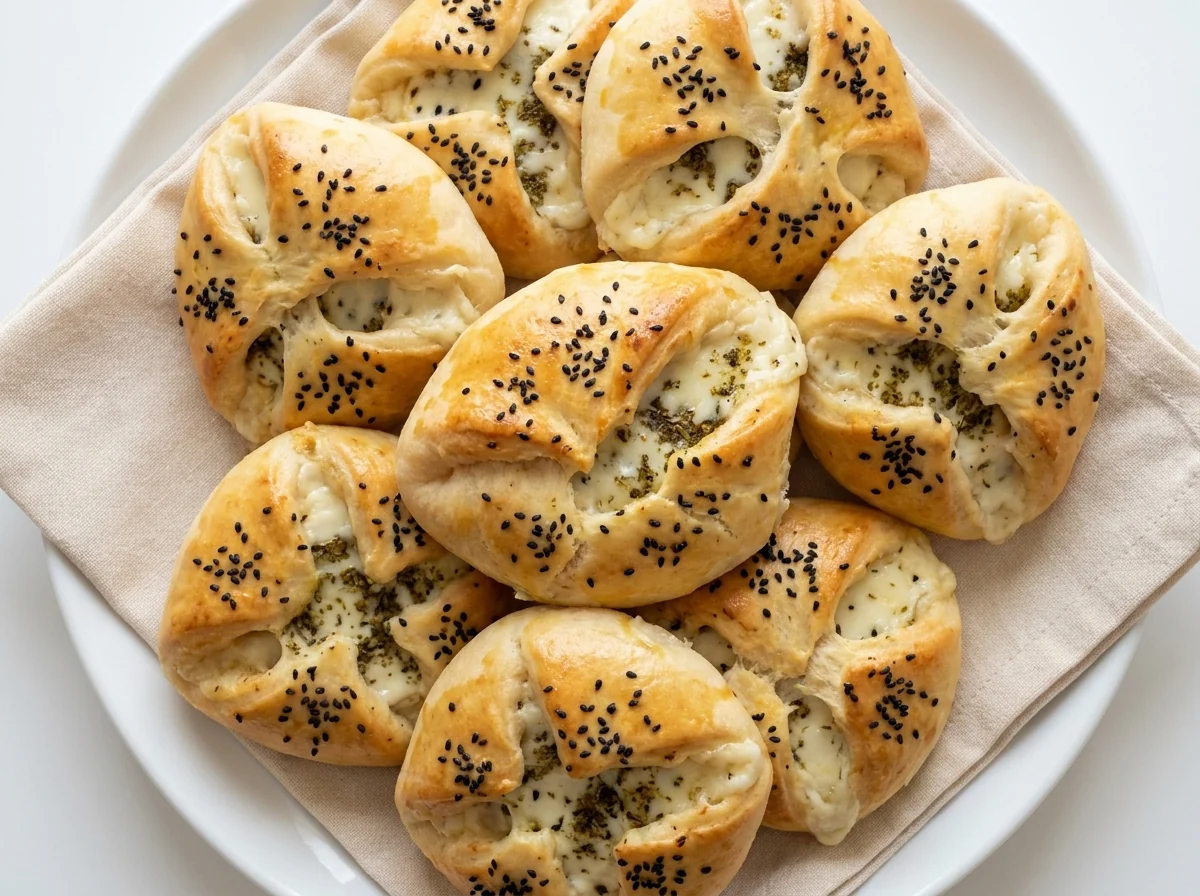
Stuffed fatayer are a pillar of Levantine pastries on Ramadan tables, and the cheese-and-za'atar filling is one of its most beloved: the saltiness of the cheese with the fragrance of za'atar in a tender home dough.
Preparation Steps
Knead the dough and let it rise
In the mixing bowl, combine the flour, yeast, sugar, and salt, then add the warm milk and olive oil and knead for eight minutes until a soft, smooth dough gathers and pulls away from the bowl wall. Cover it and leave it in a warm place for forty-five minutes until it doubles in size.
Prepare the cheese and za'atar filling
Mix the crumbled cheese with half the amount of Za'atar. Putting the za'atar inside the cheese, not just on top, makes the whole filling absorb its flavor.
Roll out and fill into boats or triangles
Divide the dough into balls the size of a large apricot, roll each ball into a circle half a centimeter thick, place a spoonful of filling in the center, and pinch the edges into an open-center boat or a closed triangle. A firm pinch will not open in the oven.
Brush the surface and bake until reddened
Arrange the fatayer on a parchment-lined tray, brush them with the egg-and-milk mixture, scatter the rest of the za'atar and the nigella seeds, and bake in a preheated oven at 220 degrees for twelve to fifteen minutes until their bottoms turn golden and their tops redden.
Serve them soft and warm
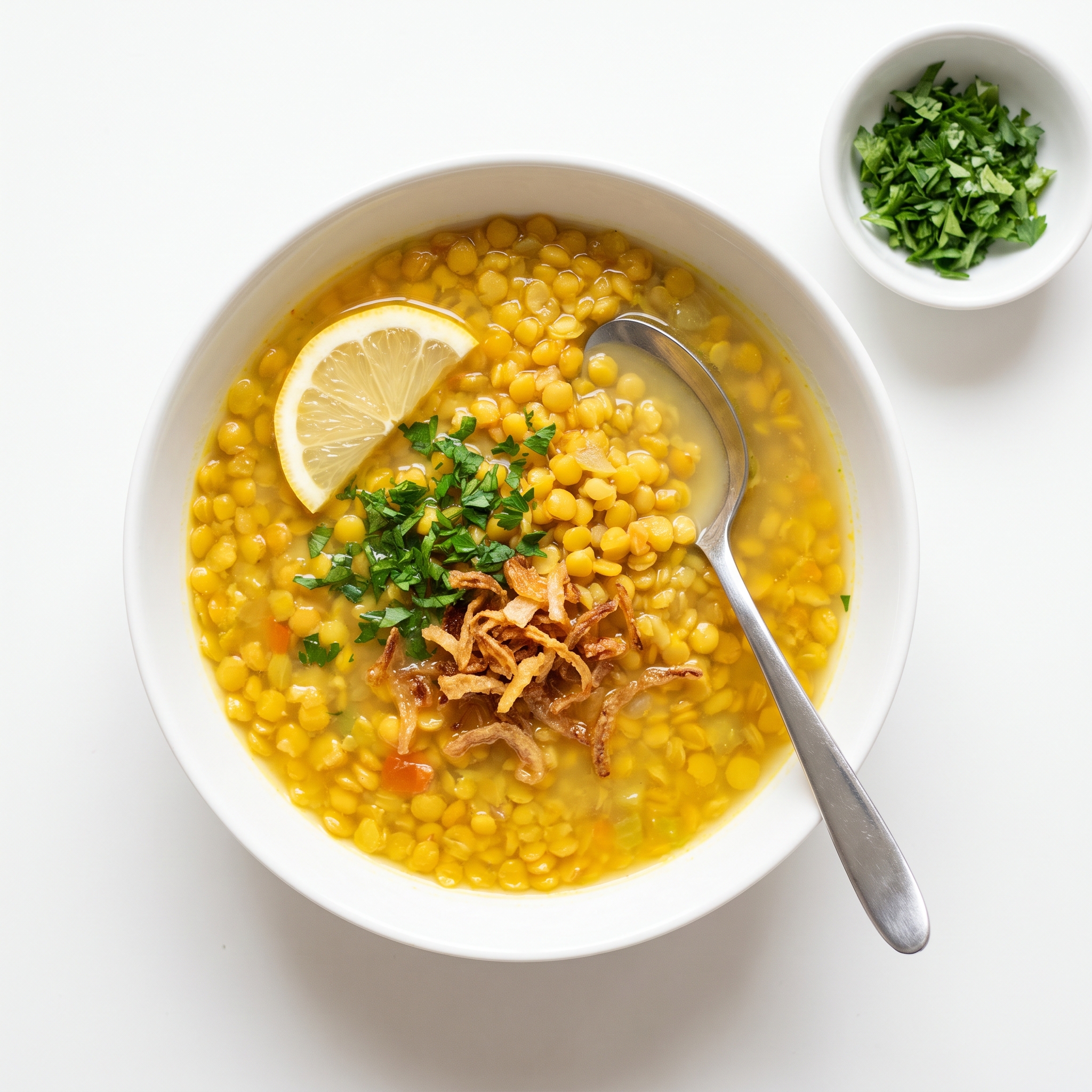
Transfer them to a basket lined with a cotton towel that keeps their tenderness, and serve them on the breakfast spread alongside the soup, or pack them for Suhoor (pre-dawn Ramadan meal) boxes and the next day's lunch.
Blood Sugar Impact
The glycemic index (GI) measures how quickly a food raises blood sugar, while the glycemic load (GL) measures how much a full serving raises it. Together they give the complete picture.
Glycemic Index
GI
71High
Low0–55Medium56–69High70+
A low value (≤55) means a gradual rise in blood sugar — the most suitable range for diabetes and insulin resistance.
Glycemic Load
GL
38High
Low0–10Medium11–19High20+
Glycemic load reflects the impact of the full serving. To lower it: take half a serving, or pair the recipe with a source of protein and fiber.
Nutritional Information
Per ServingMakes 6 servings · one serving is about 165 g of raw ingredients
Calories452 kcal23%of Daily Value*
Protein15 g30%of Daily Value*
Carbohydrates56 g20%of Daily Value*
Fat18 g23%of Daily Value*
Fiber2 g7%of Daily Value*
Sodium826 mg36%of Daily Value*
* Percent Daily Values are based on a 2,000-calorie diet per FDA food-label reference values — your daily needs may be higher or lower. Values are derived from the recipe's ingredients via the USDA database.
Troubleshooting
The most common problems when preparing Cheese and Za'atar Fatayer, and how to fix them:
The fatayer came out hard
The cause is excess flour, under-kneading, or an unheated oven. Stick to the stated weight, knead a full eight minutes, and preheat the oven fifteen minutes before baking.
Their edges opened and the filling was exposed
The pinch was not firm, or the edge was soiled with filling. Pinch with your fingertips with real pressure and keep the edges clean.
The bottom stayed pale while the top reddened
The tray was on a high rack. Move it to the middle or lower rack in the last minutes until the bottom turns golden.
The dough did not double in size
The yeast is old, or the milk was hot and damaged it. Milk at warm hand temperature, no more, and fresh yeast.
Storage and Make-Ahead
Right away or warm
Their tenderness is at its best on the first day.
At room temperature
One day in an airtight container with a cotton towel.
In the freezer
Keep baked for two months in airtight bags, and reheat in a hot oven for five minutes so they turn soft as if just baked.
Tested Ingredient Substitutions
Original Ingredient
Tested Substitute
Ratio
Flavor Difference
White cheese with mozzarella
Squeezed cottage cheese
1:1
Higher protein and less fat
Milk in the dough
Warm water
1:1
A cheaper dough with close tenderness
Half the white flour
Whole-wheat flour
1:1 for the half
Higher fiber and a brown color
The cheese-and-za'atar filling
Squeezed labneh (strained yogurt) with za'atar, filled after baking
same amount
A cold Levantine topping that suits Suhoor
How Much Does It Make? Scaling Guide
Ingredient
~20 pastries
~10 pastries
~40 pastries
Flour
400 g
200 g
800 g
Cheese
250 g
125 g
500 g
Milk
200 ml
100 ml
400 ml
EEINA Nutrition Tip
A slightly soft dough is better than a firm, over-floured one. Resist adding flour during kneading, because a dough that sticks lightly to your hand yields tender, light fatayer.
Add This Recipe to Your Plan
The EEINA app saves your favorite recipes, calculates them from their real ingredients, and shows your daily numbers toward your goal. Try it free now.
Yes. Leave it to rise slowly in the fridge, covered, until shaping time before iftar, and the slow rise increases flavor.
My fatayer dry out on the second day, what is the fix?
Do not reduce the olive oil in the dough, store them in an airtight container rather than an open bag, and reheat in a hot oven rather than the microwave, which makes them rubbery.
Which za'atar is best: the green or the sesame blend?
What is meant here is the za'atar-sesame-and-sumac blend known in our countries. Whoever has only dried green thyme can add toasted sesame and a sprinkle of sumac to it.
Do they work for school lunchboxes after Ramadan?
They are one of the most successful school-box options: they stay soft when cold, need no reheating, and children love them.