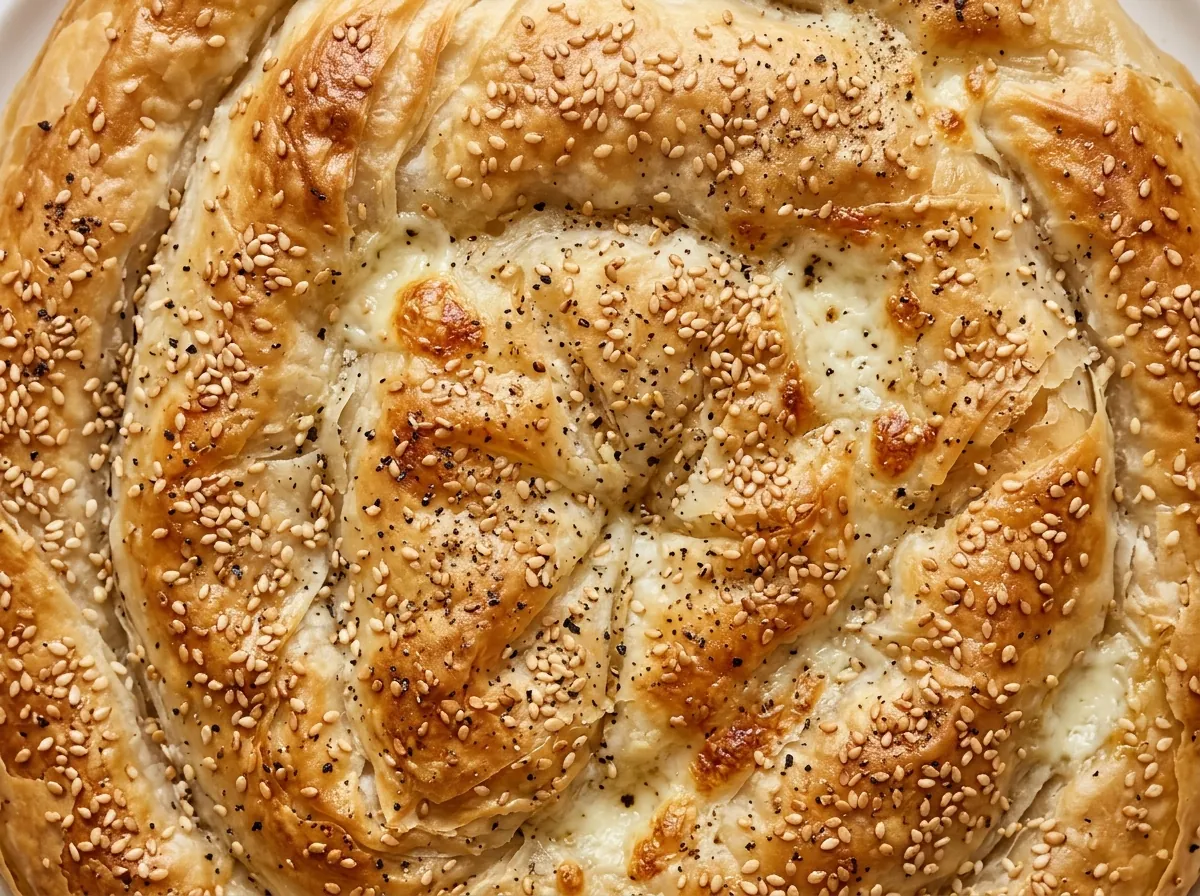
Borek is one of the pastries that spread across Levantine cafés with a cup of tea, and the white cheese filling makes it a full breakfast or a snack at any time of day.
Preparation Steps
Activate the yeast
Dissolve the yeast and sugar in half a cup of warm water and let sit for five minutes until activated.
Mix the dry
Place the flour in a deep bowl, add the salt, and mix well.
Add the butter and yeast
Add the butter and the water with the yeast dissolved in it, and mix until the ingredients come together.
Knead
Gradually add the warm water while kneading continuously until you get a soft, cohesive dough that doesn't stick to your hand.
Proof
Cover the dough and leave it in a warm place for one hour until doubled in size.
Divide into balls
Divide the dough into medium-sized balls and let them rest for ten minutes.
Roll out and shape
Roll out each ball on a flour-dusted surface with a rolling pin until medium-thick and roughly square in shape.
Fill
Place a spoonful of cheese in the middle of the square, fold the two sides over it in a triangle, and press the edges firmly to seal.
Prepare the oven
Preheat the oven to 180°C (350°F) and grease the baking tray with oil.
Beat the egg
Beat the egg in a small bowl and add a pinch of black pepper.
Arrange and brush
Arrange the borek triangles on the tray, leaving small spaces between them, and brush the surface with the beaten egg.
Bake
Sprinkle sesame seeds on top and place the tray in the oven for 30 to 35 minutes until the dough is cooked and turns a beautiful golden color.
Serving
Remove from the oven, let cool slightly, then arrange on a serving platter and serve.
Blood Sugar Impact
The glycemic index (GI) measures how quickly a food raises blood sugar, while the glycemic load (GL) measures how much a full serving raises it. Together they give the complete picture.
Glycemic Index
GI
74High
Low0–55Medium56–69High70+
A low value (≤55) means a gradual rise in blood sugar — the most suitable range for diabetes and insulin resistance.
Glycemic Load
GL
49High
Low0–10Medium11–19High20+
Glycemic load reflects the impact of the full serving. To lower it: take half a serving, or pair the recipe with a source of protein and fiber.
Nutritional Information
Per ServingMakes 6 servings · one serving is about 140 g of raw ingredients
Calories612 kcal31%of Daily Value*
Protein11 g22%of Daily Value*
Carbohydrates69 g25%of Daily Value*
Fat32 g41%of Daily Value*
Fiber3 g11%of Daily Value*
Sodium795 mg35%of Daily Value*
Potassium137 mg3%of Daily Value*
Phosphorus135 mg11%of Daily Value*
* Percent Daily Values are based on a 2,000-calorie diet per FDA food-label reference values — your daily needs may be higher or lower. Values are derived from the recipe's ingredients via the USDA database.
Troubleshooting
The most common problems when preparing Cheese Borek, Levantine Style, and how to fix them:
The dough didn't rise
Make sure the yeast is active by checking its expiry date, and leave the dough in a warmer place for longer.
The borek opens while baking
Press the edges with a fork before baking, and reduce the filling so it doesn't overflow.
The top is dry and not glossy
Beat the egg with a teaspoon of milk or water before brushing, and apply another thin layer.
Storage and Make-Ahead
Refrigerator (4°C)
Store the borek in an airtight container in the refrigerator for three days. Reheat in the oven at 150°C (300°F) for five minutes before serving.
Tested Ingredient Substitutions
Original Ingredient
Tested Substitute
Ratio
Flavor Difference
Butter
Vegetable ghee
Same amount
Gives a different flavor and a flakier texture.
White cheese
Feta with mozzarella
Half and half
You get a more melted, cohesive filling.
How Much Does It Make? Scaling Guide
Ingredient
base amount (6)
double (12)
Flour
4 cups
8 cups
Butter
1 cup
2 cups
Yeast
3 teaspoons
6 teaspoons
Salt
2 teaspoons
4 teaspoons
Sugar
1 tablespoon
2 tablespoons
EEINA Nutrition Tip
Add a teaspoon of vinegar to the kneading water; this keeps the dough soft longer after baking. Also, choose a low-moisture white cheese so it doesn't release water into the dough.
Add This Recipe to Your Plan
The EEINA app saves your favorite recipes, calculates them from their real ingredients, and shows your daily numbers toward your goal. Try it free now.
Yes, arrange the triangles on a tray and place in the freezer, then transfer to bags once firm. When baking, let them thaw completely and brush with egg before placing in the oven.
What is the best cheese for filling?
Low-salt white cheese is the classic choice. Add a little shredded mozzarella if you want a more melted texture.
Sources: USDA · University of Sydney · Our methodology · Updated on