Kabsa is a staple dish on Saudi family tables, and its absence is hard on the diabetic at family gatherings.
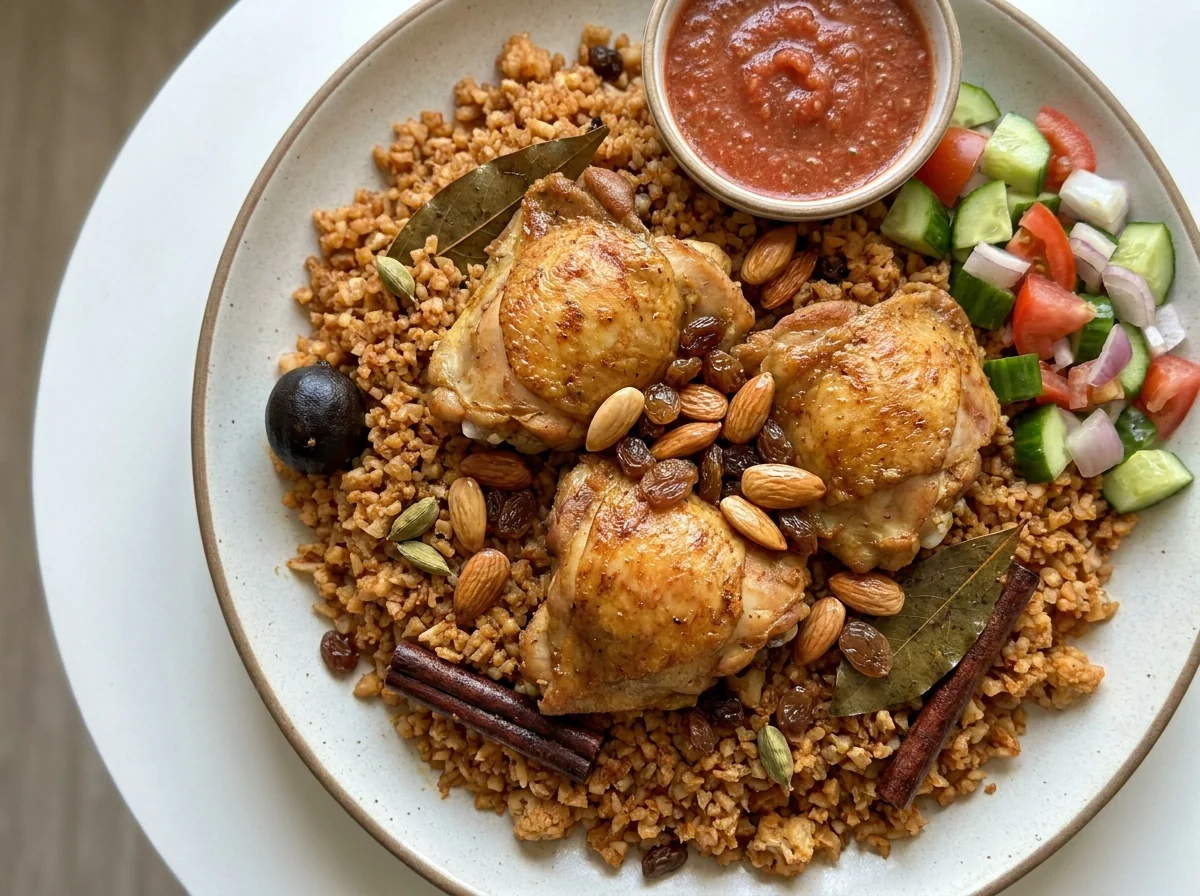
In this version, the pillars of Kabsa stay intact: the Loomi, the spices, the Daqqous, and the browned chicken, with only the rice replaced by cauliflower rice.
Preparation Steps
Prepare the red Kabsa base
Slice the onion and chop the garlic. Heat the oil in a wide pot and brown the onion well, then add the garlic and tomato paste and stir for a minute until the paste toasts, then add the grated tomato, the whole Kabsa spices, and the pierced Loomi. The flavor of Kabsa comes from these pillars, not from the rice.
Cook the chicken in the base
Toss the thigh pieces in the red sauce until coated, then cover the pot over low heat for twenty-five minutes with a little water until fully cooked (internal temperature 74 degrees).
Brown the chicken and concentrate the sauce
Lift out the chicken pieces and place them under the oven broiler for five minutes until their surface browns, and meanwhile leave the sauce over uncovered heat until it thickens and concentrates.
Add the cauliflower rice for five minutes only
Toss the squeezed cauliflower grains in the concentrated sauce for five minutes only until they absorb the color and spice. Do not leave them for twenty minutes like rice, because cauliflower absorbs faster and then its texture breaks down.
Assemble the Kabsa and serve
Spread the red rice in a wide Kabsa platter and arrange the browned chicken on top, scatter the toasted almonds and raisins, and serve with Daqqous and salad. A full-looking Kabsa with an eighth of the carbs of traditional Kabsa.
Blood Sugar Impact
The glycemic index (GI) measures how quickly a food raises blood sugar, while the glycemic load (GL) measures how much a full serving raises it. Together they give the complete picture.
Glycemic Index
GI
30Low
Low0–55Medium56–69High70+
A low value (≤55) means a gradual rise in blood sugar — the most suitable range for diabetes and insulin resistance.
Glycemic Load
GL
5Low
Low0–10Medium11–19High20+
Glycemic load reflects the impact of the full serving. To lower it: take half a serving, or pair the recipe with a source of protein and fiber.
Nutritional Information
Per ServingMakes 4 servings · one serving is about 480 g of raw ingredients
Calories353 kcal18%of Daily Value*
Protein35 g70%of Daily Value*
Carbohydrates24 g9%of Daily Value*
Fat13 g17%of Daily Value*
Fiber6 g21%of Daily Value*
Sodium310 mg13%of Daily Value*
Potassium1255 mg27%of Daily Value*
Phosphorus406 mg32%of Daily Value*
* Percent Daily Values are based on a 2,000-calorie diet per FDA food-label reference values — your daily needs may be higher or lower. Values are derived from the recipe's ingredients via the USDA database.
Troubleshooting
The most common problems when preparing Diabetic-Friendly Chicken Kabsa with Cauliflower Rice, and how to fix them:
It came out soggy like a red porridge
The cauliflower was treated like rice and left too long. Five minutes only in a pre-concentrated sauce, this is the first rule of the swap.
Its flavor is weaker than the usual Kabsa
Some pillars were dropped along with the rice. The Loomi, the whole spices, and browning the onion and chicken are the source of flavor, so do not cut them short.
It came out watery despite concentrating the sauce
The cauliflower was not squeezed, so it added its water. Always squeeze the grains with a towel before adding them.
The chicken came out pale in color
The broiler browning was skipped. Five minutes under the broiler gives the browned surface that distinguishes chicken Kabsa.
Storage and Make-Ahead
Right away
Serve hot in its wide platter with the Daqqous.
In the fridge
Keeps for two days, and the cauliflower softens more over time: acceptable but not like fresh.
The chicken in its sauce on its own
Keeps for three days in the fridge or a month in the freezer, with the cauliflower prepared fresh at serving. This split gives the best result.
Tested Ingredient Substitutions
Original Ingredient
Tested Substitute
Ratio
Flavor Difference
The chicken
Cubed meat with a longer cooking time
same amount
Meat Kabsa in the same way
The raisins
Omitting them
same amount
The raisins' sugar is counted, and the almonds alone are enough for the topping
Half the swap
Half basmati rice and half cauliflower
same amount
A gradual option for those not yet used to the full swap
The Daqqous
Kept as is
same amount
Its carbs are near-zero anyway
How Much Does It Make? Scaling Guide
Ingredient
4 servings
2 servings
8 servings
Chicken
600 g
300 g
1.2 kg
Cauliflower rice
800 g
400 g
1.6 kg
Tomatoes
280 g
140 g
560 g
EEINA Nutrition Tip
The cauliflower rice stays in the sauce for five minutes only, not twenty minutes like ordinary rice. The reason is that cauliflower absorbs the color and spice in its first five minutes and then its texture starts to break down, so if left too long it comes out soggy. That is why we concentrate the sauce before adding it, then toss it in for five minutes.
Add This Recipe to Your Plan
The EEINA app saves your favorite recipes, calculates them from their real ingredients, and shows your daily numbers toward your goal. Try it free now.
How much does it save versus rice Kabsa in numbers?
A serving has about 14 g of net carbs compared with about 70 for rice Kabsa, and the glycemic load drops from about 55 to about 6. With this, a diabetic eats a full-looking Kabsa without a large rise in blood sugar after lunch.
Do non-diabetic household members notice the difference?
Anyone used to rice will notice the difference, but the rich sauce and the browned chicken carry most of the flavor. Many households cook two pots, or adopt the half-swap as a first stage.
Why thighs specifically?
Because they withstand the long cooking in the sauce and stay tender and juicy, while breasts dry out in this type of cooking.
What about the rest of the spread for a diabetic?
The Daqqous and salad are very low in carbs, the almonds are a light scatter, and only the raisins' sugar is counted. Most of the Kabsa spread is suitable anyway, except for the rice.