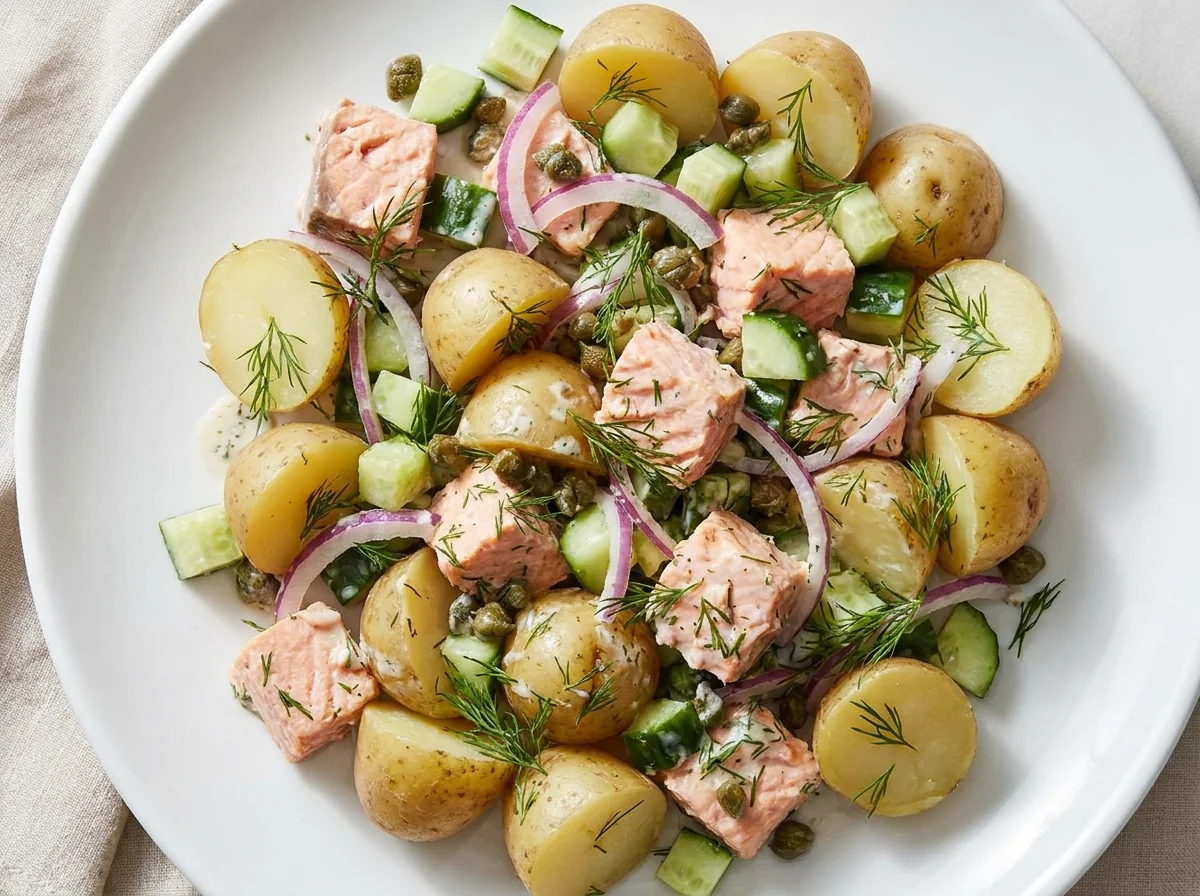
Canned salmon is an excellent economical option for anyone caring for their heart health: omega-3 close to the fresh fillet at about a third of its price, with extra calcium in its soft bones.
A potato and dill salad in the northern European style turns it into a complete lunch.
Preparation Steps
Drain the salmon and mash its soft bones
Drain the can and flake the salmon into large pieces, and mash the soft bones with a fork instead of throwing them away so they disappear into the salad, as they are the richest part of the can in calcium.
Boil the potatoes and season them warm
Wash the potatoes and boil them in their skins until tender, then halve them while warm and sprinkle them with half the lemon juice. Warm potatoes absorb the seasoning into their interior.
Prepare the yogurt, mustard, and dill dressing
Wash and chop the dill, and mix the yogurt, mustard, the rest of the lemon, the oil, and the chopped dill. Dill is a usual companion to salmon in Nordic kitchens.
Assemble the salad gently
Wash the cucumber and cut it into dice, and place the potatoes, then the cucumber, onion, and capers, then the salmon in large pieces over them, and drizzle the dressing without rough tossing, because rough tossing crushes the soft salmon.
Serve
A complete omega-3 lunch at the cost of a single can: an economical option that makes the weekly serving of oily fish easy.
Blood Sugar Impact
The glycemic index (GI) measures how quickly a food raises blood sugar, while the glycemic load (GL) measures how much a full serving raises it. Together they give the complete picture.
Glycemic Index
GI
68Medium
Low0–55Medium56–69High70+
A low value (≤55) means a gradual rise in blood sugar — the most suitable range for diabetes and insulin resistance.
Glycemic Load
GL
16Medium
Low0–10Medium11–19High20+
Glycemic load reflects the impact of the full serving. To lower it: take half a serving, or pair the recipe with a source of protein and fiber.
Nutritional Information
Per ServingMakes 3 servings · one serving is about 295 g of raw ingredients
Calories295 kcal15%of Daily Value*
Protein21 g42%of Daily Value*
Carbohydrates27 g10%of Daily Value*
Fat11 g14%of Daily Value*
Fiber4 g14%of Daily Value*
Sodium215 mg9%of Daily Value*
* Percent Daily Values are based on a 2,000-calorie diet per FDA food-label reference values — your daily needs may be higher or lower. Values are derived from the recipe's ingredients via the USDA database.
Troubleshooting
The most common problems when preparing Canned Salmon Salad with Potatoes and Dill, and how to fix them:
The salmon broke up and disappeared
It was tossed roughly. Place the large pieces over the salad and drizzle the dressing, since its visible presence is part of the dish.
The bones bothered some eaters
They were not mashed well. Full mashing with the fork hides them completely, or use 'skinless and boneless' cans for whoever insists, with less calcium.
The potatoes fell apart
The variety is soft or the boiling was too long. Use small, firm potatoes and check the boiling with a knife.
It came out too salty
The saltiness of the capers met the saltiness of the can. Drain the can well and rinse the capers, and there is no need for added salt at all.
Storage and Make-Ahead
Immediately or cold
Eaten fresh or cold, and both ways are good.
In the refrigerator
Two days in an airtight container, a cold work lunch ready to go.
Pantry stock
Salmon cans last on the shelf for about two years, making them one of the longest-keeping healthy home stocks.
Tested Ingredient Substitutions
Original Ingredient
Tested Substitute
Ratio
Flavor Difference
The canned salmon
Canned mackerel
same amount
Cheaper with close omega-3
The potatoes
Beans from our batch
same amount
A lower-carbohydrate version
The dill
Parsley and mint
same amount
A Levantine flavor instead of the Nordic one
The capers
Chopped olives
same amount
An available alternative saltiness
How Much Does It Make? Scaling Guide
Ingredient
3 servings
1 1/2 servings
6 servings
Salmon
210 g
105 g
420 g
Potatoes
400 g
200 g
800 g
Yogurt
100 g
50 g
200 g
EEINA Nutrition Tip
Mash the soft bones of the canned salmon and do not throw them away. The bones were cooked by the factory's pressure until they crush with a press of a fork, and they are the richest part of the can in calcium (about a third of the day's need in the can) and disappear completely into the salad after mashing. Throwing them away loses the can half its value, and this is an advantage the fresh fillet does not have.
Add This Recipe to Your Plan
The EEINA app saves your favorite recipes, calculates them from their real ingredients, and shows your daily numbers toward your goal. Try it free now.
Canned versus fresh, how much does it really lose?
The omega-3 and protein are very close because it is canned cooked shortly after the catch. It loses the premium texture and gains the calcium, the price, and the long storage, making it the most suitable for salads and patties.
How is the serving counted?
About 280 calories with about 18 g of protein, ample omega-3, and the bone calcium, for less than seven riyals.
Where do I find it?
On the tuna shelf in the large supermarkets, and the pink type (pink salmon) is the cheapest and most common.
How does it differ from potato salad with yogurt?
That is a side dish for grills, and this is a complete lunch with marine protein. The base is the same and the purpose is different.