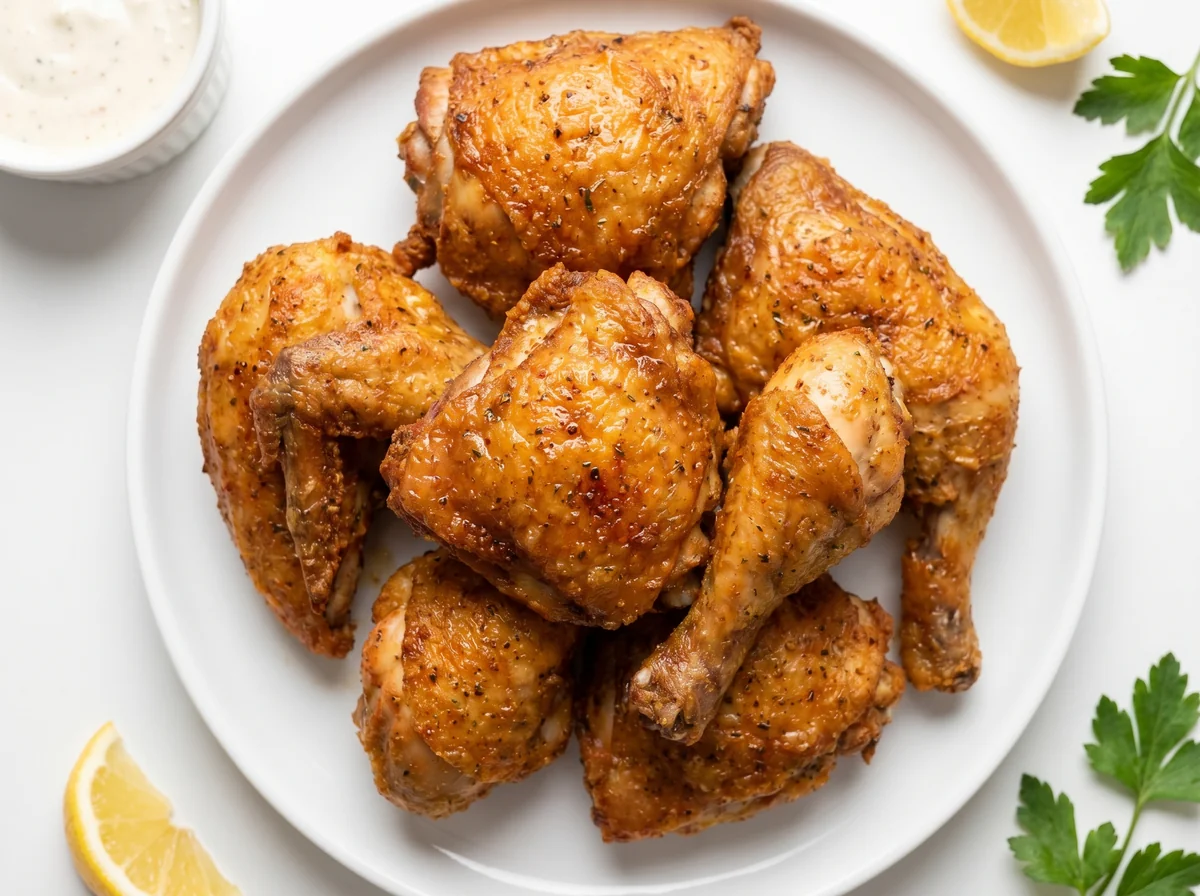
Chicken pieces marinated in buttermilk and spices, coated in seasoned flour, and pressure-fried until the outside is shatteringly crispy and the inside remains juicy. A Gulf favorite found in every broast restaurant from Riyadh to Kuwait City.
Broasted chicken arrived in the Gulf in the 1970s and became one of the most popular restaurant dishes across Saudi Arabia and the wider Gulf.
The combination of a spiced buttermilk marinade and a pressurized fry gives a uniquely crispy exterior while keeping the chicken inside extraordinarily moist. Every Gulf family has a favorite broast spot — this recipe brings that crunch home.
Preparation Steps
Marinate
Combine the buttermilk with the garlic powder, paprika, cumin, salt, and pepper. Submerge the chicken pieces, cover, and refrigerate for at least 4 hours (or overnight). Buttermilk tenderizes the meat and helps the coating adhere.
Make the coating
Whisk together the flour, cornstarch, baking powder, and a teaspoon each of salt and pepper in a wide bowl. The cornstarch is what gives broasted chicken its signature shattering crunch.
Coat the chicken
Remove the chicken from the buttermilk, letting the excess drip off, then dredge thoroughly in the flour mixture, pressing it in firmly. For extra crunch, dip briefly back in the buttermilk and coat again.
Fry
Heat oil to 175°C in a deep pot or pressure fryer. Fry the pieces for 12 to 15 minutes until deep golden and cooked through to an internal temperature of 74°C [1]. Do not crowd the pot.
Drain and serve
Drain the chicken on a rack (not kitchen paper, which traps steam) for 3 to 5 minutes before serving. Serve with garlic sauce, pickles, and flatbread for the classic Gulf broast experience.
[ingredient]
. .
Blood Sugar Impact
The glycemic index (GI) measures how quickly a food raises blood sugar, while the glycemic load (GL) measures how much a full serving raises it. Together they give the complete picture.
Glycemic Index
GI
55Low
Low0–55Medium56–69High70+
A low value (≤55) means a gradual rise in blood sugar — the most suitable range for diabetes and insulin resistance.
Glycemic Load
GL
8Low
Low0–10Medium11–19High20+
Glycemic load reflects the impact of the full serving. To lower it: take half a serving, or pair the recipe with a source of protein and fiber.
Nutritional Information
Per ServingMakes 4 servings · one serving is about 440 g of raw ingredients
Calories962 kcal48%of Daily Value*
Protein70 g140%of Daily Value*
Carbohydrates14 g5%of Daily Value*
Fat68 g87%of Daily Value*
Fiber0 g0%of Daily Value*
Sodium331 mg14%of Daily Value*
* Percent Daily Values are based on a 2,000-calorie diet per FDA food-label reference values — your daily needs may be higher or lower. Values are derived from the recipe's ingredients via the USDA database.
Troubleshooting
The most common problems when preparing Gulf-Style Broasted Chicken, and how to fix them:
Coating fell off during frying
Coating not pressed in firmly enough, or chicken was too wet. Pat the chicken dry after the buttermilk, press the flour coating firmly, and let it rest 5 minutes before frying so the coating adheres.
Outside golden but inside raw
Oil too hot — the exterior cooked before the inside. Lower the oil temperature to 170-175°C and fry for a longer time. Use a thermometer to check the internal temperature (74°C) [1].
Not crispy
Oil not hot enough or pieces crowded the pot. Fry in batches and ensure the oil is at temperature before each batch. Draining on a rack (not paper) preserves crunch.
Coating too thick and doughy
Too much flour built up. After dredging, shake off the excess flour vigorously — a thin even coating gives better crunch than a heavy one.
Greasy result
Oil temperature dropped when chicken was added. Fry fewer pieces at a time and maintain oil temperature throughout.
Flat flavor
Both the marinade and the coating flour need to be well seasoned. Taste a pinch of the coating flour dry — it should taste seasoned before the chicken goes in.
Storage and Make-Ahead
Refrigerator (4°C)
3 days in an airtight container after cooling. Reheat in an oven or air fryer to restore crunch — microwave reheating makes the coating soggy.
Freezer (-18°C)
1 to 2 months. Freeze on a tray before bagging so the pieces do not stick. Reheat from frozen in a 200°C oven for 20-25 minutes.
Meal prep
Marinate the chicken up to 24 hours in advance. The coating flour mix can also be prepared and stored dry in a sealed container.
Reheating
Oven at 200°C for 12 to 15 minutes on a rack, or air fryer at 190°C for 8 minutes. Do not leave out of the refrigerator for more than 2 hours [2].
Tested Ingredient Substitutions
Original Ingredient
Tested Substitute
Ratio
Flavor Difference
All-purpose flour
Rice flour or gluten-free flour blend
same amount
For those with gluten sensitivity — rice flour gives an even crispier result
Buttermilk
Dairy-free yogurt thinned with lemon juice, or plant-based milk with 1 tablespoon vinegar
same amount
For the dairy-free version — still tenderizes and helps the coating adhere
Chicken thighs and drumsticks
Bone-in chicken breast
same weight
Lower in fat — reduce frying time slightly as breast cooks faster
Deep frying
Air fryer at 190°C for 20 minutes, turning once
—
Significantly reduces fat — spray the coated chicken generously with oil before air frying
Paprika
Smoked paprika
same amount
Adds a smoky depth to the coating
How Much Does It Make? Scaling Guide
Servings
Chicken
Buttermilk (brine)
Flour
2 (half recipe)
4 pieces
1 cup
½ cup
4 (base)
8 pieces
2 cups
1 cup
8 (feast)
16 pieces
4 cups
2 cups
EEINA Nutrition Tip
The glycemic load is low despite a high GI because the carbohydrate content is very low (only 8 g per serving from the thin flour coating). The protein is very high at 65 g per serving. Remove the skin before eating to reduce saturated fat significantly, and balance the meal with a large salad and avoid having bread alongside.
Add This Recipe to Your Plan
The EEINA app saves your favorite recipes, calculates them from their real ingredients, and shows your daily numbers toward your goal. Try it free now.
With caution — the glycemic load is actually low (only 6) despite the high GI because there are very few carbohydrates. The protein is very high. Remove the skin and coating if following a strict low-carb plan, and balance with non-starchy vegetables.
What is the difference between broasted and fried chicken?
Traditional broasting uses a special pressure fryer that seals in moisture under pressure while frying, giving a juicier interior than regular deep frying. At home, a regular deep pot approximates the result — the buttermilk marinade compensates for the lack of pressure.
Can I make this in an air fryer?
Yes — spray the coated chicken generously with oil and air fry at 190°C for 20 to 25 minutes, turning halfway. The result is less crispy than deep frying but much lower in fat.