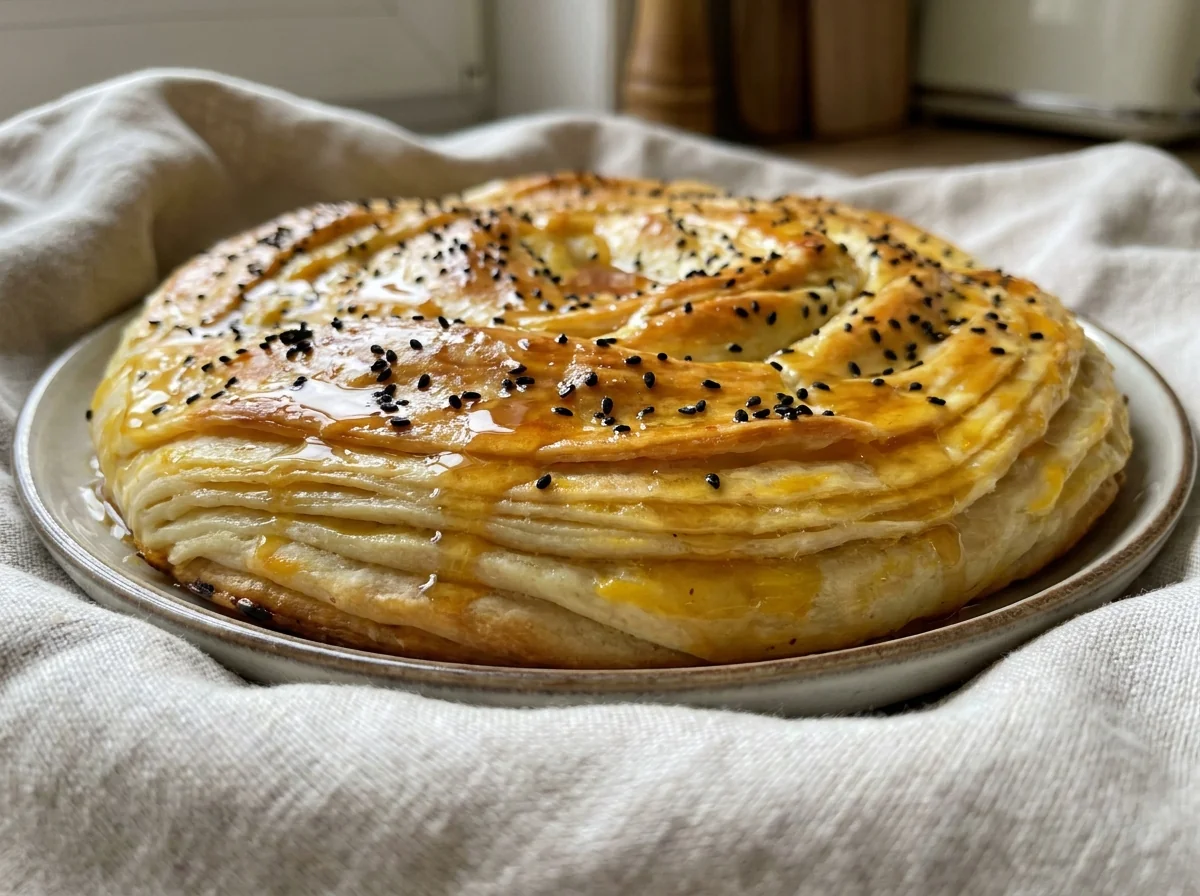
Bint al-sahn, or sabaya as it is known in some regions, is the crown of Yemeni tables at weddings, banquets, and in Ramadan.
Its layers are rolled thin as silk and brushed with ghee, layer over layer, then baked until golden and drenched in warm honey and nigella seeds. It is served in a single dish around which the family gathers to pluck at it with their hands, a symbol of generosity and celebration in Yemen.
Preparation Steps
Activating the yeast
Dissolve the yeast in a little warm water and leave it until it activates and froths, about ten minutes.
Kneading and proofing
Mix the flour and salt, then add the eggs, part of the melted ghee, and the activated yeast, and knead for about ten minutes until you have a smooth, elastic dough, then let it rest for half an hour until it proofs.
Dividing and rolling
Divide the dough into ten balls, and roll out each ball very thin until it is almost translucent, for the thinness of the layers is the secret of bint al-sahn.
Stacking the layers
Stack the layers over one another in a greased tray, brushing each layer with melted ghee before placing the next, until all the layers are done.
The top and baking
Brush the top with egg yolk and sprinkle on the nigella seeds, then bake it in a hot oven for about twenty-five minutes until the top turns golden.
The honey and serving
Pour the warm honey over its top as soon as it comes out of the oven while it is hot so it seeps between the layers, and serve it warm.
Blood Sugar Impact
The glycemic index (GI) measures how quickly a food raises blood sugar, while the glycemic load (GL) measures how much a full serving raises it. Together they give the complete picture.
Glycemic Index
GI
69Medium
Low0–55Medium56–69High70+
A low value (≤55) means a gradual rise in blood sugar — the most suitable range for diabetes and insulin resistance.
Glycemic Load
GL
36High
Low0–10Medium11–19High20+
Glycemic load reflects the impact of the full serving. To lower it: take half a serving, or pair the recipe with a source of protein and fiber.
Nutritional Information
Per ServingMakes 8 servings · one serving is about 110 g of raw ingredients
Calories444 kcal22%of Daily Value*
Protein8 g16%of Daily Value*
Carbohydrates54 g20%of Daily Value*
Fat22 g28%of Daily Value*
Fiber2 g7%of Daily Value*
Sodium275 mg12%of Daily Value*
* Percent Daily Values are based on a 2,000-calorie diet per FDA food-label reference values — your daily needs may be higher or lower. Values are derived from the recipe's ingredients via the USDA database.
Troubleshooting
The most common problems when preparing Bint Al-Sahn (Yemeni Layered Honey Pastry), and how to fix them:
The layers are thick and heavy
Roll the dough thinner and make more layers, for the thinness is what gives it its lightness and flakiness.
The top is pale and not golden
Brush the top well with egg yolk and raise the oven temperature in the final minutes of baking.
The honey does not seep in
Pour the honey while it is hot as soon as it comes out of the oven, for the heat opens the layers and draws the honey inside them.
Storage and Make-Ahead
Room temperature
It stays soft the same day when covered, and it is best eaten fresh and warm on the day it is made.
Refrigerator
Keep it in an airtight container for up to two days, reheat it in a warm oven, and add a drizzle of honey before serving.
Tested Ingredient Substitutions
Original Ingredient
Tested Substitute
Ratio
Flavor Difference
ghee
melted butter
same weight, 150 g
Butter is lighter in flavor while ghee is authentic to the Yemeni taste
honey
sidr honey
same weight, 150 g
Yemeni sidr honey is the original and deeper in flavor
instant yeast
fresh yeast
double the weight, 20 g
Fresh yeast is a substitute, and we double its amount because it is less concentrated
nigella seeds
sesame
same weight, 5 g
Sesame is a common substitute for the top, while nigella seeds are closer to the Yemeni tradition
How Much Does It Make? Scaling Guide
Ingredient
Half amount
Full amount (base)
Double
Flour
200 g
400 g
800 g
Eggs
75 g
150 g
300 g
Ghee
75 g
150 g
300 g
Instant yeast
5 g
10 g
20 g
Honey
75 g
150 g
300 g
EEINA Nutrition Tip
Roll each layer very thin until it is almost translucent, for the thinner and more numerous the layers, the lighter and flakier bint al-sahn becomes, and pour the honey while it is hot so it seeps between the layers.
Add This Recipe to Your Plan
The EEINA app saves your favorite recipes, calculates them from their real ingredients, and shows your daily numbers toward your goal. Try it free now.