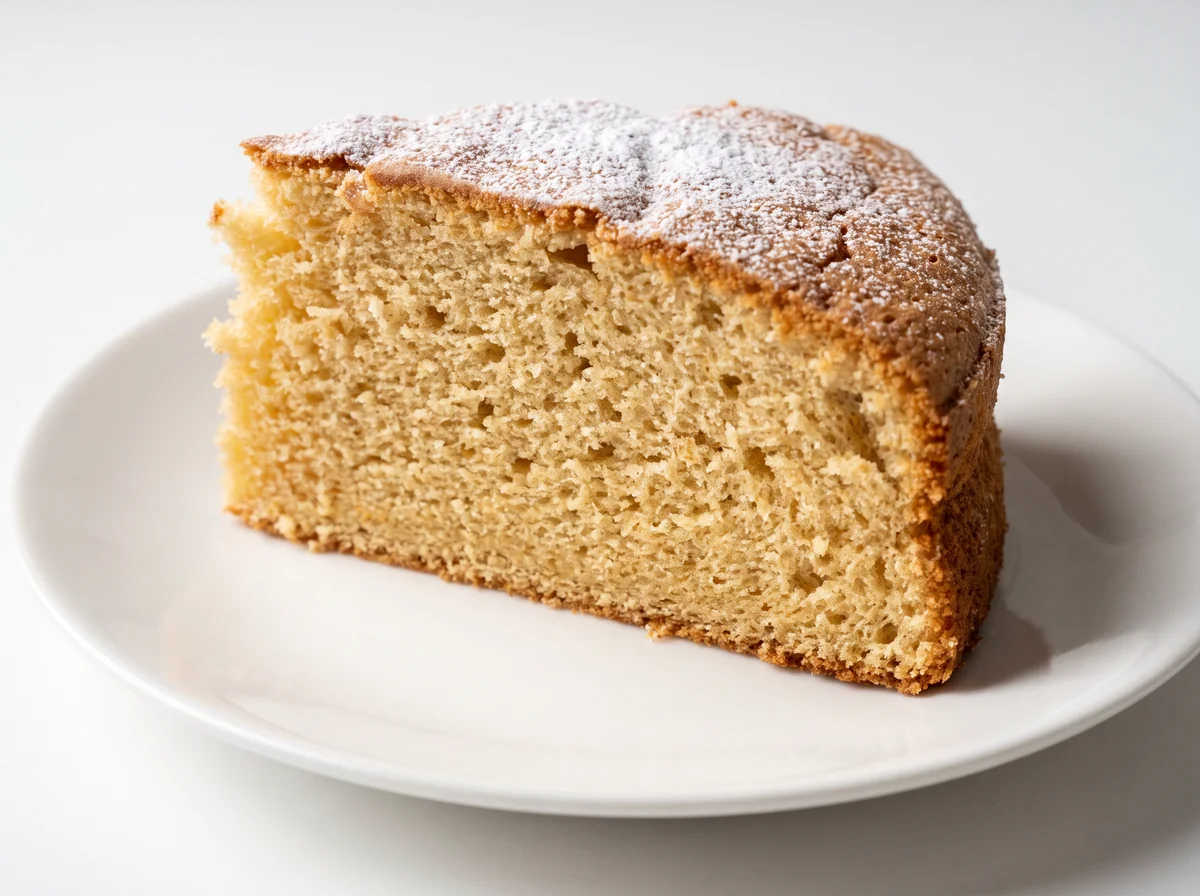
A light, airy sponge cake with a simple base of eggs and sugar, suitable as a base for many toppings with cream, chocolate, and fruit. A classic recipe used by both beginners and professionals.
Sponge cake is one of the simplest and most versatile types of cake.
It originated in Western kitchens in the nineteenth century with the spread of the electric whisk, and became a base for many decorations with cream, chocolate, and fruit. It works as a base for tall layer cakes at occasions.
Preparation Steps
Prepare the oven and the pan
Preheat the oven to 180°C. Grease the cake pan with oil and dust the inside with flour, then shake off the excess so the cake does not stick when baked.
Prepare the dry ingredients
In a medium bowl, mix the flour with the cornstarch and baking powder with a hand whisk or spoon until the dry ingredients are fully combined and ready to be added.
Whisk the eggs
In a deep bowl, whisk the eggs with the vanilla using an electric whisk on medium speed for two minutes until they thicken and their color lightens and you notice bubbles on the surface.
Add the sugar and the dry
Add the sugar gradually while continuing to whisk until the sugar dissolves and the mixture becomes pale and airy. Then add the flour and cornstarch mixture gradually, whisking slowly until the mixture is uniform and has a creamy texture.
Bake the cake
Pour the mixture into the prepared pan and level the surface with a spoon. Place it in the preheated oven and leave it 60 minutes until it is done and the top turns golden, and insert a wooden skewer into the middle; if it comes out clean, the cake is done.
Cool and serve
Take the cake out of the oven and leave it to cool in the pan for 10 minutes, then flip it onto a wire rack until it cools completely. When desired, cut it into layers, fill it, and decorate it with cream, chocolate, or fruit to taste.
Blood Sugar Impact
The glycemic index (GI) measures how quickly a food raises blood sugar, while the glycemic load (GL) measures how much a full serving raises it. Together they give the complete picture.
Glycemic Index
GI
67Medium
Low0–55Medium56–69High70+
A low value (≤55) means a gradual rise in blood sugar — the most suitable range for diabetes and insulin resistance.
Glycemic Load
GL
34High
Low0–10Medium11–19High20+
Glycemic load reflects the impact of the full serving. To lower it: take half a serving, or pair the recipe with a source of protein and fiber.
Nutritional Information
Per ServingMakes 8 servings · one serving is about 90 g of raw ingredients
Calories264 kcal13%of Daily Value*
Protein7 g14%of Daily Value*
Carbohydrates52 g19%of Daily Value*
Fat3 g4%of Daily Value*
Fiber1 g4%of Daily Value*
Sodium203 mg9%of Daily Value*
Potassium86 mg2%of Daily Value*
Phosphorus282 mg23%of Daily Value*
* Percent Daily Values are based on a 2,000-calorie diet per FDA food-label reference values — your daily needs may be higher or lower. Values are derived from the recipe's ingredients via the USDA database.
Troubleshooting
The most common problems when preparing Basic Sponge Cake, and how to fix them:
The cake sinks in the middle
Whisk the eggs properly until they thicken before adding the dry ingredients. And put the cake in the oven as soon as the mixture is ready, and avoid opening the door during the first 30 minutes.
The cake is dense
Whisk the eggs longer until they double in volume before adding the flour. And check the baking powder expiration date.
Storage and Make-Ahead
Refrigerator (4°C)
Keep the cake in a sealed container in the refrigerator for up to 5 days. And cover it with a damp towel to keep it moist.
Tested Ingredient Substitutions
Original Ingredient
Tested Substitute
Ratio
Flavor Difference
baking powder
baking soda with a teaspoon of vinegar
1 tablespoon in the same amount
Gives a similar result but slightly changes the flavor of the cake.
fine sugar
regular fine sugar
cup for cup
A very close result, but fine dissolves faster.
EEINA Nutrition Tip
Put the cake in the oven right after finishing the whisking, since the delay drops the air that makes it airy. And do not open the oven door before at least 30 minutes so the cake does not fall.
Add This Recipe to Your Plan
The EEINA app saves your favorite recipes, calculates them from their real ingredients, and shows your daily numbers toward your goal. Try it free now.