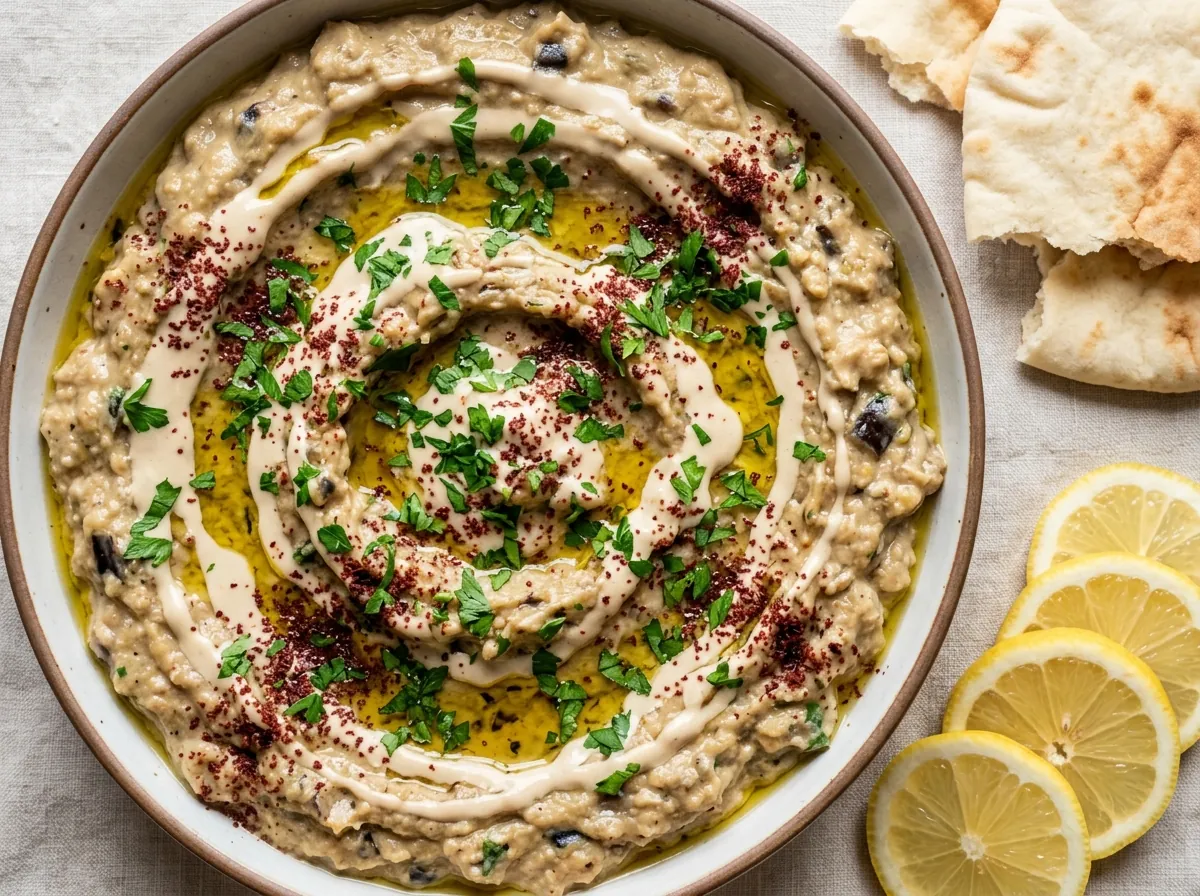
Baba ghanoush is one of the oldest Levantine meze dishes, with roots dating back to Damascus and Aleppo.
The extra tahini gives it the deeper, creamier texture that many families prefer, and balances the bitterness of the roasted eggplant. At suhoor, it stimulates the appetite and nourishes the body with starchy protein and potassium.
Preparation Steps
Roast the eggplant
Preheat the oven to 220 degrees or light the charcoal. Poke the eggplant with a fork in several places and place it on a baking tray or on a grill. Roast it for 25 to 30 minutes until it becomes completely soft and the skin chars. Cover it and let it cool.
Prepare the eggplant
Peel the roasted eggplant and discard the charred skin. Mash the flesh with the tines of a fork in a deep bowl, straining out the excess liquid through a fine sieve. Add the crushed garlic, cumin, and salt.
Whisk the tahini
In a bowl, whisk the tahini with the lemon juice and two spoonfuls of cold water until it softens and takes on the texture of a liquid cream. Add cold water a spoonful at a time if it thickens too much.
Combine the ingredients
Pour the whisked tahini over the eggplant and fold gently. Cover the bowl and place it in the refrigerator for 20 minutes to let the flavors meld.
Serve
Transfer the baba ghanoush to a wide plate and form a small well in the center. Pour the olive oil into it and sprinkle with sumac and parsley. Serve with warm Arabic bread and lemon slices.
Blood Sugar Impact
The glycemic index (GI) measures how quickly a food raises blood sugar, while the glycemic load (GL) measures how much a full serving raises it. Together they give the complete picture.
Glycemic Index
GI
34Low
Low0–55Medium56–69High70+
A low value (≤55) means a gradual rise in blood sugar — the most suitable range for diabetes and insulin resistance.
Glycemic Load
GL
5Low
Low0–10Medium11–19High20+
Glycemic load reflects the impact of the full serving. To lower it: take half a serving, or pair the recipe with a source of protein and fiber.
Nutritional Information
Per ServingMakes 4 servings · one serving is about 180 g of raw ingredients
Calories267 kcal13%of Daily Value*
Protein6 g12%of Daily Value*
Carbohydrates21 g8%of Daily Value*
Fat19 g24%of Daily Value*
Fiber6 g21%of Daily Value*
Sodium484 mg21%of Daily Value*
* Percent Daily Values are based on a 2,000-calorie diet per FDA food-label reference values — your daily needs may be higher or lower. Values are derived from the recipe's ingredients via the USDA database.
Troubleshooting
The most common problems when preparing Baba Ghanoush with Extra Tahini, and how to fix them:
The color is too dark
Lower the oven temperature and cover the eggplant with foil. Over-roasting turns the flesh into a strong, smoky taste.
The taste is bitter
Double the salt and lemon. Larger eggplants tend to be more bitter, so choose medium-sized ones.
The texture is watery
Strain the eggplant in a fine sieve for ten minutes. Reduce the tahini if the texture looks thin.
The garlic is strong
Cut the garlic in half and add a spoonful of olive oil. Choose fresh garlic.
Storage and Make-Ahead
Refrigerator
Three days in an airtight container. Cover it with a thin layer of olive oil to prevent discoloration.
Not suitable for freezing
Baba ghanoush loses its creamy texture after thawing.
Tested Ingredient Substitutions
Original Ingredient
Tested Substitute
Ratio
Flavor Difference
Roasted eggplant
Boiled eggplant
1:1
Faster but less flavorful.
Tahini
Greek yogurt
35 g = 40 g yogurt
A lighter version.
Sumac
Lemon juice
3 g = 10 ml
An available alternative.
How Much Does It Make? Scaling Guide
Ingredient
4 people
8 people
12 people
Eggplant
500 g
1000 g
1500 g
Tahini
70 g
140 g
210 g
Lemon
35 ml
70 ml
105 ml
Olive oil
40 ml
80 ml
120 ml
EEINA Nutrition Tip
Drain the liquid from the eggplant before adding the tahini so the texture doesn't become watery. Tahini separates in the jar, so stir it well before using.
Add This Recipe to Your Plan
The EEINA app saves your favorite recipes, calculates them from their real ingredients, and shows your daily numbers toward your goal. Try it free now.
Baba ghanoush uses only roasted eggplant with tahini, while mutabbal sometimes contains egg and oil. Baba ghanoush is lighter and more flavorful.
Is it safe to eat after two days?
Yes, if refrigerated. Cover the surface with a layer of oil and stir before serving.
Why the extra tahini?
It gives a deeper, creamier texture and balances the bitterness of the eggplant. Too little tahini gets absorbed by the fibers and the dish becomes dry.
Is it suitable for diabetics?
Yes, eggplant and tahini both have a low glycemic index. Choose barley bread.