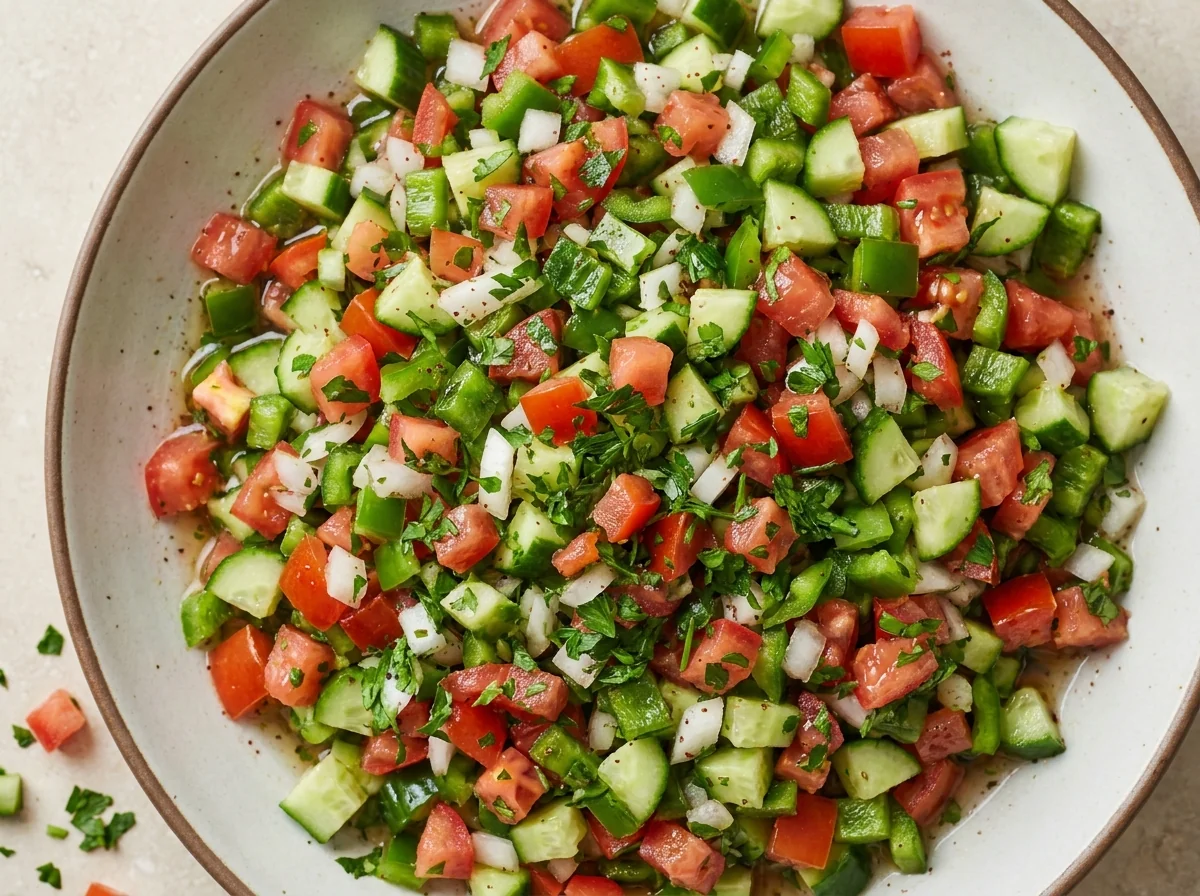
The Arabic chopped salad, or falahi as it is called in many homes, is the simplest thing on the Arab table and the most ever-present.
Summer vegetables chopped fine, a dressing of lemon and olive oil, and a sprinkle of sumac, with no fried bread like fattoush and no dominant parsley like tabbouleh. An everyday salad that rounds out any main dish with its freshness.
Preparation Steps
Chop the vegetables finely
Cut the tomatoes, cucumber, pepper, and onion into small, even cubes roughly the size of a chickpea. The even size makes every bite balanced, and this is the essence of the falahi chopped salad.
Drain the tomato juice
Put the tomato cubes in a strainer for two minutes to let their excess water drain. This keeps the salad from turning watery after the dressing is added, and keeps the texture crisp.
Chop the parsley
Wash the parsley and dry it well, then chop it finely. Drying it before chopping prevents it from clumping and keeps its color a bright green. Here the parsley is an aromatic touch rather than a dominant ingredient, and this is what sets this salad apart from tabbouleh.
Prepare the dressing
Mix the lemon juice with the olive oil, sumac, and salt until combined. Dissolve the salt in the liquid first so it distributes evenly instead of gathering on a single piece.
Toss and serve
Put the chopped vegetables in a bowl, pour the dressing over them, and toss gently until everything is coated. Taste it and serve it immediately while it's crisp. The longer it rests, the more the cucumber releases its water, so it is best served fresh.
Blood Sugar Impact
The glycemic index (GI) measures how quickly a food raises blood sugar, while the glycemic load (GL) measures how much a full serving raises it. Together they give the complete picture.
Glycemic Index
GI
14Low
Low0–55Medium56–69High70+
A low value (≤55) means a gradual rise in blood sugar — the most suitable range for diabetes and insulin resistance.
Glycemic Load
GL
1Low
Low0–10Medium11–19High20+
Glycemic load reflects the impact of the full serving. To lower it: take half a serving, or pair the recipe with a source of protein and fiber.
Nutritional Information
Per ServingMakes 4 servings · one serving is about 210 g of raw ingredients
Calories108 kcal5%of Daily Value*
Protein2 g4%of Daily Value*
Carbohydrates10 g4%of Daily Value*
Fat7 g9%of Daily Value*
Fiber3 g11%of Daily Value*
Sodium205 mg9%of Daily Value*
* Percent Daily Values are based on a 2,000-calorie diet per FDA food-label reference values — your daily needs may be higher or lower. Values are derived from the recipe's ingredients via the USDA database.
Troubleshooting
The most common problems when preparing Arabic Chopped Salad (Falahi), and how to fix them:
The salad turned watery
Drain the tomatoes and cucumber before mixing, and add the dressing only just before serving.
The flavor is bland
Add a sprinkle of sumac and some lemon juice gradually while tasting, for the acidity is what wakes up the flavor of the vegetables.
The onion is too sharp
Soak the chopped onion in cold water for five minutes, then drain it, so its sharpness eases while its taste remains.
The pieces are uneven
Take your time chopping and keep to a single small size, for the evenness is what sets this salad apart.
Storage and Make-Ahead
Refrigerator before dressing
Keep the chopped vegetables undressed in a sealed container for up to two days, and add the dressing at serving.
Refrigerator after dressing
Once dressed, eat it the same day, because the cucumber releases its water and softens the texture.
Dressing separately
Prepare the lemon, oil, and sumac dressing and keep it in a small jar for up to three days in the refrigerator.
Tested Ingredient Substitutions
Original Ingredient
Tested Substitute
Ratio
Flavor Difference
Green bell pepper
Sweet colored peppers
Same amount
Gives a milder sweetness and a brighter color.
Sumac
Grated lemon zest
A small pinch
Gives a close aromatic acidity when sumac isn't available.
Onion
Green onion
Same amount
Milder and better suited to those who don't like strong onion.
Parsley
Fresh mint
Half the amount
Gives a cooler flavor, and it's best used less so it doesn't overpower.
How Much Does It Make? Scaling Guide
Ingredient
2 servings
4 servings (base)
8 servings
Tomatoes
150 g
300 g
600 g
Cucumber
125 g
250 g
500 g
Lemon juice
15 ml
30 ml
60 ml
Olive oil
15 ml
30 ml
60 ml
Salt
1 g
2 g
4 g
EEINA Nutrition Tip
Sumac adds a pleasant acidity and color, letting you cut back a little on the lemon juice while keeping the taste refreshing. This is general cooking information from common Arabic kitchen practice.
Add This Recipe to Your Plan
The EEINA app saves your favorite recipes, calculates them from their real ingredients, and shows your daily numbers toward your goal. Try it free now.