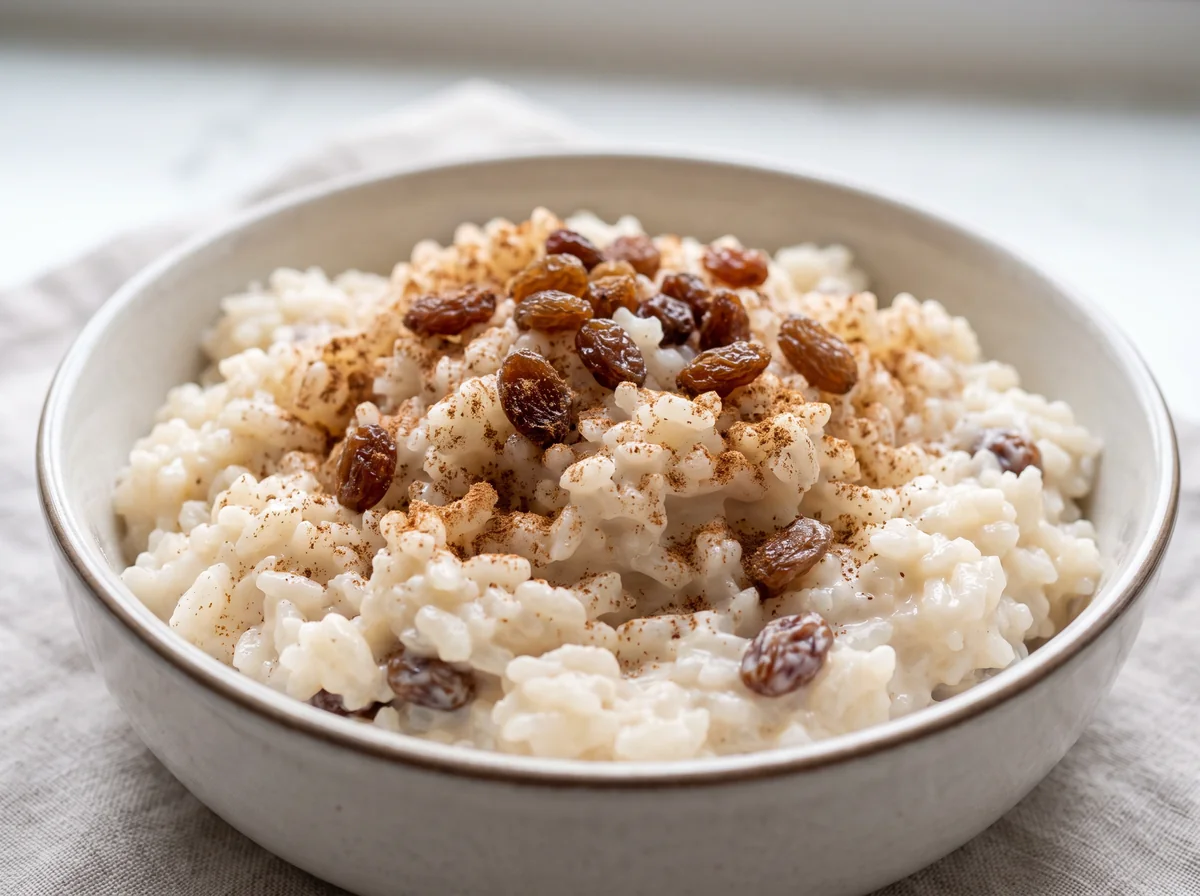
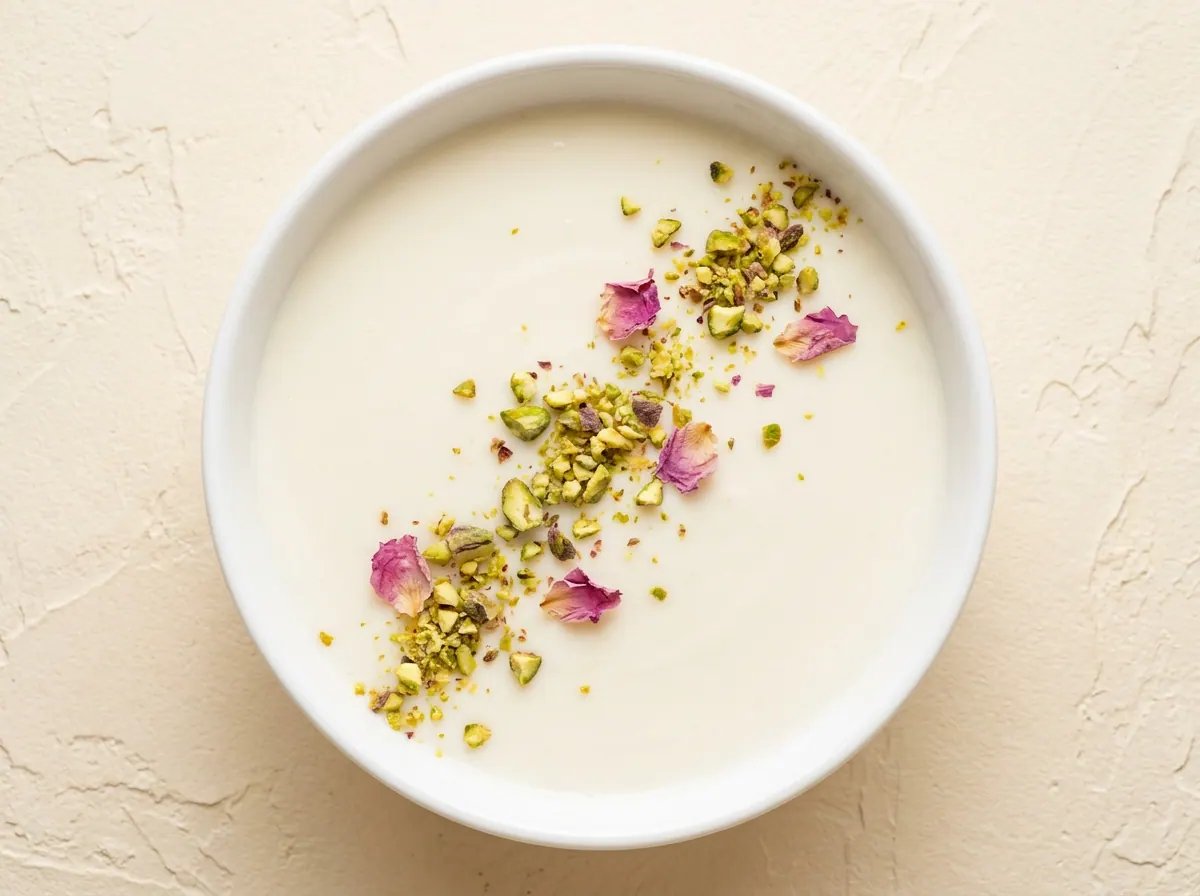
A kidney-conscious version of the beloved rice pudding: unsweetened, unfortified almond milk takes the place of cow's milk, dropping the phosphorus and potassium substantially, and we cut the sugar from the original. A cold dessert portioned into individual cups with the serving already measured, waiting in the refrigerator.
Rice pudding is the dessert of our earliest homes, but its usual cups are built on cups of cow's milk that make it heavy for anyone whose kidneys are tired.
This version unties the knot at its end: unfortified almond milk cooks the rice and gives the same creamy body with phosphorus and potassium that bear no comparison to milk. Its origin is the arroz con leche recipe from DaVita's renal kitchen; we brought it closer to our Arabic palate with vanilla and cinnamon and left the door open for orange blossom water, and cut the sugar from the original quarter cup to three tablespoons.
Preparation Steps
Rinse the rice and simmer it in the water
Rinse the rice under running water until the water runs clear and drain it, then put it in a medium pot with the cup of water and bring to a boil over medium heat; cover, lower the heat, and leave for 10 minutes until the rice absorbs nearly all the water. Simmering in water first softens the grain and shortens the milk's time on the stove.
Add the almond milk and raisins
Uncover, pour in the almond milk, add the raisins, and stir, then cover and let the pot simmer gently for about 10 minutes, stirring every two minutes so the rice does not stick to the bottom, until the grain is fully tender and most of the milk is absorbed.
Sweeten and perfume off the heat
Take the pot off the heat and add the sugar, cinnamon, and vanilla, stirring until the sugar dissolves in the pot's residual heat; adding the sugar at the end keeps the grain tender and does not prolong the cooking.
Portion into cups and chill
Divide the almond milk rice pudding while hot among 6 individual serving cups — it firms and thickens as it cools. Let it come to warm, then refrigerate for at least two hours and serve cold with a light dusting of cinnamon.
Blood Sugar Impact
The glycemic index (GI) measures how quickly a food raises blood sugar, while the glycemic load (GL) measures how much a full serving raises it. Together they give the complete picture.
Glycemic Index
GI
70High
Low0–55Medium56–69High70+
A low value (≤55) means a gradual rise in blood sugar — the most suitable range for diabetes and insulin resistance.
Glycemic Load
GL
24High
Low0–10Medium11–19High20+
Glycemic load reflects the impact of the full serving. To lower it: take half a serving, or pair the recipe with a source of protein and fiber.
Nutritional Information
Per ServingMakes 6 servings · one serving is about 160 g of raw ingredients
Calories159 kcal8%of Daily Value*
Protein3 g6%of Daily Value*
Carbohydrates35 g13%of Daily Value*
Fat1 g1%of Daily Value*
Fiber1 g4%of Daily Value*
Sodium60 mg3%of Daily Value*
Potassium121 mg3%of Daily Value*
Phosphorus47 mg4%of Daily Value*
* Percent Daily Values are based on a 2,000-calorie diet per FDA food-label reference values — your daily needs may be higher or lower. Values are derived from the recipe's ingredients via the USDA database.
Troubleshooting
The most common problems when preparing Almond Milk Rice Pudding, and how to fix them:
The rice stuck to the bottom and burned
The heat was too high or the stirring too infrequent. Cook at a gentle simmer and stir every two minutes, scraping the bottom with a wooden spoon — almond milk sticks exactly like cow's milk.
The texture came out thin and runny
The cooking time was too short. Leave it on the heat a few extra minutes while stirring, and remember it thickens considerably as it chills; the final texture shows after two hours in the refrigerator, not on the stove.
It thickened into a paste after chilling
It was cooked too long on the stove. Take it off while it is wetter than you want, and if it is too late, stir in a little cold almond milk before serving and it turns creamy again.
A skin formed on the surface
Natural when any cooked milk cools. Cover the surface of the cups with wrap touching it directly while chilling, or stir the top before serving and hide it under the dusting of cinnamon.
Storage and Make-Ahead
Refrigerator (4°C)
Keep in covered cups or an airtight container for 3 to 4 days. It thickens as it stands, so stir in a little almond milk before serving if needed. Serve cold.
Freezer
Freezing is not recommended — the texture of rice cooked in milk breaks down grainy and watery after thawing. Make it fresh and keep it chilled.
Make ahead
An ideal dessert to prepare a day before guests: cook, portion into cups, and chill, then dust with cinnamon or garnish at serving time.
Tested Ingredient Substitutions
Original Ingredient
Tested Substitute
Ratio
Flavor Difference
Raisins
Omit them entirely
Omit 20 g
Dried fruits are concentrated in potassium, and omitting the raisins lowers the serving's potassium further for anyone managing it strictly.
Unfortified almond milk
Unfortified rice milk
1:1
An alternative for anyone with a tree nut allergy, and it stays low in phosphorus and potassium provided it is free of phosphate additives.
Vanilla
Orange blossom water or rose water
1 tablespoon (15 ml), added off the heat
The familiar Levantine touch in rice pudding, with no nutritional effect worth mentioning.
Sugar
Reduce it to 2 tablespoons (25 g)
25 g instead of 40 g
With the raisins and vanilla an acceptable sweetness remains — the choice for anyone managing both kidney disease and diabetes.
How Much Does It Make? Scaling Guide
Number of servings
Rice
Water
Almond milk
Sugar
3 servings
0.5 cup (90 g)
0.5 cup (120 ml)
1 cup (240 ml)
1.5 tbsp (20 g)
6 servings (recipe)
1 cup (185 g)
1 cup (240 ml)
2 cups (480 ml)
3 tbsp (40 g)
12 servings
2 cups (370 g)
2 cups (480 ml)
4 cups (960 ml)
6 tbsp (80 g)
EEINA Nutrition Tip
Read the almond milk carton carefully: what you want is "unsweetened" and "unfortified," free of phosphate additives (any ingredient containing the fragment "phosphate") — versions fortified with calcium and phosphorus put back into the dessert what we took out of it. The shelf-stable cartons often have fewer additives than the refrigerated ones.
Add This Recipe to Your Plan
The EEINA app saves your favorite recipes, calculates them from their real ingredients, and shows your daily numbers toward your goal. Try it free now.
The core ingredient: unfortified almond milk instead of cow's milk, dropping the phosphorus and potassium substantially and leaving the dessert dairy-free altogether. The method, the creamy texture, and the cold serving are unchanged.
Does it need starch to thicken?
No; this version relies on the rice's own starch and a lower liquid ratio than the cow's milk version, so it thickens in the cooking and then firms further as it chills, without any added starch.
Is dessert even allowed for a kidney patient?
A measured dessert is a normal part of modern kidney plans, and what matters is the quantities and the portion: a single individual cup of this version was designed to stay within the mineral limits, and its place in the patient's day remains a matter for the dietitian's plan.
Which rice suits it?
Short-grain white rice, like Egyptian rice, is the best fit — its high starch gives the creaminess — followed by medium-grain. Long-grain basmati comes out with a loose, separated texture.