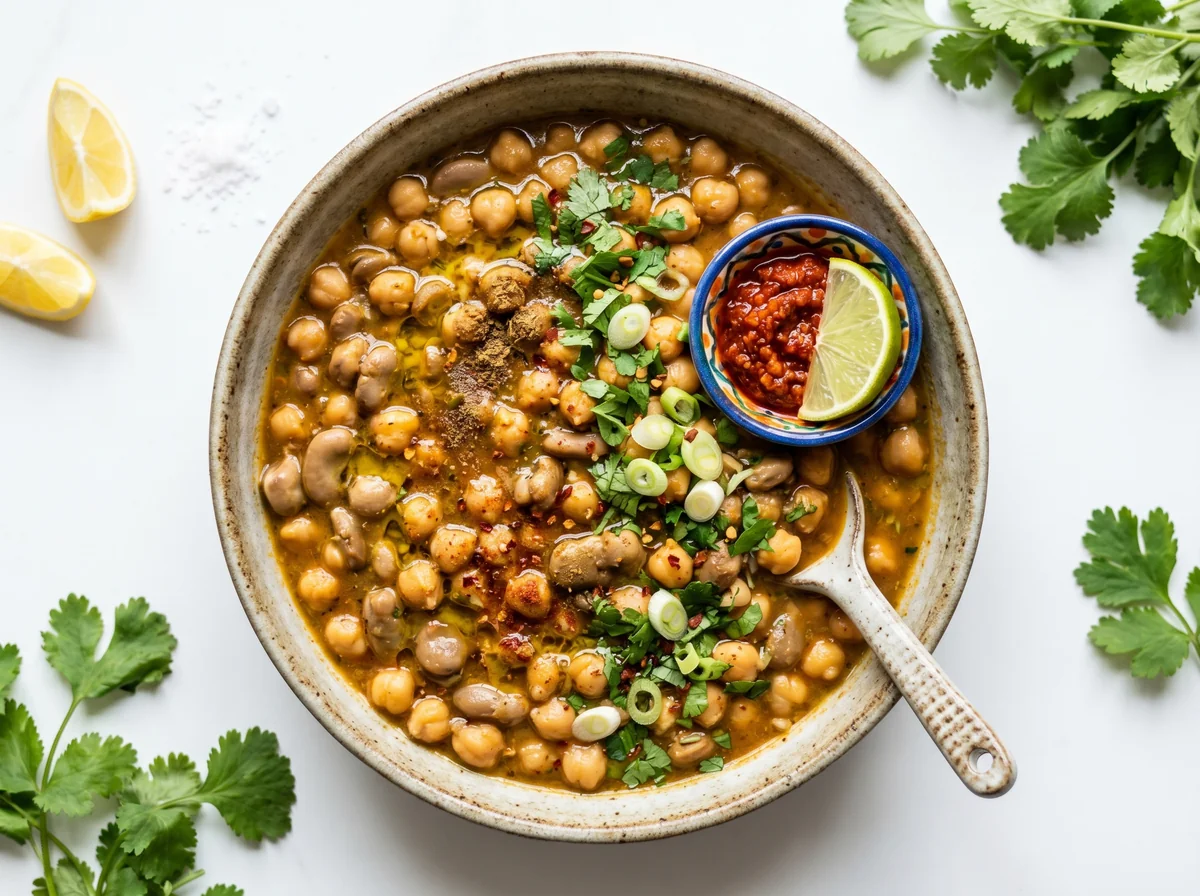
A popular Algerian dish — chickpeas and fava beans cooked with tomatoes, cumin, and hot pepper into a warm stew, ladled into a bowl and sprinkled with cumin and olive oil. The iconic Biskra breakfast, low glycemic load, free of common allergens.
Doubara is a beloved popular Algerian dish, closely associated with the city of Biskra (in southeastern Algeria) — it has become its culinary icon. It is a legume stew (chickpeas and fava beans at its core) cooked with tomatoes, garlic, generous cumin, and hot red pepper, then ladled into bowls and sprinkled with more cumin, olive oil, and lemon.
Doubara is the iconic Biskra breakfast (sold from carts and stalls in the city each morning, with people gathering around it) — an economical, nourishing, hot, boldly spiced, warming popular dish. Its richness in legumes (plant protein and fibre) and its bold flavour (cumin and heat) have made it a beloved dish, a symbol of southern Algerian popular cuisine and the warm mornings of Biskra. Note: people with G6PD deficiency (favism) should be cautious with fava beans.
Preparation Steps
Cook the legumes
Cook the soaked chickpeas and fava beans in water until completely tender (or in a pressure cooker to speed things up). Doubara is a legume dish (chickpeas and fava beans at its core) — cook them until fully soft (the foundation of the dish). Reserve the cooking water (broth).
Make the sauce
Heat the olive oil in a pot, add the crushed garlic, tomato paste, and grated tomatoes, and stir until fragrant. The garlic and tomatoes are the base of the sauce. Doubara is a simple rustic dish whose flavour comes from the cumin, hot pepper, and garlic.
Add the cumin and pepper
Add the generous cumin, red hot pepper, and salt and stir. Generous cumin and hot pepper are the distinctive flavour of Doubara (a boldly spiced hot dish) — be generous with them (they are its soul).
Combine the legumes
Add the cooked chickpeas and fava beans with some of their cooking water to the sauce, and let them cook together until blended and slightly thickened (about 15 minutes). The legumes meld with the hot spiced sauce to become a warm, richly flavoured stew.
Adjust the consistency
Doubara should be a warm stew (tender legumes in a light tomato sauce, somewhere between a soup and a thick stew), with the flavour of cumin and heat. Add hot water if it thickens too much, or let it reduce if it is too thin. Taste and adjust.
Serve
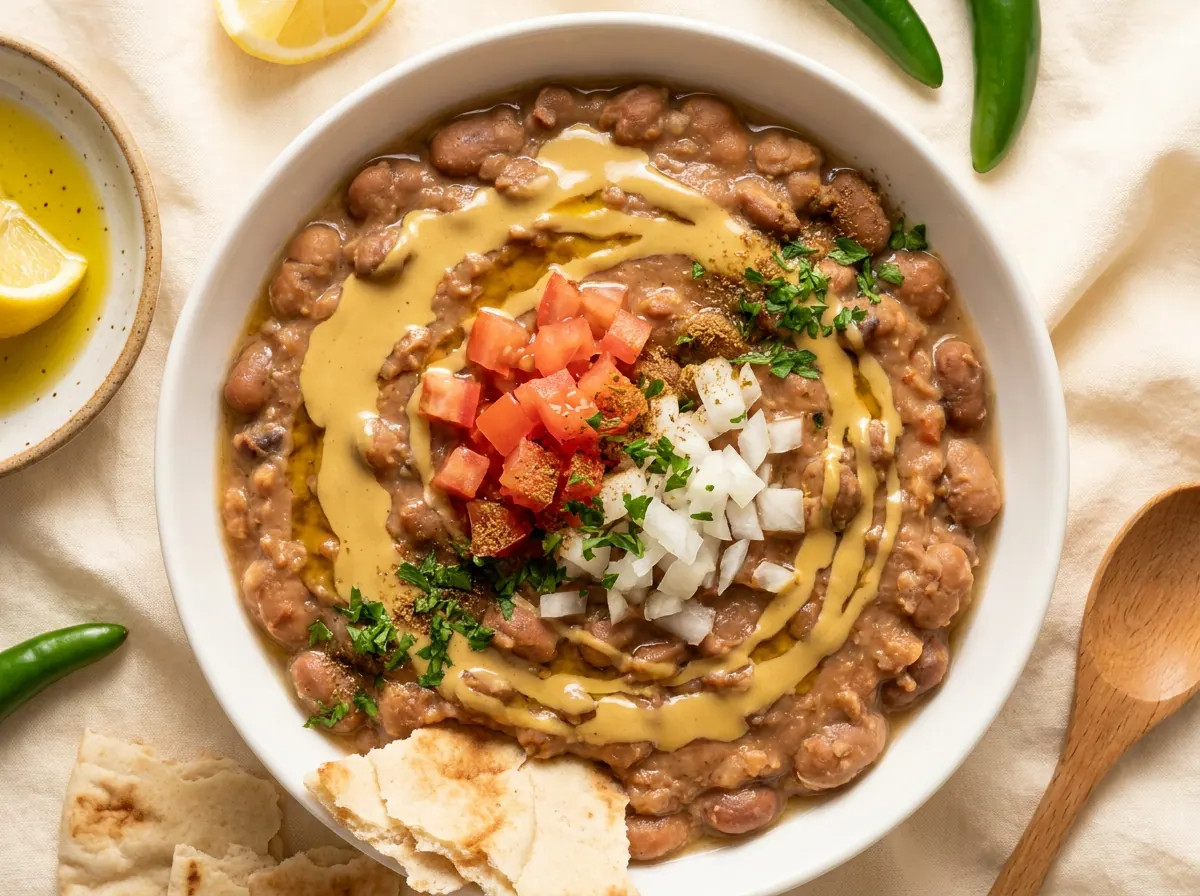
Ladle the Doubara into bowls, sprinkle with extra cumin, olive oil, lemon juice (and hot pepper for those who enjoy it), and serve hot with bread. It is a beloved popular Algerian dish, especially in Biskra (its iconic breakfast, sold from carts and stalls in the city each morning) — a warm, filling, boldly spiced legume stew, a symbol of Algerian popular cuisine and Biskra's warm mornings.
Blood Sugar Impact
The glycemic index (GI) measures how quickly a food raises blood sugar, while the glycemic load (GL) measures how much a full serving raises it. Together they give the complete picture.
Glycemic Index
GI
28Low
Low0–55Medium56–69High70+
A low value (≤55) means a gradual rise in blood sugar — the most suitable range for diabetes and insulin resistance.
Glycemic Load
GL
10Low
Low0–10Medium11–19High20+
Glycemic load reflects the impact of the full serving. To lower it: take half a serving, or pair the recipe with a source of protein and fiber.
Nutritional Information
Per ServingMakes 4 servings · one serving is about 155 g of raw ingredients
Calories383 kcal19%of Daily Value*
Protein20 g40%of Daily Value*
Carbohydrates55 g20%of Daily Value*
Fat11 g14%of Daily Value*
Fiber18 g64%of Daily Value*
Sodium20 mg1%of Daily Value*
Potassium1058 mg23%of Daily Value*
Phosphorus351 mg28%of Daily Value*
* Percent Daily Values are based on a 2,000-calorie diet per FDA food-label reference values — your daily needs may be higher or lower. Values are derived from the recipe's ingredients via the USDA database.
Troubleshooting
The most common problems when preparing Doubara Biskra, and how to fix them:
Legumes are hard
Not soaked enough or not cooked long enough. Soak the chickpeas and fava beans overnight, and cook them until completely tender (or in a pressure cooker) before adding to the sauce. Hard legumes do not soften in the short time the sauce cooks.
Flat flavour
Not enough cumin, hot pepper, or garlic. Generous cumin, hot pepper, and garlic are the soul of Doubara (a boldly flavoured dish) — be generous with them, and sprinkle extra cumin at serving. Cumin especially is the distinctive flavour.
Too spicy
Too much hot pepper. Add the red hot pepper to taste (Doubara is traditionally spicy but adjust it) — serve the extra hot pepper on the side for each person to add as they like. Cumin remains the core flavour without high heat.
Too watery
Too much water. Let the Doubara reduce a little (excess evaporates), or mash some of the legumes (thickens it). Doubara sits between a soup and a stew (not a watery broth) — keep it warm and slightly cohesive.
Dry (heavy stew)
Too little water. Add hot water (or legume cooking water) — Doubara is served moist in its sauce (ladled into a bowl and eaten with bread). Keep it between a soup and a stew.
Storage and Make-Ahead
Refrigerator (4°C)
Doubara keeps in an airtight container in the refrigerator for 3 to 4 days and its flavour improves (like legumes). Reheat with a splash of water over low heat, and sprinkle fresh cumin and oil at serving. Practical for weekday breakfasts.
Freezer
Doubara freezes excellently for two to three months in an airtight container (legumes freeze very well). Thaw and reheat. Practical for making a large batch (cook in bulk and freeze in portions).
Make-ahead
Cook the chickpeas and fava beans ahead of time (they keep refrigerated or frozen), then prepare the Doubara quickly. Or cook it fully the day before (it improves) and reheat it. Practical for a quick morning breakfast.
Food safety
Cook the legumes until fully done, cool the Doubara quickly, do not leave it out of the refrigerator for more than two hours, and reheat thoroughly before serving.
Tested Ingredient Substitutions
Original Ingredient
Tested Substitute
Ratio
Flavor Difference
Chickpeas and fava beans together
Chickpeas only or fava beans only
2 cups of one
The combination is traditional (nearly complete protein) — but a chickpeas-only or fava-beans-only version works depending on availability; the combination is richer in nutritional value
Dried soaked legumes
Canned legumes
Same amount
Canned is faster (no soaking or long cooking) and dried soaked is cheaper with better texture and flavour; both yield the dish
Red hot pepper
Sweet pepper or reduce it
To taste
For a milder version; cumin remains the core flavour. Authentic Doubara is spicy, but adjust to taste
How Much Does It Make? Scaling Guide
Servings
Chickpeas
Fava beans
Tomatoes
2 (small)
½ cup
½ cup
1
4 (base)
1 cup
1 cup
2
8 (feast)
2 cups
2 cups
4
EEINA Nutrition Tip
Doubara is an excellent healthy choice: very rich in plant protein and fibre (chickpeas and fava beans together are nearly a complete protein combination), its glycemic index and load are low (provides long satiety and supports blood sugar control), cumin aids digestion, the hot pepper contains capsaicin, olive oil provides healthy fats, and it is low in saturated fat. Its only challenge is sodium (salt). For the best version: control the salt, use moderate olive oil, and serve with whole-wheat bread. An outstanding legume protein and fibre dish — an excellent popular healthy choice, especially for vegetarians, people with diabetes, and those seeking healthy satiety.
Add This Recipe to Your Plan
The EEINA app saves your favorite recipes, calculates them from their real ingredients, and shows your daily numbers toward your goal. Try it free now.
A popular Algerian dish, especially from Biskra (its iconic breakfast), which is a legume stew (chickpeas and fava beans) cooked with tomatoes, garlic, generous cumin, and hot pepper, then ladled into a bowl and sprinkled with cumin, olive oil, and lemon. A warm, filling, boldly spiced legume dish sold each morning from carts in Biskra — a popular icon.
Why is Doubara associated with Biskra?
Doubara is the iconic Biskra breakfast (a city in southeastern Algeria): sold from carts and stalls in the city each morning, with people gathering around it for a warm popular breakfast. It became a culinary symbol of Biskra (visitors seek it out when they visit), even though it is also cooked in homes across Algeria. It is part of the city's food identity and its mornings.
What is the difference between Doubara and Lablabi?
Both are popular spicy chickpea stews, but Algerian Doubara (Biskra) combines chickpeas and fava beans with generous cumin and hot pepper (ladled and sprinkled with spices), while Tunisian Lablabi is chickpeas in a broth poured over dried bread with egg, tuna, harissa, and cumin. They are similar (chickpeas, cumin, heat) but the presentation and additions differ.
Is Doubara healthy?
Yes, excellent: very rich in plant protein and fibre (chickpeas and fava beans), its glycemic index and load are low (provides long satiety and supports blood sugar control), cumin aids digestion, olive oil is healthy, and it is low in saturated fat. Its only challenge is sodium. Control the salt, use moderate oil, and serve with whole-wheat bread. An outstanding legume dish, especially for vegetarians and people with diabetes.
Sources: USDA · University of Sydney · Gulf GSO · Our methodology · Updated on