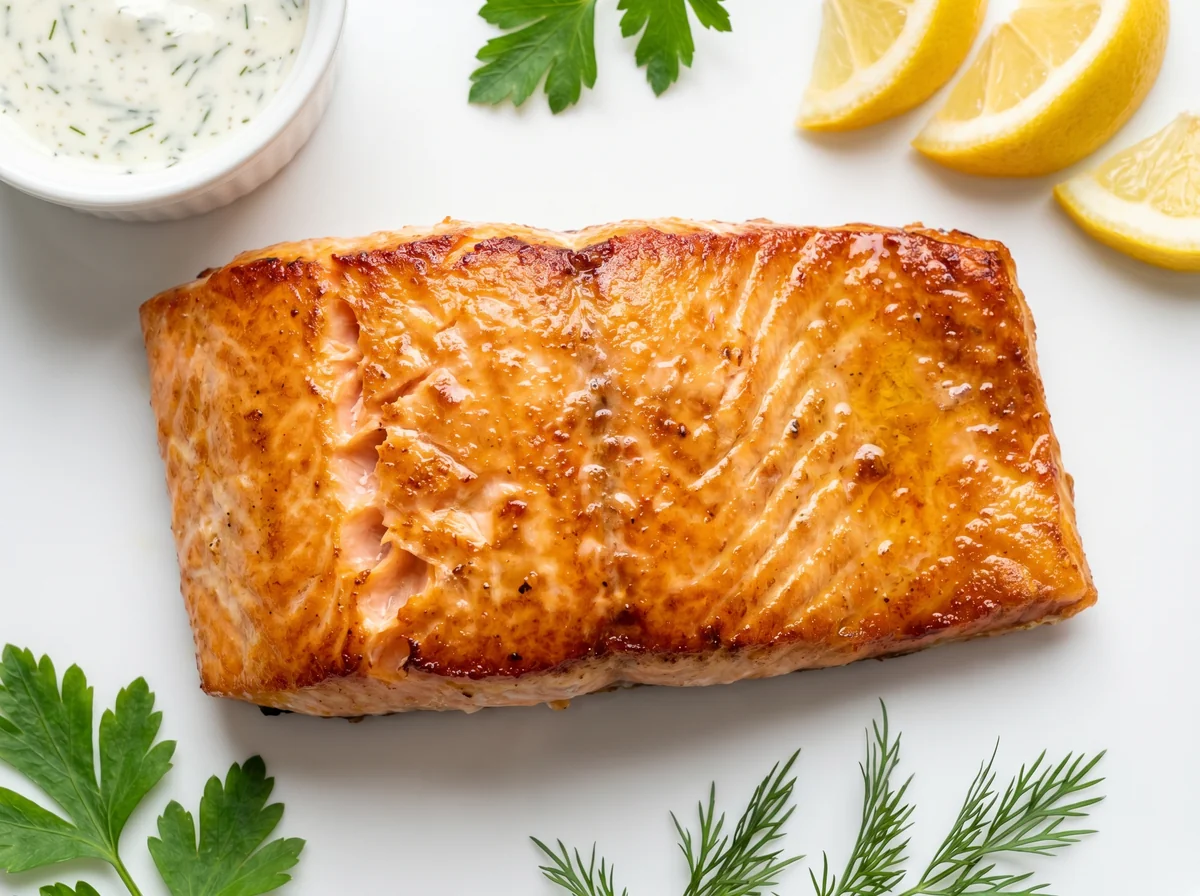
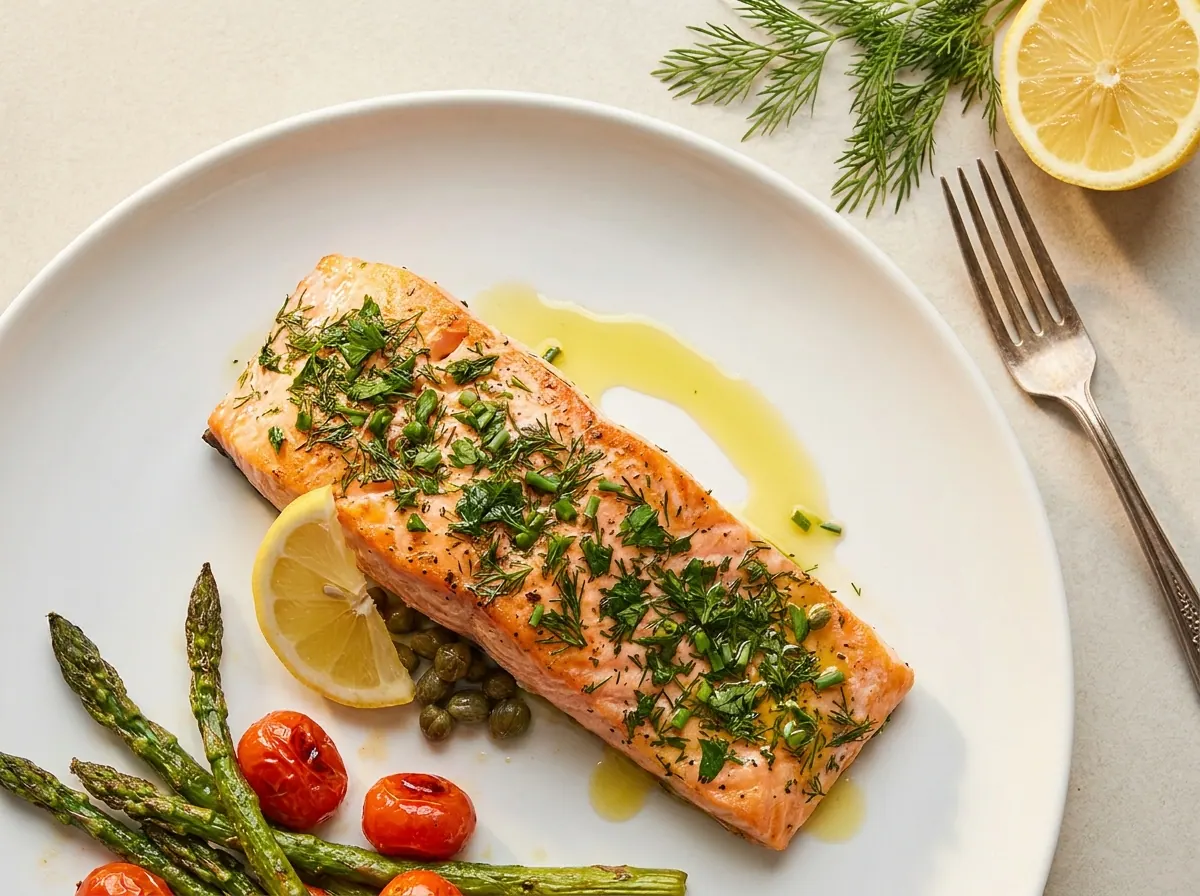
Salmon fillets coated with Dijon mustard, paprika, and garlic cooked in the air fryer in ten minutes — a fast, light, high-protein dinner packed with omega-3 and virtually zero carbs.
Salmon is one of the richest fish in omega-3 and protein, and the air fryer cooks it in minutes to a golden exterior and tender interior with no excess oil.
The mustard coating locks in the flavour and spices, delivering a fast, elegant meal with virtually zero carbohydrates.
Preparation Steps
Prepare the salmon
Preheat the air fryer to 200°C. Pat the salmon fillets thoroughly dry with paper towels. Drying helps form a golden crust.
Coat with mustard
Brush each fillet with a thin layer of Dijon mustard. The mustard acts as a binder for the spices and adds a gentle, pleasant tang.
Season
Sprinkle the paprika, garlic powder, salt, and black pepper directly over the salmon, then give it a light mist of olive oil spray. The spray aids browning.
Cook
Place two fillets in the air fryer and cook for 8 to 10 minutes until the salmon flakes easily with a fork (63°C internal temperature), then repeat with the remaining fillets. Do not overcook or the fish will dry out.
Serve
Serve the salmon immediately with a salad or roasted vegetables. A quick, light, omega-rich dinner in ten minutes.
Blood Sugar Impact
The glycemic index (GI) measures how quickly a food raises blood sugar, while the glycemic load (GL) measures how much a full serving raises it. Together they give the complete picture.
Glycemic Index
GI
0Low
Low0–55Medium56–69High70+
A low value (≤55) means a gradual rise in blood sugar — the most suitable range for diabetes and insulin resistance.
Glycemic Load
GL
0Low
Low0–10Medium11–19High20+
Glycemic load reflects the impact of the full serving. To lower it: take half a serving, or pair the recipe with a source of protein and fiber.
Nutritional Information
Per ServingMakes 4 servings · one serving is about 180 g of raw ingredients
Calories358 kcal18%of Daily Value*
Protein35 g70%of Daily Value*
Carbohydrates1 g0%of Daily Value*
Fat23 g29%of Daily Value*
Fiber0 g0%of Daily Value*
Sodium395 mg17%of Daily Value*
Potassium642 mg14%of Daily Value*
Phosphorus414 mg33%of Daily Value*
* Percent Daily Values are based on a 2,000-calorie diet per FDA food-label reference values — your daily needs may be higher or lower. Values are derived from the recipe's ingredients via the USDA database.
Troubleshooting
The most common problems when preparing Air Fryer Salmon with Mustard and Paprika, and how to fix them:
Protein/fish is dry
Too much heat or too long a cooking time. Cook at medium-high heat for a set time and let it rest a few minutes before slicing so the juices redistribute.
No sear marks appear
Pan not hot enough or surface is wet. Heat a ridged pan thoroughly and dry the surface — do not move the piece before the marks have formed.
Flavour lacks depth
Not enough salt or spices. Season well and taste — add fresh herbs or a squeeze of lemon to lift all the flavours.
Storage and Make-Ahead
Refrigerator (4°C)
Two days in an airtight container after cooling. Reheat until fully hot before serving.
Freezer (-18°C)
One to two months in individual portions. Thaw in the refrigerator before reheating.
Meal prep
Prepare and cut the ingredients in advance and refrigerate — assembly and cooking takes just minutes at serving time.
Reheating
Reheat gently with a splash of water or in a moderate oven until hot. Do not leave out of the refrigerator for more than two hours [2].
Tested Ingredient Substitutions
Original Ingredient
Tested Substitute
Ratio
Flavor Difference
Fish
Salmon or prawns
Same weight
A seafood variation rich in omega-3
Oil/fat
Extra virgin olive oil
Same amount
Monounsaturated fats, better for heart health
Salt
Herbs, spices, and lemon juice
To taste
Reduces sodium while keeping plenty of flavour
How Much Does It Make? Scaling Guide
Number of servings
Ratio
2 (individual × 2)
Half the quantities
4 (base)
Quantities as listed
6 (family)
1.5×
8 (entertaining)
Double the quantities
EEINA Nutrition Tip
Fatty fish like salmon is an excellent source of heart-healthy omega-3. Do not exceed 63°C or it will dry out — and pat the surface dry before cooking so a golden crust can form. Dijon mustard is sugar-free and does not raise the glycemic load.
Add This Recipe to Your Plan
The EEINA app saves your favorite recipes, calculates them from their real ingredients, and shows your daily numbers toward your goal. Try it free now.
Yes — its glycemic index is low and the protein and fibre slow sugar absorption. Keep portions moderate and serve with vegetables or salad, avoiding large amounts of refined carbohydrates alongside.
How do I store leftovers?
In an airtight container in the refrigerator for a few days, or in the freezer for later portions (note that seafood has a shorter shelf life). Reheat until fully hot, once only.
Can I adapt it for my diet?
Yes — see the substitutions table: you can swap the protein, make it dairy-free or gluten-free, or reduce the salt and fat without losing flavour.
Sources: USDA · University of Sydney · Gulf GSO · Our methodology · Updated on