A recipe we rely on when we want quick protein that feeds the family in twenty minutes without standing over the stove.
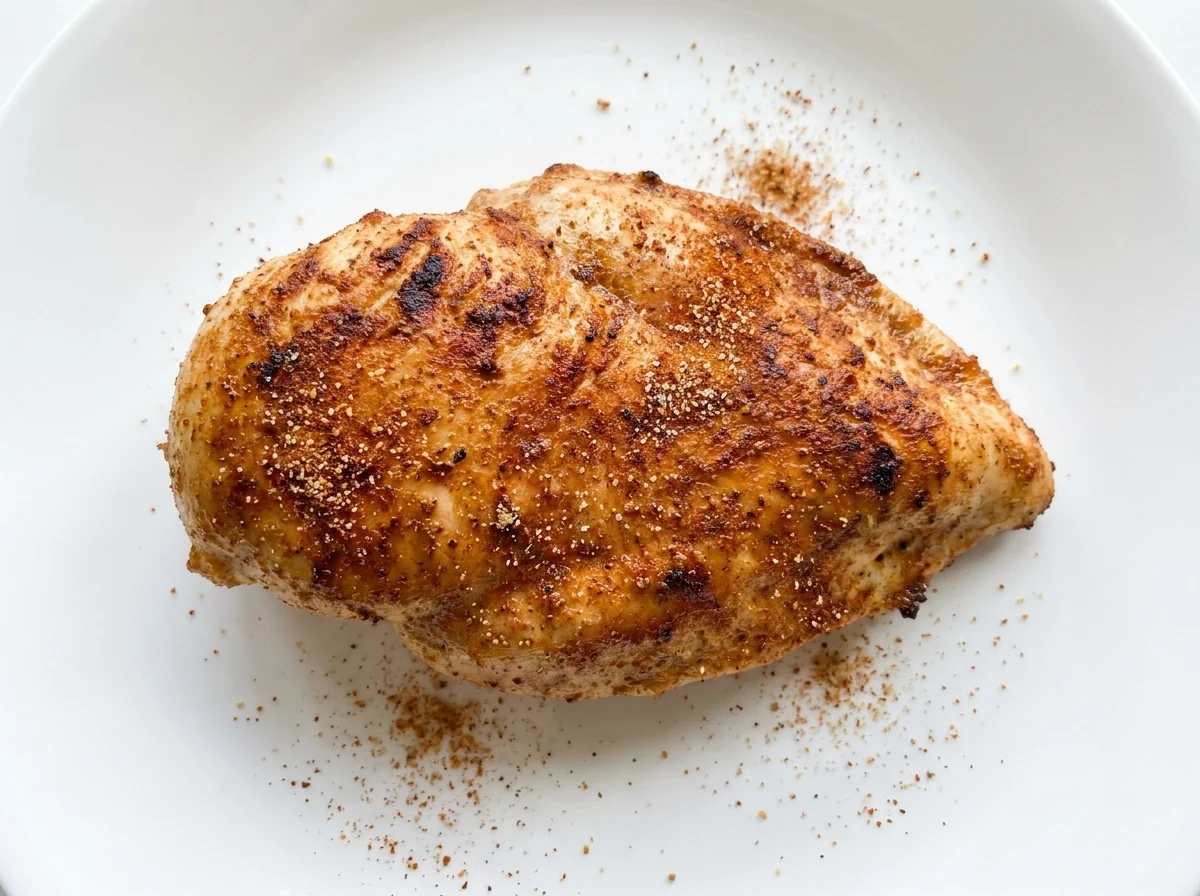
The air fryer gives us a golden surface with far less oil than deep frying, while the inside stays tender because we sliced the breast thin and sealed its surface with high heat.
Preparation Steps
Prepare the chicken
Slice each breast horizontally into thin, evenly thick cutlets so they cook evenly and the edges do not dry out, then pat them dry thoroughly with paper towel, because a dry surface is what browns.
The spice mix
Combine the paprika, garlic, onion, salt, brown sugar, and cornstarch in a bowl; the cornstarch and sugar together create a crisp golden crust on the surface.
Season
Scatter the mix over the cutlets, add the oil, and toss by hand until every piece is fully coated; leave for 5 minutes so the surface absorbs the flavor.
Preheat
Preheat the air fryer to 215°C for about 3 minutes; a preheated air fryer seals the surface of the chicken quickly so it keeps its juices.
Air fry
Arrange the cutlets in a single layer without touching (fry in two batches if needed) and air fry at 215°C for 10 minutes; for thicker pieces extend up to 13 minutes.
Check and rest
Confirm the internal temperature has reached 74°C with a meat thermometer (the chicken safety standard), then rest the chicken two minutes before slicing so the juices redistribute.
Blood Sugar Impact
The glycemic index (GI) measures how quickly a food raises blood sugar, while the glycemic load (GL) measures how much a full serving raises it. Together they give the complete picture.
Glycemic Index
GI
49Low
Low0–55Medium56–69High70+
A low value (≤55) means a gradual rise in blood sugar — the most suitable range for diabetes and insulin resistance.
Glycemic Load
GL
1Low
Low0–10Medium11–19High20+
Glycemic load reflects the impact of the full serving. To lower it: take half a serving, or pair the recipe with a source of protein and fiber.
Nutritional Information
Per ServingMakes 4 servings · one serving is about 135 g of raw ingredients
Calories185 kcal9%of Daily Value*
Protein28 g56%of Daily Value*
Carbohydrates4 g1%of Daily Value*
Fat6 g8%of Daily Value*
Fiber1 g4%of Daily Value*
Sodium446 mg19%of Daily Value*
* Percent Daily Values are based on a 2,000-calorie diet per FDA food-label reference values — your daily needs may be higher or lower. Values are derived from the recipe's ingredients via the USDA database.
Troubleshooting
The most common problems when preparing Air-Fryer Juicy Chicken Breast, and how to fix them:
The chicken is dry
The pieces are thin so they cook quickly; remove them right at 74°C and do not exceed the time, and rest the chicken before slicing
The surface is pale, not golden
The surface was wet or the pieces were touching; pat dry thoroughly, leave space between the pieces, and fry in batches
The spices are scorching
Brown sugar browns quickly; if you notice early darkening, lower the heat by 10 degrees and extend the time slightly
The pieces are undercooked in the middle
Uneven thickness; gently pound the thick parts to even them out before seasoning
Storage and Make-Ahead
Refrigerator
In an airtight container up to 3 days; reheat in the air fryer at 180°C for two minutes so the surface crisps up again
Freezer
Freeze after fully cooling, up to two months; thaw in the refrigerator overnight before reheating
Make ahead
Mix the spices and keep them dry in a jar; season the chicken only at cooking time so the salt does not draw out its moisture
Tested Ingredient Substitutions
Original Ingredient
Tested Substitute
Ratio
Flavor Difference
Avocado oil
Olive oil or sunflower oil
1 to 1
Any oil that withstands high heat works
Smoked paprika
Extra sweet paprika
1 to 1
You only lose the smoky flavor, with no effect on texture
Brown sugar
White sugar or date honey
1 to 1
The aim is to brown the surface; honey browns faster, so watch it
Cornstarch
Potato starch
1 to 1
Both create a crisp crust
How Much Does It Make? Scaling Guide
Ingredient
2 servings
4 servings (base)
8 servings
Chicken breasts
250 g
500 g
1000 g
Avocado oil
5 ml
10 ml
20 ml
Sweet paprika
2.5 g
5 g
10 g
Salt
2 g
4 g
8 g
EEINA Nutrition Tip
Slicing thin and drying the surface before the air fryer matter more than long cooking time; thick, wet pieces come out pale because steam prevents browning. Leave space between the pieces so air circulates around every side.
Add This Recipe to Your Plan
The EEINA app saves your favorite recipes, calculates them from their real ingredients, and shows your daily numbers toward your goal. Try it free now.