Ingredients and Preparation
Tahini sauce is easy once you understand its behavior. These are the ingredients and ratios followed by the full method for a smooth sauce that doesn't clump:
Ingredients and Ratios
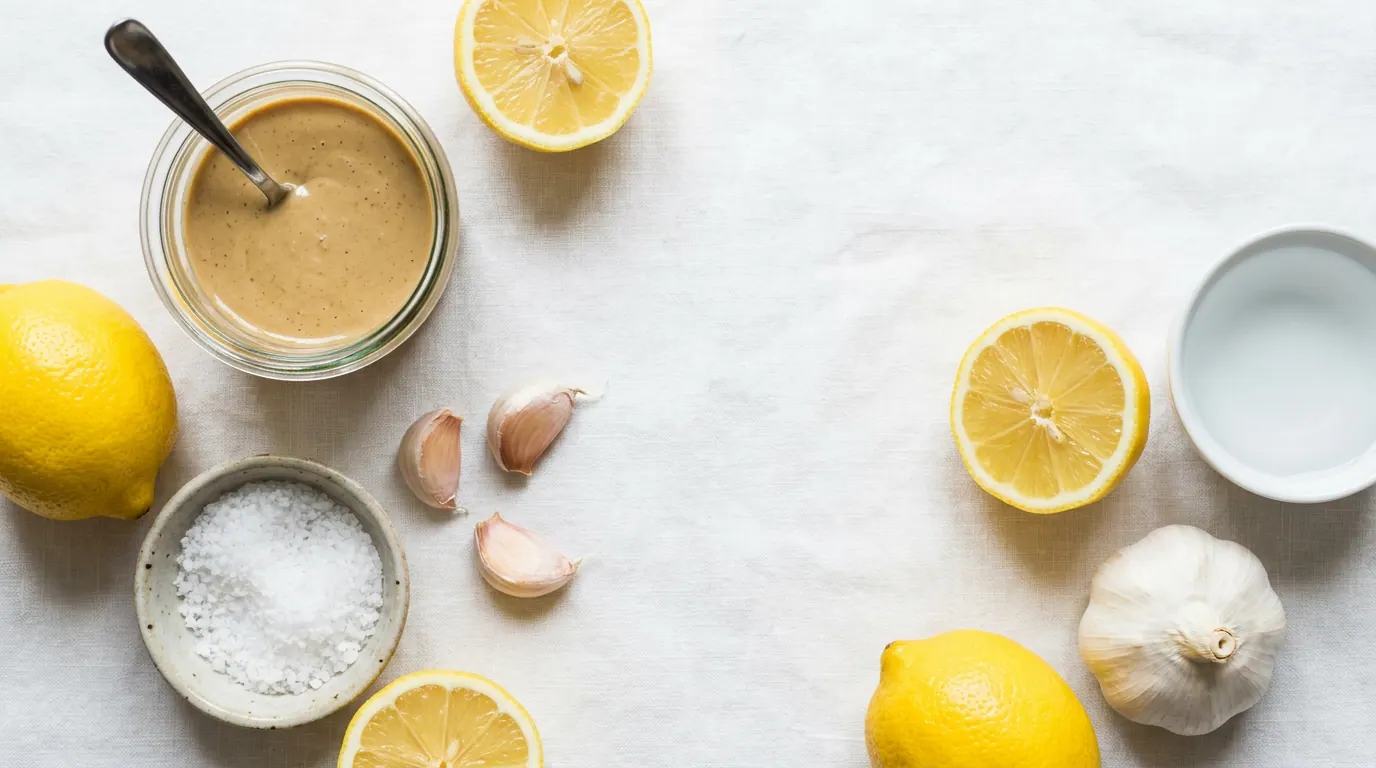
- 1/2 cup pure sesame tahini (Base)
- 1/4 cup fresh lemon juice (about 2 lemons)
- 4–6 tablespoons cold water (added gradually)
- 1 or 2 garlic cloves, mashed
- 1/2 teaspoon salt, adjust after balancing
Method
- Mash the garlic and soak it in lemon juice for about 10 minutes then strain, to remove its sharp bite
- Place the tahini in a bowl, add lemon juice and salt first and stir
- Expect clumping immediately: the mix becomes a thick pale paste, this is normal
- Add cold water tablespoon by tablespoon with continuous vigorous whisking, not all at once
- Continue: it will look grainy then suddenly turn after about 3–4 tablespoons into a smooth creamy light sauce
- Adjust consistency with cold water (thicker for dipping, thinner for dressing) then correct the salt
What is Tahini with Lemon?
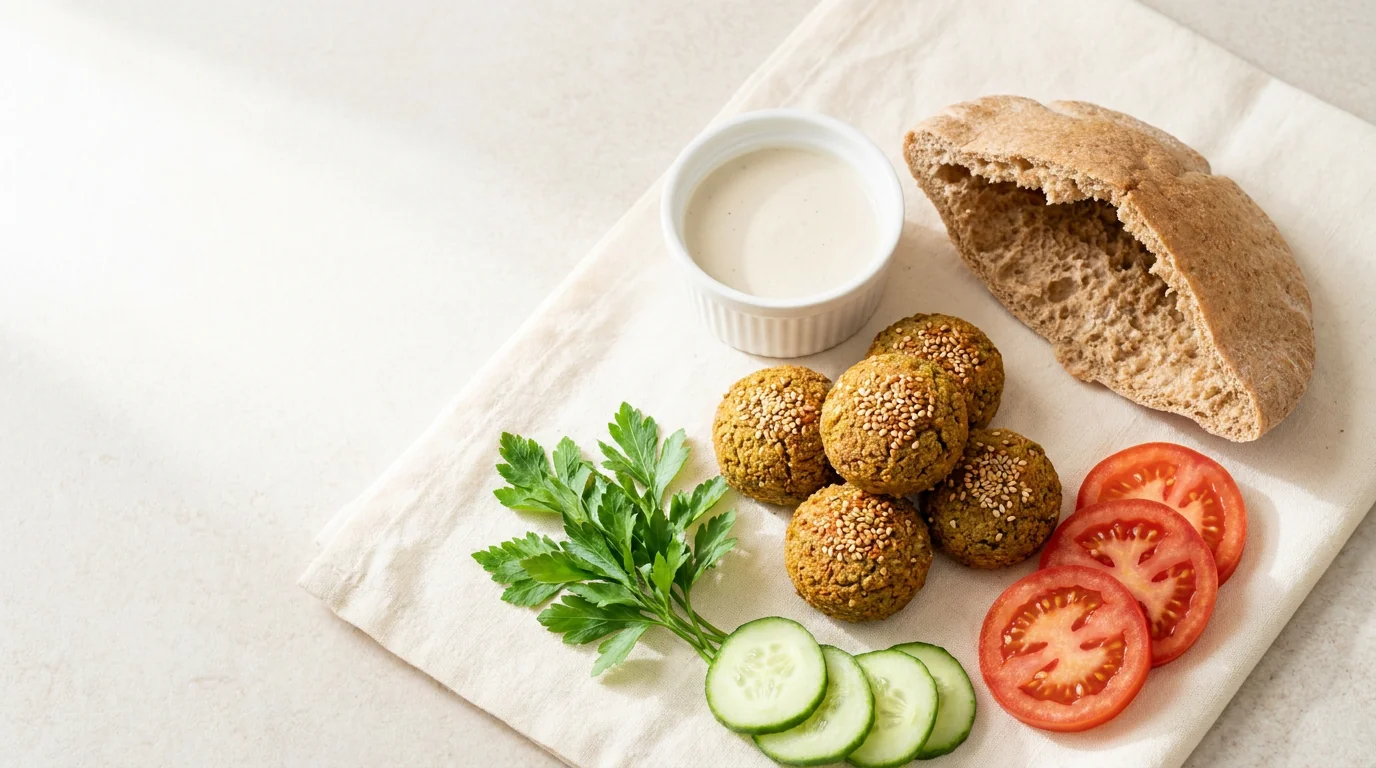
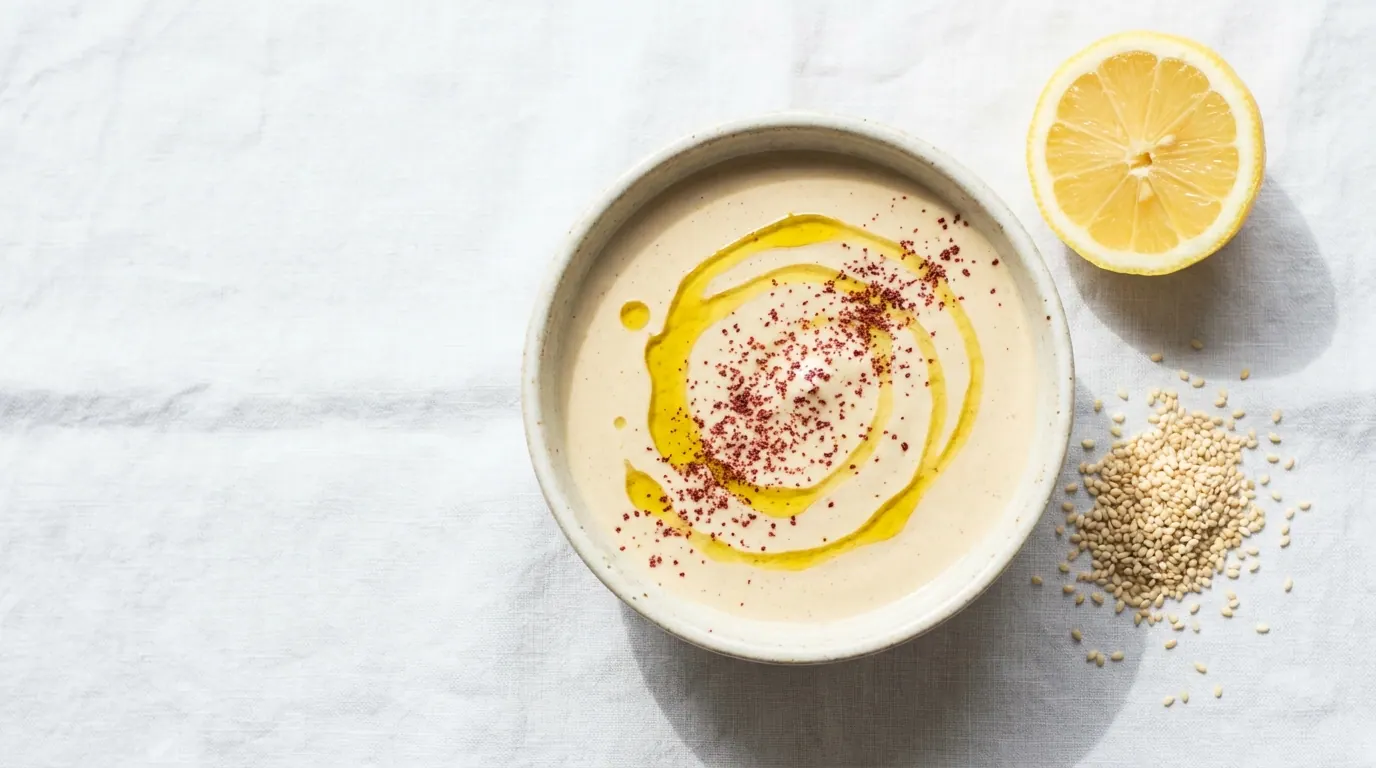
Tahini with lemon (Tahini sauce) is an emulsified sauce with a creamy ivory-white texture, based on ground sesame paste (Tahini) with lemon juice, cold water, garlic, and a bit of salt. It is a foundational base in Levantine and Saudi kitchens, served with Falafel, Shawarma, BBQ, grilled vegetables, and as a layer in sandwiches and wraps.
The secret of its visual and textural success is that it transforms from a thick dark paste to a light fluid sauce upon controlled emulsification. Tahini paste is originally a concentrated fatty system: solid sesame particles suspended in sesame oil. When it meets water and lemon juice, it passes through a strange stage of clumping before becoming smooth, and understanding this stage is the difference between a mastered sauce and a failed one.
Sauce Profile
- Type
- Emulsified sauce (water-in-oil) cold
- Base
- Tahini paste (pure ground sesame)
- Acidic component
- Fresh lemon juice (balance + breaking garlic bite)
- Prep time
- About 5 minutes
- Common ratio
- 1 Tahini : 0.5–0.75 Cold water : 0.25 Lemon juice
- Top use
- Falafel, Shawarma, and BBQ sauce
- Allergens
- Sesame (major allergen mandatory for labeling) · may contain garlic
- Lasts
- 5–7 days refrigerated in an airtight container
Origin and Tradition
Few sauces with simple ingredients have such a presence on the Arabic table. Tahini and its sauce are an ancient base spanning from the Levant to the Arabian Peninsula:
Origin of Tahini: Tahini (from "tahn", to grind) is an ancient product in the kitchens of the Levant and the Arabian Peninsula, based on slightly roasted sesame seeds then ground until they become a smooth oily paste.
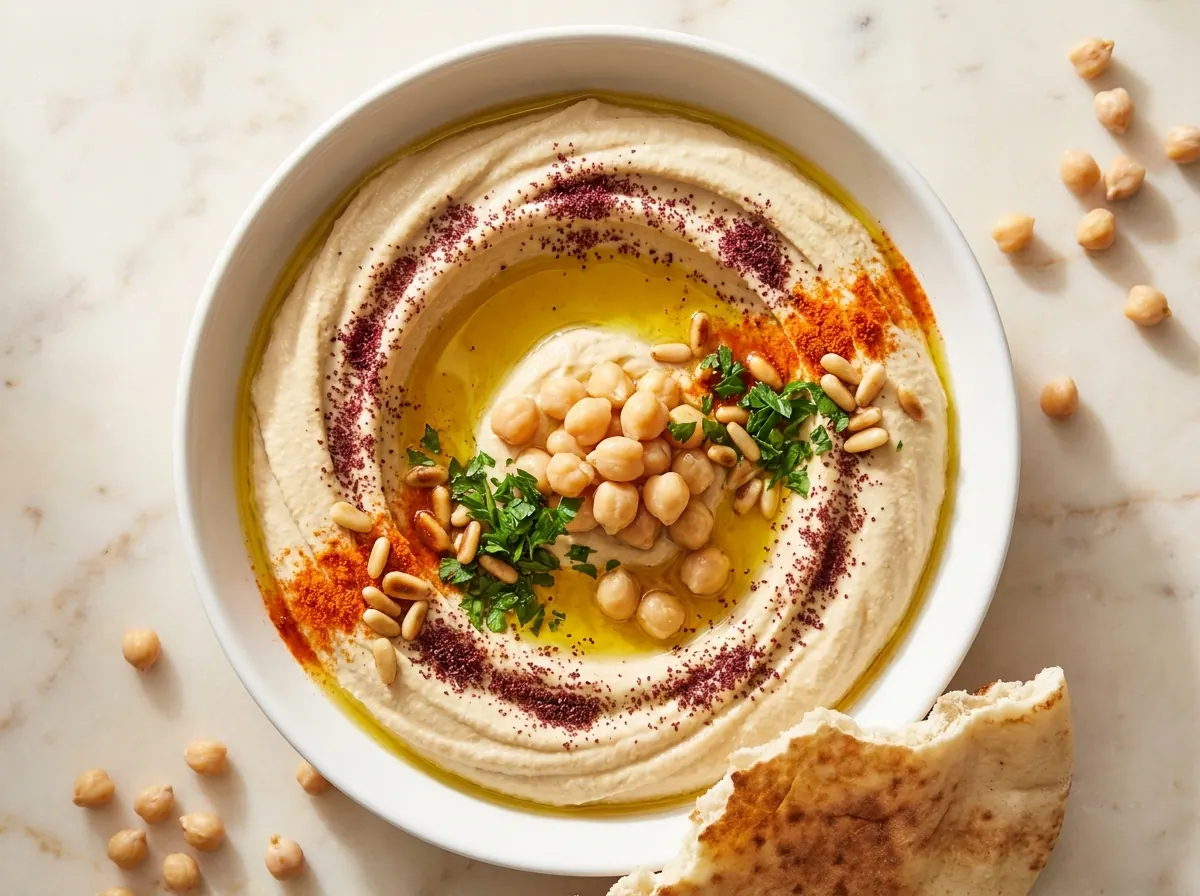
Foundational Levantine Base: Tahini sauce with lemon and garlic is a firmly established base in Levantine cuisine, upon which many sauces are built, entering dishes from Hummus to Baba Ganoush.
Gulf Spread: The sauce moved to Saudi Arabia and the Gulf as a companion to Falafel, Shawarma, and BBQ, until it became one of the familiar table accompaniments in restaurants and homes.
Sesame at the Heart: What makes this sauce special is the sesame itself; it gives it its creamy texture, nutty flavor, and nutritional depth, and explains its strange behavior during emulsification.
Sauce Variations
Tahini sauce is a flexible base, its thickness and flavor adjusted according to use. Know the differences to choose the right formula:
| Variation | Description | Texture | Best For |
|---|---|---|---|
| Tahini for dipping | Less water, thicker | Thick, holds on the spoon | Vegetable and cracker dip |
| Tahini for dressing | More cold water, thinner | Fluid, flows easily | Falafel and Shawarma sauce |
| Tahini with parsley | Minced herbs added | Creamy, speckled with green | Grilled fish and Kofta |
| Salad dressing base | More diluted with cold water | Light, flowing | Salad and bowl dressings |
Consistency is adjusted with cold water, not by adding more Tahini. If your sauce becomes too thick, add cold water tablespoon by tablespoon with whisking until you reach the desired thickness. If it stiffens upon refrigeration, re-dilute it with a little cold water and stir.
The Science of Emulsification: Why Tahini Clumps then Smoothes
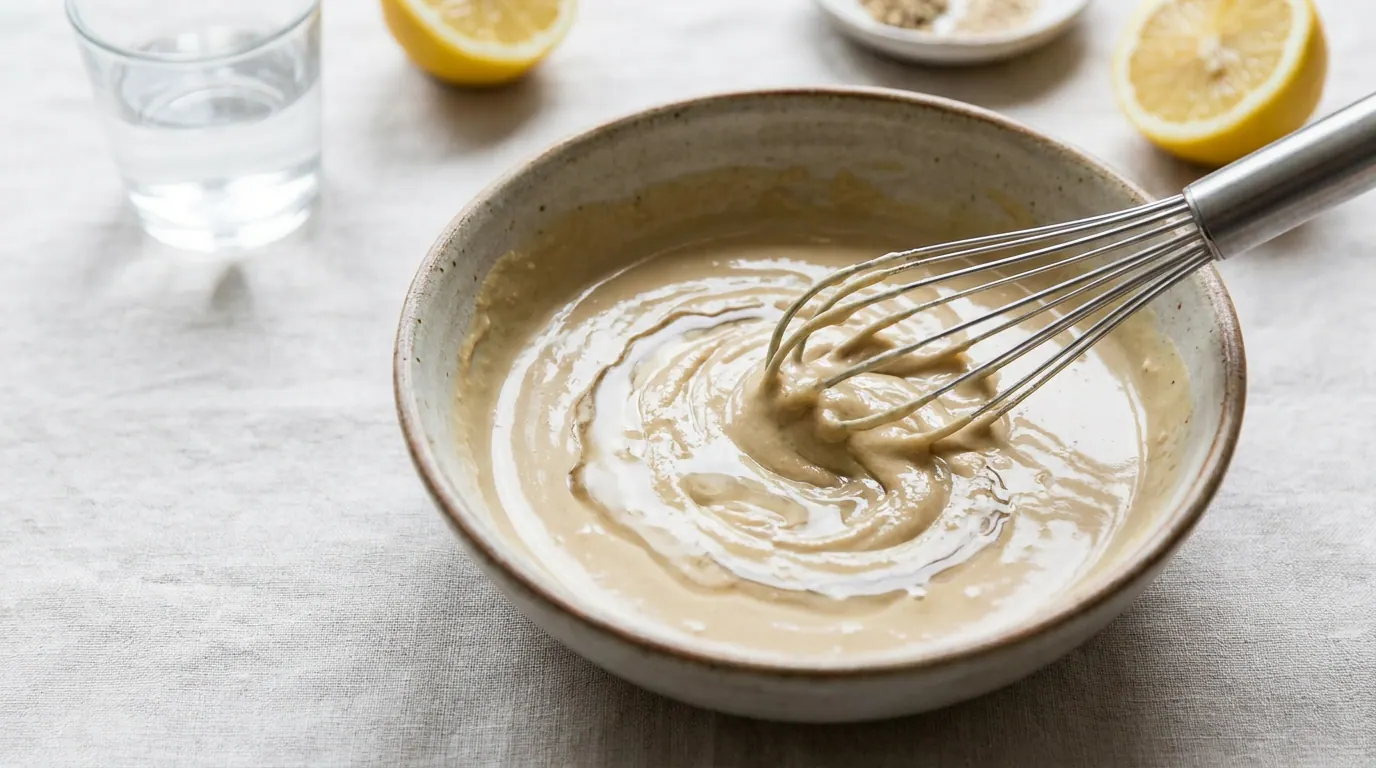
Tahini paste is a continuous phase fatty system: ground solid sesame particles suspended inside sesame oil. When you add a water-based liquid (lemon or water) in a small amount, the hydrophilic solid particles are attracted to the water droplets and stick to each other forming a network, so the mixture suddenly clumps and becomes thicker and harder to stir. This is the "seize" phenomenon: insufficient water binds the particles instead of separating them.
Four principles governing the sauce
Upon the first liquid, sesame particles are attracted to the water and stick, so the mixture clumps and becomes a stiff paste. This is an expected step before smoothness, not a sign of failure. The solution is increasing water, not decreasing it.
With gradually increasing water and vigorous whisking, you cross a certain point where particles slide freely and clumping breaks down, and the system turns into a light ivory creamy water-in-oil emulsion.
Cold water produces a smoother, more creamy texture and less clumping, because the sesame oil remains more cohesive and emulsifies regularly. Therefore, cold water is preferred over warm in this sauce.
Citric acid performs two roles: it chemically breaks the bite of raw garlic (soaking garlic in lemon juice tones down its sharp edge), and adds the acidity that balances the natural bitterness of Tahini.
Where It's Used
Six common uses
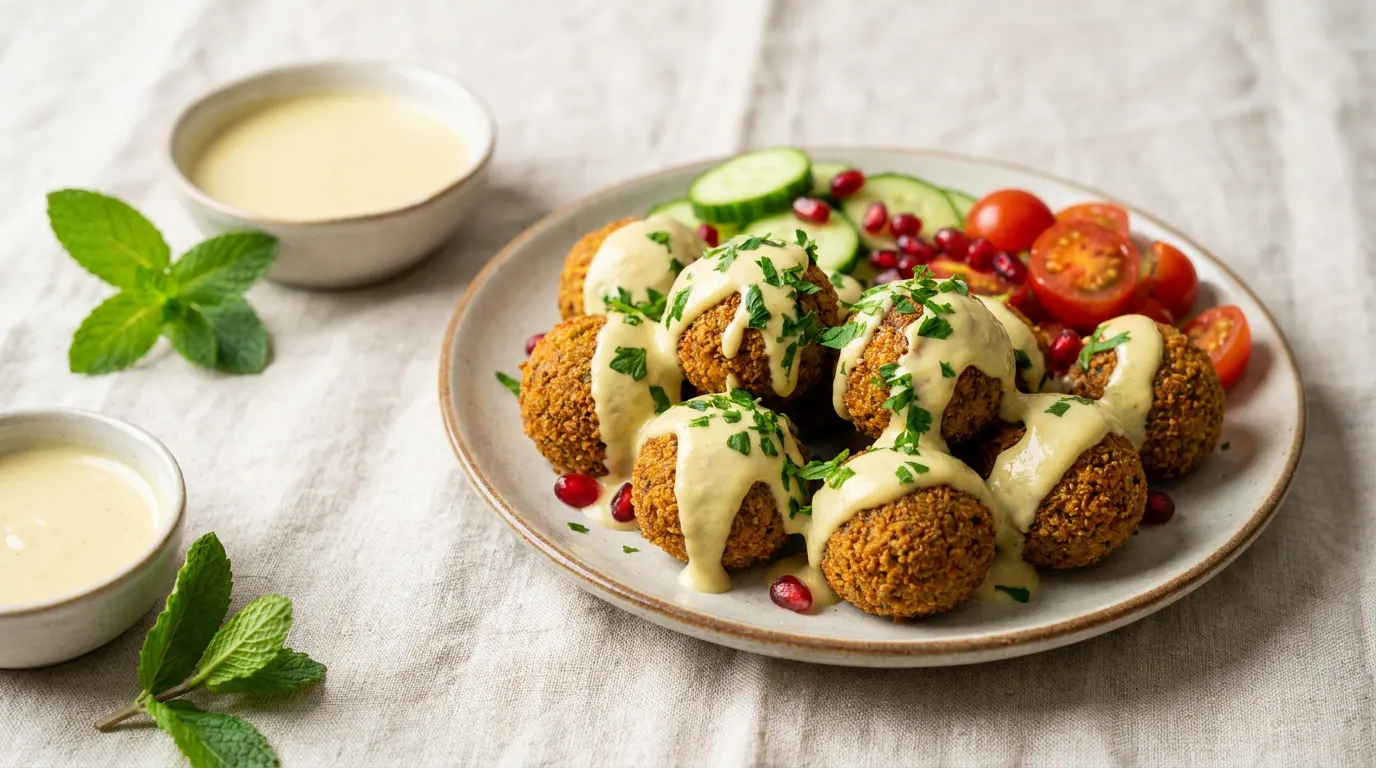
The most famous use. A slightly thinned sauce flows over Falafel and Shawarma providing moisture and nutty flavor. Thin it with cold water until it flows without being runny.
With less water it becomes a thick dip that holds on the spoon, suiting grilled vegetables and crackers. Keep it dense so it sticks to the piece without sliding.
A layer of sauce deepens the flavor of sandwiches and wraps and moistens them. Use a medium texture that doesn't soak through the bread or dry out.
The sauce is poured over grilled fish and Kofta, balancing their richness with its acidity. Add minced parsley for deeper flavor and a nicer color.
With more dilution with cold water it becomes a base for salad and bowl dressings. Increase the lemon slightly for a refreshing acidity that suits leafy greens.
A dressing over grilled potatoes and eggplants adds creaminess and flavor. The Tahini base suits them well because it balances the dryness of grilled vegetables with light fat.
Expert Technique
The difference between a smooth and clumpy sauce lies in the small details. These techniques ensure success every time:
| Technique | How | Effect | Best For |
|---|---|---|---|
| Soaking garlic in lemon | Mash and soak 10 mins then strain | Removes the sharp bite | Every formula with raw garlic |
| Acid then Water | Add lemon first, then water gradually | Regular emulsification | The classic sauce |
| Cold water drop by drop | Spoon then whisk then spoon | Bypasses clumping safely | Avoiding oily separation |
| Delaying Salt | Salt after adjusting texture | Precise balance | Sauce that doesn't concentrate saltiness |
Expect the clumping stage as a natural step, not a failure. Add water and acid little by little with continuous whisking, and be patient with the grainy stage. Do not give up and add oil or abandon the sauce, as gradual cold water alone will restore it to smooth creaminess.
Six Common Mistakes and Corrections
Most tahini sauce failures come from misunderstanding its behavior. These six mistakes and their solutions:
Pouring all the water once without whisking.
Thinking the stiff paste is a failure.
Adding hot water instead of cold.
Adding garlic without soaking in lemon.
Salting before adjusting consistency.
Keeping diluted sauce for over a week.
Oily separation in the raw tahini jar is normal, not a sign of spoilage. Stir the separated oil back into the paste before each use until homogeneous. And do not insert a wet or dirty spoon into the jar, as moisture accelerates spoilage.
Health Benefits with Evidence
The base of this sauce is sesame, which has a documented nutritional value and some human evidence. We present them honestly with the level of evidence for each:
Sesame seeds are rich in copper (about 4 mg/100g, one of the richest dietary sources), calcium, magnesium, and iron, in addition to unsaturated fats (primarily omega-6 linoleic acid).
A systematic review, meta-analysis, and clinical trial showed that sesame and sesamin supplements lower total and LDL cholesterol in hypercholesterolemic individuals. The sauce is part of a balanced diet, not a medicine.
A GRADE-based systematic review and dose-response meta-analysis observed that sesame supplements modestly lower systolic and diastolic blood pressure in hypertensive and pre-hypertensive individuals. Sesame does not replace blood pressure medication.
Dietary copper is essential for energy production, connective tissue formation, and iron metabolism. RDA for adults is 900 mcg/day, and sesame is a rich source within the sauce.
Food Safety: Storing Sauce and Avoiding Spoilage
Diluted Tahini sauce has a shorter life than raw Tahini paste: keep it refrigerated at 4°C or below, and consume within 5–7 days. Place in an airtight container and refrigerate within two hours of preparation (two-hour rule). Open raw Tahini paste lasts 3–6 months refrigerated. Do not insert a wet or dirty spoon into the jar, as moisture accelerates spoilage.
Airtight container in the fridge for 5–7 days. It may stiffen in the cold, so re-dilute with a little cold water and stir before serving.
Refrigerated for 3–6 months, and freezing is possible for the paste for 6–12 months. Stir the separated oil before each use; its separation is natural and not a sign of spoilage.
Rancid or sour smell, and an unusual bitter taste, are signs of spoilage. Discard the sauce immediately if you notice any of these, and do not risk repeated tasting.
Do not insert a wet or dirty spoon into the Tahini jar, as moisture accelerates spoilage. Always use a clean dry spoon, and seal the jar tightly after each use.
Allergy and Notices
- Sesame is a major allergen: Tahini is pure sesame. Sesame is a major allergen mandatory for labeling in the Gulf under GSO regulations, and it is the ninth major allergen adopted in the US since 2023 under the FASTER Act.
- Reaction severity varies: Sesame allergy symptoms range from hives and lip swelling to life-threatening anaphylaxis. Those who know their allergy avoid it entirely.
- Garlic: Some formulas may contain garlic; pay attention if you are sensitive to it or avoid it.
- Gluten cross-contamination: The sauce is often served with bread containing gluten; pay attention if you avoid it.
- Check the label: Always check the tahini product label for ingredients and shared manufacturing alerts.
These are notices regarding allergy and cross-contamination. The sauce with its simple ingredients is safe and familiar to those who do not have a sesame allergy.
Frequently Asked Questions about Tahini Sauce
Why does tahini clump when adding lemon?
How do I fix clumped tahini?
Should I use cold or warm water?
What is the ratio of tahini to water and lemon?
How do I tone down raw garlic's bite?
Why did my sauce separate and become oily?
How long does tahini sauce last in the fridge?
Why does oil separate in the tahini jar?
Does tahini contain allergens?
Can tahini sauce be frozen?
When should I add salt to the sauce?
Does tahini sauce have health benefits?
Add Tahini Sauce to your plan in Eeina
Eeina app connects your sauces to your calculated Saudi recipes, from Falafel to BBQ. Start for free.