Glycemic Index
GI
48
Low
Low0–55
Medium56–69
High70+
A low value (≤55) means a gradual rise in blood sugar, making it ideal for diabetics and insulin resistance.

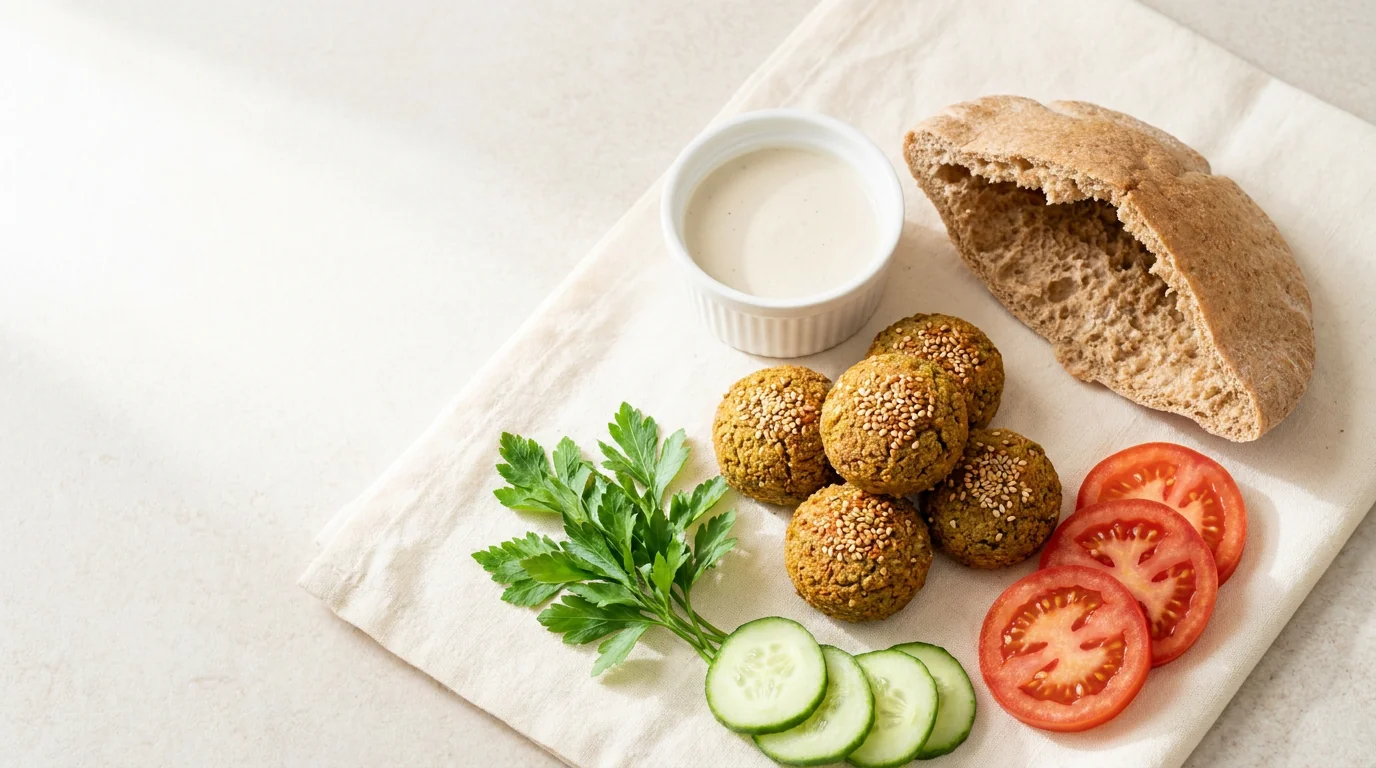
A Levantine falafel sandwich, an authentic part of Saudi breakfasts. While the deep-fried restaurant version contains 580 kcal, this baked recipe cuts it down to 340 kcal with the same crunch.
The reality in most falafel shops: Dried chickpeas, onions, garlic, parsley, cilantro, and spices. Up to here, everything is healthy. The change happens in frying: the balls are submerged in refined vegetable oil (sunflower, canola, or cheap oil blends) at 170-180°C, and usually, the oil is reused for hours or days before being fully replaced.
Served in a white pita bread (refined flour, GI 75) with heavy, pure tahini sauce and high-sodium commercial pickles. Reused oil forms oxidized compounds linked to chronic inflammation.
Every modification preserves flavor and drops excess fat:
Soak dry chickpeas in a large bowl of cold water, ensuring the water level is at least double the chickpeas as they swell. Do not use canned chickpeas; they are pre-cooked and will cause the falafel to fall apart during shaping. Drain thoroughly before using.
OvernightIn a food processor, combine drained chickpeas, onion, garlic, parsley, cilantro, cumin, coriander seeds, cardamom, black pepper, and salt. Pulse in short bursts until the texture is finely minced but not pureed. Leave some graininess for that signature crunch.
5 minTransfer the mixture to a bowl, cover with plastic wrap, and chill in the refrigerator for 30 minutes. This rest is the secret to cohesive falafel, as it lets the starch and proteins bind, keeping the balls intact during cooking.
30 minAdd baking soda to the chilled mixture and stir. Shape into walnut-sized balls (30g per ball, making 20 balls total). Flatten the base slightly, then dip the top into toasted sesame seeds. Sesame adds crunch and completes the plant protein profile.
10 minOven: Preheat oven to 220°C. Arrange balls on a baking sheet lined with parchment paper, and brush them with olive oil. Bake for 15 minutes, flip carefully, and bake for 7 more minutes until browned on both sides. Air Fryer: Cook at 200°C for 14 minutes, flipping halfway, for the closest texture to deep-fried falafel.
14-22 minGlycemic Index (GI) measures how quickly blood sugar rises after eating, and Glycemic Load (GL) measures the rise for a full serving. Both readings together give the accurate picture.
A low value (≤55) means a gradual rise in blood sugar, making it ideal for diabetics and insulin resistance.
Glycemic Load reflects the impact of the entire serving. To lower it: eat a half portion or pair the recipe with protein and fiber.
The most important decision when making falafel at home is the cooking method, which determines 70% of the final calories. The numbers below are calculated per full sandwich (5 balls with half a whole wheat pita and 2 tbsp tahini sauce).
| Method | Calories/Sandwich | Fat | Crispiness | Time | Best For |
|---|---|---|---|---|---|
| Deep Frying | 580 | 32 g | Maximum crispiness | 15 min | Special occasions only, using fresh oil once |
| Oven (220°C) | 340 | 14 g | Good crispiness | 22 min | Large batches and family Friday breakfasts |
| Air Fryer (200°C) | 320 | 12 g | Closest to deep-fried | 14 min | Fastest, best restaurant-style taste for 1-2 servings |
Now that your falafel is prepped, these sauces and toppings will complete your sandwich. Each takes only 3 to 4 minutes to prepare, and they can be prepped while the falafel is baking to save time. Tahini sauce and sumac-onion salad are essential, while hummus and shatta are optional based on your choice of build.
In a small bowl, whisk the tahini and Greek yogurt together. Whisk in the lemon juice, garlic, and salt. Gradually stir in warm water one tablespoon at a time until the mixture reaches a smooth, pourable cream consistency.
In a blender, combine boiled chickpeas, tahini, lemon juice, garlic, and spices. Blend until smooth, adding cooking water one tablespoon at a time as needed. The ideal consistency is a thick, spreadable paste.
In a small blender, combine minced chilies, garlic, olive oil, vinegar, salt, and cumin. Blend into a smooth paste. Store in a glass jar in the fridge; flavors will mature and improve over the week.
In a medium bowl, rub the sliced onion with salt for 30 seconds to soften and reduce its sharpness. Toss in the parsley, sumac, and lemon juice. Serve fresh. Sumac adds a signature earthy, tart acidity that defines a classic falafel sandwich.
A falafel sandwich begins with the same crispy baked falafel, but can be customized in four delicious ways depending on your hunger level and health goals.
The simplest and lightest. Ideal for daily breakfast and intermittent fasting breaks.
The traditional breakfast style in Levantine cafes. Offers the highest protein content for sustained morning fullness.
Adding oven-roasted potatoes (instead of fried) increases satiety and adds warmth, saving 80 kcal compared to fried potato fillings.
Perfect for keto and low-carb diets. Replaces pita with crispy romaine lettuce leaves for high-protein, low-carb satiety.
Other alternatives: cabbage leaves or specialty low-carb keto wraps.
Baked falafel is a **highly balanced meal**: complete plant protein, high fiber (9g, exceeding a third of daily needs), and low GI. It's suitable for diabetics as a main meal and helps maintain satiety during intermittent fasting. **Note:** Chickpeas can cause bloating in some individuals; to prevent this, soak with a pinch of baking soda and introduce slowly to monitor your tolerance.
Here are six common troubleshooting tips for making the perfect baked falafel at home:
The chickpeas were not drained well after soaking, keeping the mixture too wet, or they were processed into a pureed paste. Always pat soaked chickpeas dry with a towel before grinding and pulse only to a "wet sand" texture. If the mixture is already too wet, stir in 1-2 tablespoons of chickpea flour and rest in the fridge for 15 minutes before shaping.
The mixture was over-processed, removing all air. Light falafel requires a slightly grainy structure and a touch of leavening (1/2 tsp baking soda per cup of dry chickpeas), added right before shaping. Avoid packing the balls too tightly when forming them.
The oven wasn't hot enough, or they weren't brushed with oil. Preheat your oven to 220°C before baking, brush the balls generously with olive oil, and flip halfway through. Broil for the final 2 minutes for extra color and crispiness.
Too much water from wet herbs or added water. Never add water to the chickpea mix itself. If wet, add a little chickpea flour or whole wheat breadcrumbs and chill for 15 minutes. Drying your washed herbs completely before processing resolves this from the start.
Tough stems from parsley or cilantro were blended instead of leaves only. Blend only the leaves, and balance cilantro and parsley equally. A touch of ground cumin and coriander rounded out with salt balances any heavy herbaceous tones.
Baked too long. Walnut-sized balls only need about 22 minutes at 220°C. Creamy tahini sauce and sumac-onion salad inside the sandwich restore moisture, so do not over-bake in search of a hard shell.
Raw mixture: 1 day in an airtight container. Longer storage turns the mixture dark and watery.
Cooked balls: 2 days. Reheat in the oven or air fryer to restore crispiness.
Uncooked shaped balls: Freeze separated on a tray for 1 hour, then transfer to a freezer bag. Keeps for 1 month; bake directly from frozen (adding 5 minutes to bake time, no thawing needed).
Soaking: Overnight (8 hours) before cooking.
Sauces: Tahini sauce and sumac-onion salad can be prepped 1 hour ahead and kept chilled.
Oven at 180°C for 5-7 minutes, or air fryer for 3 minutes. Avoid the microwave, which turns falafel rubbery and soft.
Note: Canned cooked chickpeas cannot be substituted for dried chickpeas in this recipe as they will not bind.
| Original Ingredient | Tested Substitute | Ratio | Difference in Taste |
|---|---|---|---|
| Dried chickpeas | Dried split fava beans (Egyptian style) | Half and half | Softer interior, darker color, traditional "ta'ameya" flavor |
| Greek yogurt in sauce | Warm water only | Same volume | Vegan, dairy-free, lighter body |
| Whole wheat pita | Whole wheat saj bread or keto wraps | Same amount | Thinner wrap, significantly lower carbs |
| Fresh parsley | Mix of fresh parsley and mint | Same volume | Brighter, deeply aromatic Leventine flavor |
| Baking soda | Baking powder | Double the amount | Slightly less rise, but works well |
Quantities are adjusted for the number of sandwiches, calculating roughly 5 walnut-sized balls per sandwich.
| Sandwiches | Dry Chickpeas | Falafel Balls | Oven Time |
|---|---|---|---|
| 2 (Single × 2) | 3/4 cup | 10 balls | 20 min |
| 4 (Standard) | 1.5 cups | 20 balls | 22 min |
| 8 (Family Size) | 3 cups | 40 balls | Batch of 2 × 22 min |
| 12 (Gathering) | 4.5 cups | 60 balls | Batch of 3 × 22 min |
For large groups: Arrange balls on multiple sheets without overcrowding so they brown evenly. Prep the whole batch of dough at once, and freeze any extra uncooked shaped balls for later.
This classic Levantine recipe is shared across Syria, Lebanon, Palestine, and Jordan, and traveled to Saudi Arabia through traditional breakfast cafes in the last century, becoming a beloved breakfast staple.
Based on **classic Levantine culinary heritage**, as prepared daily in traditional breakfast spots in Damascus, Beirut, and Amman. Nutritional metrics are calculated using **USDA FoodData Central** databases and **Sydney University's Glycemic Index** methodology.
Coming soon: dedicated regional variations (Egyptian Fava Ta'ameya, Lebanese Mint Falafel, Kid-friendly baked balls).
EEINA saves your favorite recipes, guides how often to eat them (twice weekly for baked falafel), and generates your smart weekly plan.