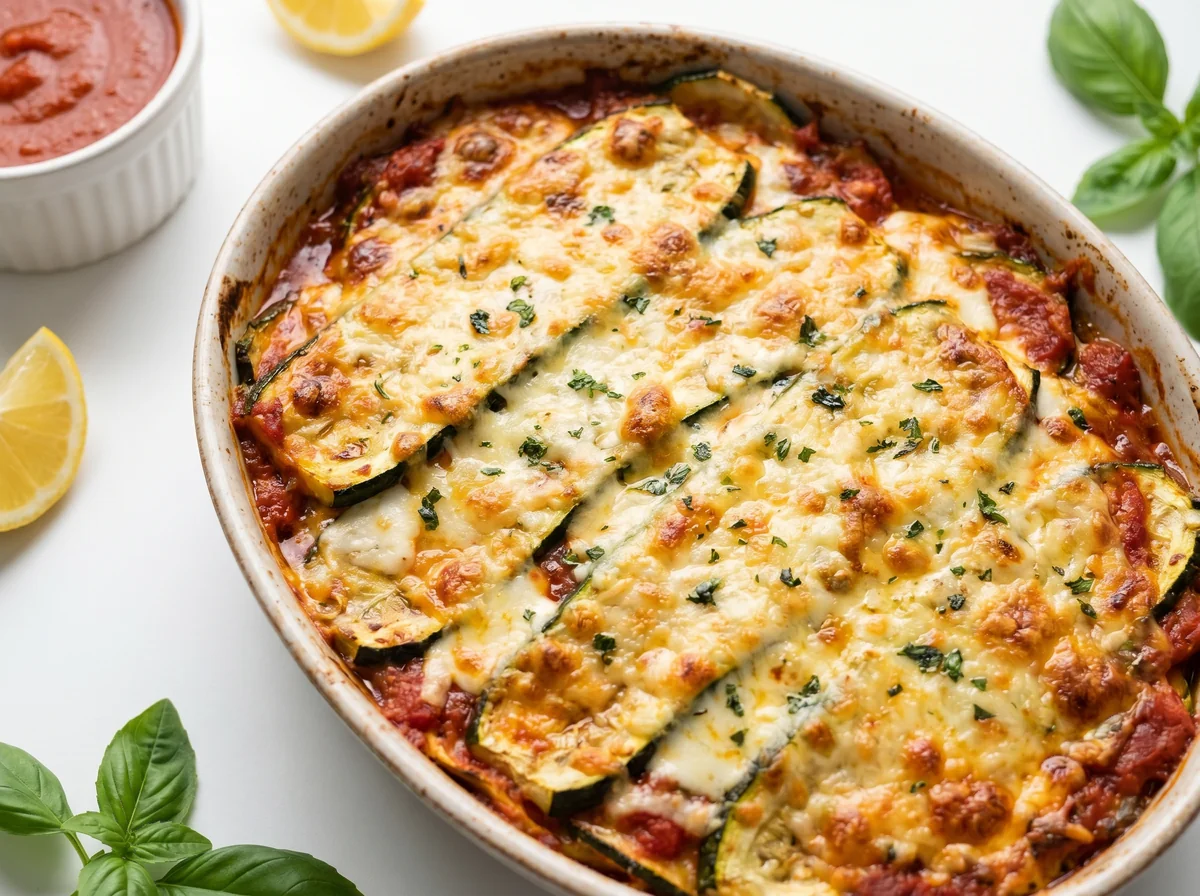
Lasagna made with thin zucchini slices instead of pasta sheets, layered with meat sauce, tomatoes, and cheese — gluten-free and low GI. A wholesome low-carb twist on a beloved classic.
Lasagna is the ultimate Italian family comfort food — but traditional pasta sheets push the carb count high.
EEINA's version swaps them for thin zucchini slices, keeping all the layers, the sauce, and the melted cheese exactly as they should be, but with a fraction of the carbohydrates and no gluten whatsoever. The result is a satisfying, balanced family dinner.
Preparation Steps
Dry the zucchini
Cut the zucchini into thin lengthwise slices (about half a centimetre thick). Sprinkle with salt and leave on a kitchen towel for 15 minutes to release their water, then press firmly to dry. Zucchini is naturally watery — this step is what keeps the lasagna from turning into soup.
Sauté the onion and garlic
Heat the olive oil in a pan, add the onion and cook, stirring, until soft and translucent. Add the garlic and cook until fragrant. This aromatic base is the foundation of the meat sauce.
Brown the meat
Add the ground beef and cook, breaking it up, until fully browned with no pink remaining. Browning the meat gives the sauce a deeper, richer flavour.
Simmer the meat sauce
Add the tomato sauce, oregano, basil, salt and pepper, and let the sauce simmer gently until thickened. A thick sauce prevents the lasagna layers from becoming soggy.
Char the zucchini
Grill the zucchini slices on a dry hot pan or in the oven, 2 minutes per side, until wilted and further dried out. This step greatly improves texture and prevents excess moisture.
Layer the lasagna
In a baking dish, spread a layer of meat sauce, then zucchini slices, then dollops of ricotta, then more sauce — and repeat. Finish with mozzarella and Parmesan on top. Press each layer gently as you go so it holds together.
Bake and rest
Bake at 190°C for 30 to 35 minutes until the top is golden and the edges are bubbling. Let the lasagna rest for 10 minutes before slicing. Resting is essential — it allows the layers to set so the lasagna holds together when served.
Blood Sugar Impact
The glycemic index (GI) measures how quickly a food raises blood sugar, while the glycemic load (GL) measures how much a full serving raises it. Together they give the complete picture.
Glycemic Index
GI
20Low
Low0–55Medium56–69High70+
A low value (≤55) means a gradual rise in blood sugar — the most suitable range for diabetes and insulin resistance.
Glycemic Load
GL
2Low
Low0–10Medium11–19High20+
Glycemic load reflects the impact of the full serving. To lower it: take half a serving, or pair the recipe with a source of protein and fiber.
Nutritional Information
Per ServingMakes 6 servings · one serving is about 315 g of raw ingredients
Calories348 kcal17%of Daily Value*
Protein24 g48%of Daily Value*
Carbohydrates12 g4%of Daily Value*
Fat22 g28%of Daily Value*
Fiber3 g11%of Daily Value*
Sodium585 mg25%of Daily Value*
* Percent Daily Values are based on a 2,000-calorie diet per FDA food-label reference values — your daily needs may be higher or lower. Values are derived from the recipe's ingredients via the USDA database.
Troubleshooting
The most common problems when preparing Zucchini Lasagna with Meat, and how to fix them:
The lasagna is watery like soup
The zucchini's water was not removed. This is the most important step: salt the slices, let them release moisture, press them dry, and ideally grill them lightly before layering. A thickened sauce (not a runny one) also helps.
The lasagna collapsed when sliced
It was not rested. After baking, leave it for at least 10 minutes before cutting so the layers can set and firm up. Slicing while it is too hot causes the layers to slide apart.
The top burned before the inside cooked through
The heat is too high or the dish is too close to the grill. Bake in the centre of the oven at 190°C. If the top browns too early, cover with foil and continue baking.
The meat is dry and clumpy
It was cooked over too high a heat without enough sauce. Break the meat up as it cooks, then add the tomato sauce and let it simmer gently on low heat until the meat stays tender.
The layers are not holding together and fall apart
Too little binding sauce or the layers are too thick. Spread enough sauce between every layer, keep the zucchini slices touching with no gaps, and press each layer down gently.
Storage and Make-Ahead
Refrigerator (4°)
Keeps for four days in an airtight container once cooled. The flavour deepens and the layers firm up the next day — excellent leftovers.
Freezer (-18°)
Up to three months. Slice into portions and wrap before freezing. Thaw overnight in the fridge, then reheat in the oven.
Make-ahead
Assemble the lasagna completely in the dish and refrigerate for up to a day before baking, or prepare the meat sauce ahead of time. Ideal for dinner parties.
Reheating
In a moderate oven (170°C) covered for 15 minutes, or in the microwave for individual portions. Do not leave out of the fridge for more than two hours [1].
Tested Ingredient Substitutions
Original Ingredient
Tested Substitute
Ratio
Flavor Difference
Zucchini slices
Grilled eggplant slices
Same weight
Deeper flavour — salt and dry them the same way to draw out bitterness and moisture
Ground beef
Ground chicken or cooked lentils
Same weight
Chicken is leaner; lentils are a high-fibre vegetarian option
Ricotta cheese
Cottage cheese or reduced-fat soft cheese
Same quantity
Higher protein and lower fat with a similar texture
Ready-made tomato sauce
Fresh tomatoes, blended and cooked down
Two cups
Lower sodium and fresher flavour — needs longer cooking to thicken
Meat (for a vegetarian version)
Chopped mushrooms and lentils
Same weight
Rich umami flavour and high fibre with no meat
How Much Does It Make? Scaling Guide
Servings
Zucchini
Meat
Sauce
Tray
3 (small)
2 pieces
200 g
1 cup
small tray
6 (base)
4 pieces
400 g
2 cups
medium tray
9 (family)
6 pieces
600 g
3 cups
large tray
12 (hosting)
8 pieces
800 g
4 cups
2 trays
EEINA Nutrition Tip
Replacing pasta with zucchini cuts the carbohydrates to roughly one quarter, making this lasagna an excellent choice for people managing diabetes. Choose lean meat and reduced-fat cheese to keep saturated fat in check, and serve alongside a green salad for a complete meal.
Add This Recipe to Your Plan
The EEINA app saves your favorite recipes, calculates them from their real ingredients, and shows your daily numbers toward your goal. Try it free now.
Is zucchini lasagna suitable for people with diabetes?
Very much so. Replacing pasta sheets with zucchini cuts the carbohydrates to roughly one quarter, resulting in a low glycemic index and low glycemic load. Choose lean meat and reduced-fat cheese, and serve with a salad.
How do I keep it from becoming watery?
The secret is removing the zucchini's water: salt the slices, leave for 15 minutes, then press dry — ideally grill them briefly before layering. Use a thickened sauce rather than a runny one, and let the lasagna rest after baking.
Is it gluten-free?
Yes — there are no pasta sheets or flour, making it completely gluten-free. Just confirm that your tomato sauce and cheeses contain no gluten-containing additives.
Can it be made vegetarian?
Yes — replace the meat with cooked lentils, chopped mushrooms, or a combination of both for a rich umami flavour and plenty of fibre. All other steps stay the same.
Is it good for entertaining and make-ahead cooking?
Excellent for both. Assemble it completely and refrigerate up to a day before baking, or bake it ahead and reheat. The flavour and texture actually improve the next day.
Sources: USDA · University of Sydney · Gulf GSO · Our methodology · Updated on