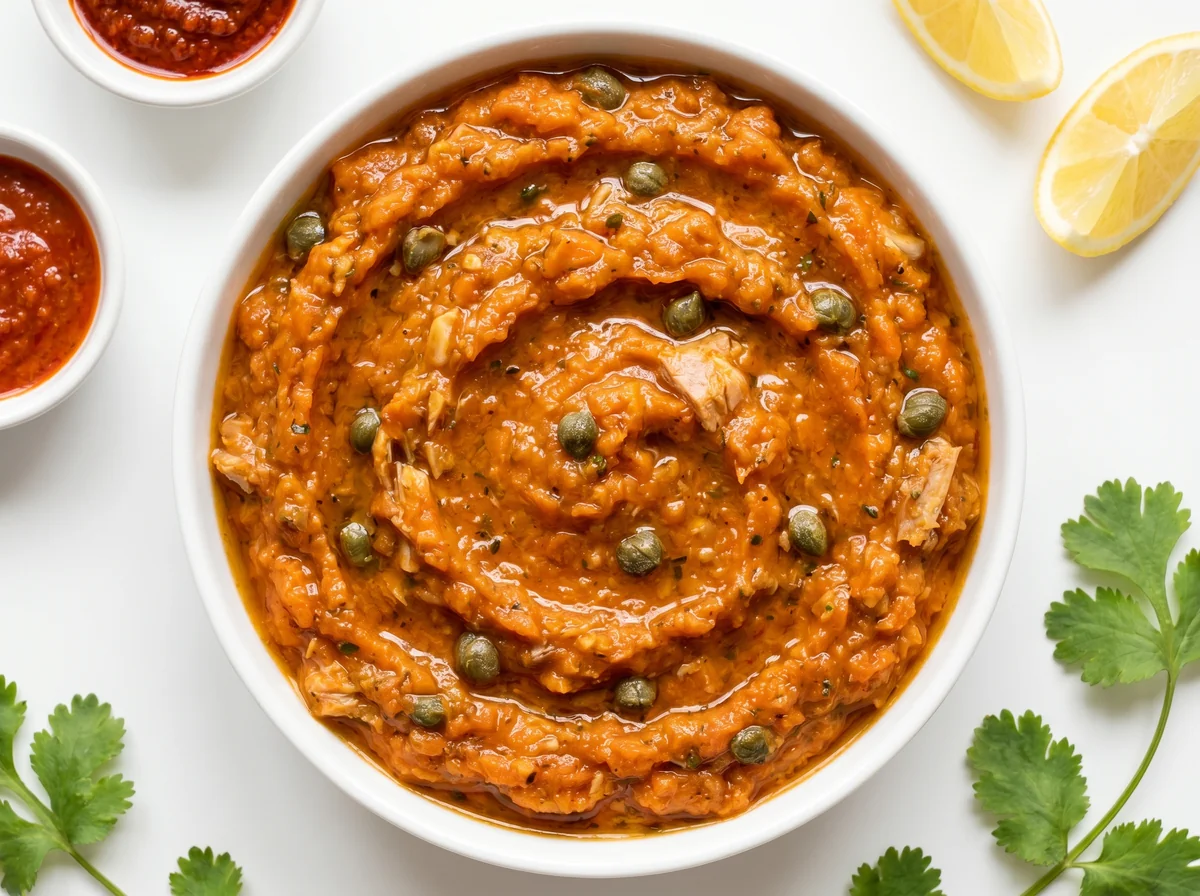
A Tunisian carrot salad — boiled carrots mashed and seasoned with garlic, cumin, harissa, olive oil, and lemon. A spicy, refreshing appetizer that is low in calories with a low glycemic load and free of common allergens.
Ommok Houria is a famous Tunisian carrot salad, a beloved cold appetizer on the Tunisian table. It is made by boiling carrots, mashing them, and seasoning with garlic, cumin, harissa, olive oil, and lemon. Its charming name (Ommok Houria, meaning roughly "your mother is as beautiful as a mermaid") is part of its folk heritage, as is its beautiful orange color.
The sweetness of boiled carrot meets the heat of Tunisian harissa and the fragrance of cumin and lemon acidity, creating a spicy, refreshing, balanced appetizer. Served with bread as part of the Tunisian mezze spread (alongside grilled salad and other dishes), it is a light and healthy choice. Its color, heat, and distinctive flavor have made it an icon of Tunisian salads, a symbol of its spicy, fresh, and generous cuisine.
Preparation Steps
Boil the carrots
Boil the chopped carrots in salted water until completely tender (easily mashed), about fifteen minutes. The carrots must be thoroughly soft to mash smoothly (the salad has a smooth paste-like texture, not chunky). Drain well.
Mash the carrots
Mash the drained boiled carrots (with a fork or potato masher) into a fairly smooth paste — some texture can remain. Mashing is the signature texture of Ommok Houria (a mashed carrot salad, not a diced one).
Prepare the dressing
Mix the crushed garlic, harissa, cumin, dried coriander, olive oil, lemon juice, and salt. Harissa, garlic, and cumin are the soul of the Tunisian flavor in Ommok Houria — the harissa provides the heat and distinctive flavor.
Combine carrots and dressing
Mix the mashed carrots thoroughly with the dressing until uniform — a spiced, pleasantly hot, orange-colored carrot paste, with the sweetness of carrot meeting the heat of harissa, the tartness of lemon, and the fragrance of cumin. Taste and adjust salt, harissa, and lemon.
Rest
Allow Ommok Houria to rest briefly (the flavors meld), then serve at room temperature or slightly chilled. Resting improves the flavor (the spices infuse into the carrot). It can be prepared hours ahead.
Serve
Spread Ommok Houria on a plate, run a spoon across the surface to create furrows, drizzle with olive oil, and garnish with olives, capers, and hard-boiled egg (optional). Serve with bread as an appetizer. A beloved Tunisian classic — the salad's whimsical name is part of its charm, the sweetness of carrot combined with harissa heat and cumin is a delightful treat, a healthy appetizer prized on the Tunisian table.
Blood Sugar Impact
The glycemic index (GI) measures how quickly a food raises blood sugar, while the glycemic load (GL) measures how much a full serving raises it. Together they give the complete picture.
Glycemic Index
GI
32Low
Low0–55Medium56–69High70+
A low value (≤55) means a gradual rise in blood sugar — the most suitable range for diabetes and insulin resistance.
Glycemic Load
GL
2Low
Low0–10Medium11–19High20+
Glycemic load reflects the impact of the full serving. To lower it: take half a serving, or pair the recipe with a source of protein and fiber.
Nutritional Information
Per ServingMakes 4 servings · one serving is about 85 g of raw ingredients
Calories100 kcal5%of Daily Value*
Protein1 g2%of Daily Value*
Carbohydrates9 g3%of Daily Value*
Fat7 g9%of Daily Value*
Fiber2 g7%of Daily Value*
Sodium372 mg16%of Daily Value*
* Percent Daily Values are based on a 2,000-calorie diet per FDA food-label reference values — your daily needs may be higher or lower. Values are derived from the recipe's ingredients via the USDA database.
Troubleshooting
The most common problems when preparing Tunisian Ommok Houria (Carrot Salad), and how to fix them:
Carrots did not mash well
They were not boiled long enough. Boil the carrots until completely tender (easily mashed with a fork) — semi-soft carrots are difficult to mash and will remain chunky. Sufficient boiling gives the smooth, paste-like texture.
Watery consistency
Not drained well enough. Drain the boiled carrots thoroughly (and allow them to steam-dry briefly) before mashing — excess water makes the salad watery. Drained, relatively dry carrots yield a firm texture.
Bland flavor
Insufficient garlic, cumin, or lemon. Garlic, cumin, harissa, and lemon are the flavor of Ommok Houria — be generous with them. Harissa (for heat), cumin (for fragrance), and lemon (for acidity) balance the sweetness of the carrot.
Too spicy
Too much harissa. Add the harissa gradually and taste (heat is to taste) — excess harissa overwhelms the carrot flavor. Reduce it or omit it for a mild version (still delicious with cumin and garlic).
Too salty
Salt from the cooking water, harissa, and added salt all contribute. Boil the carrots with just a little salt, noting that harissa is already salty, and reduce any added salt, adjusting with lemon (which adds flavor without sodium).
Storage and Make-Ahead
Refrigerator (4°C)
Ommok Houria keeps in an airtight container in the refrigerator for 3 to 4 days and actually improves in flavor as the spices meld. Serve cold or at room temperature — a practical ready-made appetizer waiting in the fridge.
Make ahead
Ideal for making ahead (flavor improves with rest) — prepare it hours or even a day before the meal and serve cold. Perfect for Tunisian mezze spreads and dinner parties (prepared in advance and served cold).
Freezer
Freezing Ommok Houria is not recommended (the mashed carrot with dressing changes texture and becomes watery after thawing). It is a fresh salad that keeps well refrigerated for days — freezing ruins its texture.
Food safety
Use well-washed carrots and clean utensils, keep the salad refrigerated, and do not leave it unrefrigerated for more than two hours, especially in warm weather. The olive oil and lemon help preservation slightly.
Tested Ingredient Substitutions
Original Ingredient
Tested Substitute
Ratio
Flavor Difference
Harissa
Ground red chili pepper or omit
to taste
For heat use red chili, or omit harissa entirely for a mild version (still delicious with garlic, cumin, and lemon)
Carrots
Carrots with a little potato or pumpkin
mostly carrot
A small amount of boiled potato or pumpkin gives a smoother texture and extra sweetness; carrot remains the base, the color, and the flavor
Olive oil
Reduce quantity
less
Reduces calories; some olive oil is essential for flavor, texture, and healthy fats, but the amount can be adjusted and used only as a drizzle
How Much Does It Make? Scaling Guide
Servings
Carrots
Harissa
Garlic
2 (small)
2 1/2 pieces
1/2 teaspoon
1 clove
4 (base)
5 pieces
1 teaspoon
2 cloves
8 (feast)
10 pieces
2 teaspoons
4 cloves
EEINA Nutrition Tip
Ommok Houria is an excellent healthy appetizer: carrots are rich in beta-carotene (vitamin A) and fiber, olive oil provides healthy fats, and the garlic, cumin, and harissa (with capsaicin from the hot pepper) offer antioxidants. Its glycemic load is low and calorie count is modest. The only challenge is sodium (from salt and canned harissa), so adjust the salt and use a low-sodium harissa. Drizzle olive oil in moderation. A tasty, refreshing plant-based appetizer — an excellent everyday choice.
Add This Recipe to Your Plan
The EEINA app saves your favorite recipes, calculates them from their real ingredients, and shows your daily numbers toward your goal. Try it free now.
A Tunisian carrot salad served as a cold appetizer, made by boiling carrots, mashing them, and seasoning with garlic, cumin, harissa, olive oil, and lemon. Its charming name (Ommok Houria) is part of its folk heritage. The sweetness of carrot meets the heat of harissa — a spicy, refreshing, healthy appetizer cherished on the Tunisian table.
Why the unusual name Ommok Houria?
Ommok Houria is a playful Tunisian folk expression (roughly meaning 'your mother is beautiful as a mermaid'), attributed to the salad's beautiful orange color and its appeal. Whimsical names are common for folk dishes, and this name is part of the salad's heritage and its beloved Tunisian charm.
Is Ommok Houria spicy?
It is as spicy as the amount of harissa used (Tunisian harissa is hot), so it can be made fiery (generous harissa), mild (a little harissa), or gentle (none at all). Heat is to taste — the ideal balance is the carrot's sweetness with a pleasant warmth, the tartness of lemon, and the fragrance of cumin.
Is Ommok Houria healthy?
Yes, an excellent healthy appetizer: carrots provide beta-carotene and fiber, olive oil gives healthy fats, garlic and cumin and harissa offer antioxidants, the glycemic load is very low, and calories are modest. The only challenge is sodium (adjust salt and harissa). A delicious, refreshing plant-based appetizer — an excellent daily choice.
Sources: University of Sydney · Gulf GSO · Our methodology · Updated on