A classic Levantine breakfast — tahini (strained yogurt) stirred with date molasses (or carob molasses) until it becomes a caramel-like dipping sauce for bread. Energy-rich, low glycemic load, contains sesame (tahini).
Tahini and date molasses (known in Iraq as dibs w rashi) is a classic Levantine and Iraqi breakfast — a simple, beloved dish of tahini (sesame paste) mixed with molasses (date molasses, carob molasses, or grape molasses). Combining them yields a caramel-like sauce for dipping bread.
It is one of the simplest, most affordable, and most loved winter breakfast dishes, providing energy and warmth, and it holds an emotional place in morning memory and home pantry traditions. It brings together the richness and goodness of sesame with the natural sweetness and minerals of molasses — a genuine folk dish that appears on simple breakfast tables with generosity and warmth.
Preparation Steps
Prepare the tahini
Stir the tahini well in its jar before using (the oil floats to the top and must be reincorporated). Spoon the tahini into a plate. Good-quality fresh tahini is the foundation of the flavor — old tahini turns bitter and ruins the dish.
Add the date molasses
Add the date molasses to the tahini gradually. The usual ratio is about two-thirds tahini to one-third molasses, but adjust to taste (more molasses = sweeter and thinner; more tahini = thicker and less sweet).
Mix
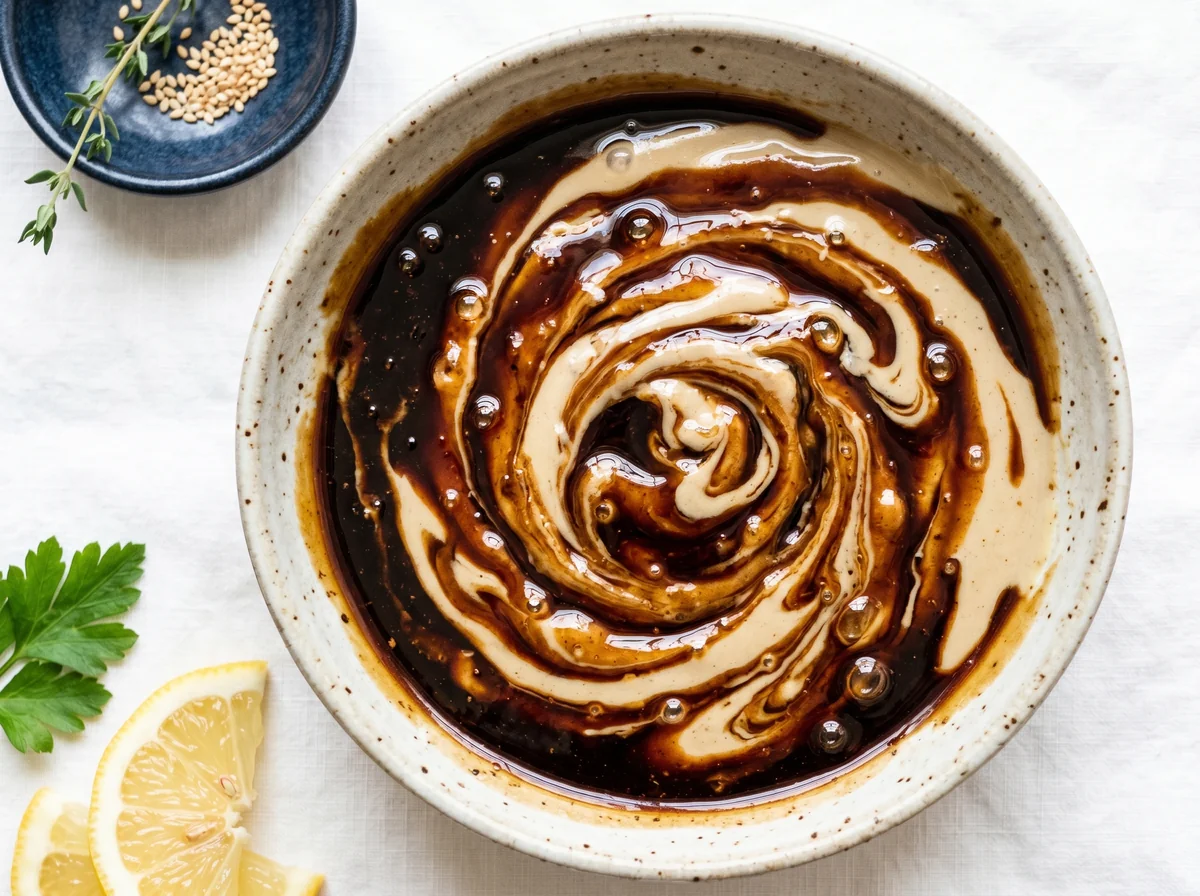
Stir the tahini and molasses together with a spoon or fork until fully combined into a smooth, glossy brown sauce (caramel-colored). The tahini will seize and thicken when it first meets the molasses, then smooth out with continued stirring — keep going until it is silky.
Adjust the consistency
Adjust the consistency and sweetness: if too thick, add a little more molasses or a splash of water; if too thin, add more tahini. The target is a sauce that flows just enough to dip bread into — sweet but balanced, not overwhelming.
Spread on the plate
Spread the molasses-tahini mixture on a flat plate and make swirls with the back of the spoon. Its glossy caramel color is inviting. A drizzle of the oil that rises from the tahini or a few sesame seeds on top makes a lovely finish.
Serve
Serve the tahini and date molasses with fresh Arabic bread for dipping — a classic Levantine (and Iraqi, where it is known as dibs w rashi) breakfast or light sweet. It is one of the simplest and most beloved Levantine morning dishes, combining the richness of tahini (sesame) with the natural sweetness and minerals of date molasses — a nourishing, economical energy dish with a treasured place in Levantine breakfast memory.
Blood Sugar Impact
The glycemic index (GI) measures how quickly a food raises blood sugar, while the glycemic load (GL) measures how much a full serving raises it. Together they give the complete picture.
Glycemic Index
GI
45Low
Low0–55Medium56–69High70+
A low value (≤55) means a gradual rise in blood sugar — the most suitable range for diabetes and insulin resistance.
Glycemic Load
GL
10Low
Low0–10Medium11–19High20+
Glycemic load reflects the impact of the full serving. To lower it: take half a serving, or pair the recipe with a source of protein and fiber.
Nutritional Information
Per ServingMakes 4 servings · one serving is about 60 g of raw ingredients
Calories263 kcal13%of Daily Value*
Protein6 g12%of Daily Value*
Carbohydrates26 g9%of Daily Value*
Fat16 g21%of Daily Value*
Fiber3 g11%of Daily Value*
Sodium91 mg4%of Daily Value*
* Percent Daily Values are based on a 2,000-calorie diet per FDA food-label reference values — your daily needs may be higher or lower. Values are derived from the recipe's ingredients via the USDA database.
Troubleshooting
The most common problems when preparing Tahini and Date Molasses (Dibs w Tahini), and how to fix them:
The mixture seized and would not smooth out
This is normal — tahini thickens when it first meets the molasses. Keep stirring (the molasses will gradually loosen it), and add a touch more molasses or a splash of water until it becomes silky and glossy. Continued stirring resolves the seizing.
The flavor is bitter
The tahini is old. Use good-quality fresh tahini (old tahini turns bitter and ruins the flavor), stir it well before using. The molasses balances, but bitter tahini overpowers it.
Too sweet or not sweet enough
The ratio is off. Adjust to taste: more molasses for sweetness, more tahini to dial it back. The usual ratio is two-thirds tahini to one-third molasses, but it is flexible based on preference.
Too thick to dip
Not enough molasses or moisture. Add a little more molasses (it loosens and sweetens) or a splash of water and stir until the sauce flows and is right for bread dipping.
The oil has separated in the tahini
The jar was not stirred. Tahini oil floats to the surface in the jar, so stir it well before measuring to recombine. Well-stirred tahini gives a smoother mixture.
Storage and Make-Ahead
Room temperature
The tahini-molasses mixture keeps in an airtight container at room temperature for several days (both ingredients last a long time); stir before use if it has separated. Practical to prepare a batch and keep it ready for breakfast.
Ingredients stored separately
Tahini and date molasses each keep for months in a cool place (tahini may be refrigerated after opening). Mix a fresh portion when needed — simpler and fresher.
Advance preparation
It is very quick (5 minutes) so advance preparation is usually unnecessary. However, you can mix a batch and store it in a jar for a quick breakfast over several days — stir before serving.
Food safety
Tahini and molasses are dry, stable ingredients that keep well. Use fresh tahini (watch the date and smell) and clean utensils; the mixture keeps safely for several days.
Tested Ingredient Substitutions
Original Ingredient
Tested Substitute
Ratio
Flavor Difference
Date molasses
Carob molasses, grape molasses, or honey
Same amount
Carob molasses is the classic Levantine choice (dibs w rashi); grape molasses is sweeter; honey is a different-flavored alternative — all mix well with tahini.
High tahini ratio
A little more molasses
To taste
For those who prefer sweeter and thinner; more tahini gives a thicker, less sweet, sesame-richer consistency.
Dipping with bread
Spread or filling (for sandwiches or pastries)
—
Can be spread on bread as a sandwich, used as a pastry filling, or added to sfouf and sweets dough.
How Much Does It Make? Scaling Guide
Servings
Tahini
Date molasses
2 (half recipe)
1/4 cup
2 tablespoons
4 (base)
1/2 cup
1/4 cup
8 (feast)
1 cup
1/2 cup
EEINA Nutrition Tip
Tahini and date molasses is a moderately nourishing energy breakfast: tahini is rich in healthy fats, calcium, iron, and plant protein; date molasses (or carob) is a natural sweetener with minerals (iron and potassium) that is better than refined sugar; and the fats and fiber slow sugar absorption, giving it a low glycemic load. Its challenge is that it is calorie-dense (tahini and molasses), so use a moderate amount for dipping and balance the accompanying bread. It is a good energy source for breakfast.
Add This Recipe to Your Plan
The EEINA app saves your favorite recipes, calculates them from their real ingredients, and shows your daily numbers toward your goal. Try it free now.
A Levantine and Iraqi breakfast (known as dibs w rashi) of tahini (sesame paste) mixed with molasses (date molasses, carob, or grape), forming a rich caramel-like sauce for dipping bread. One of the simplest and most loved energy-giving winter breakfasts.
Which molasses should I use?
Date molasses is widely available; carob molasses is the distinctive Levantine choice (making the classic dibs w rashi); grape molasses is sweeter. All are natural sweeteners that mix with tahini. Choose based on taste and availability — all are delicious with tahini.
Is tahini and date molasses healthy?
A moderately nourishing energy breakfast: tahini provides healthy fats, calcium, iron, and plant protein; molasses is a natural sweetener with minerals better than refined sugar; and the fats and fiber slow sugar absorption giving a low glycemic load. Its challenge is calorie density, so keep the amount moderate.
Why does the mixture seize at first?
Tahini thickens and seizes when it first meets the molasses (a liquid) — this is completely normal. Keep stirring and the molasses gradually loosens the tahini until it becomes a smooth, glossy sauce. Do not give up at the first seizing; stirring resolves it.