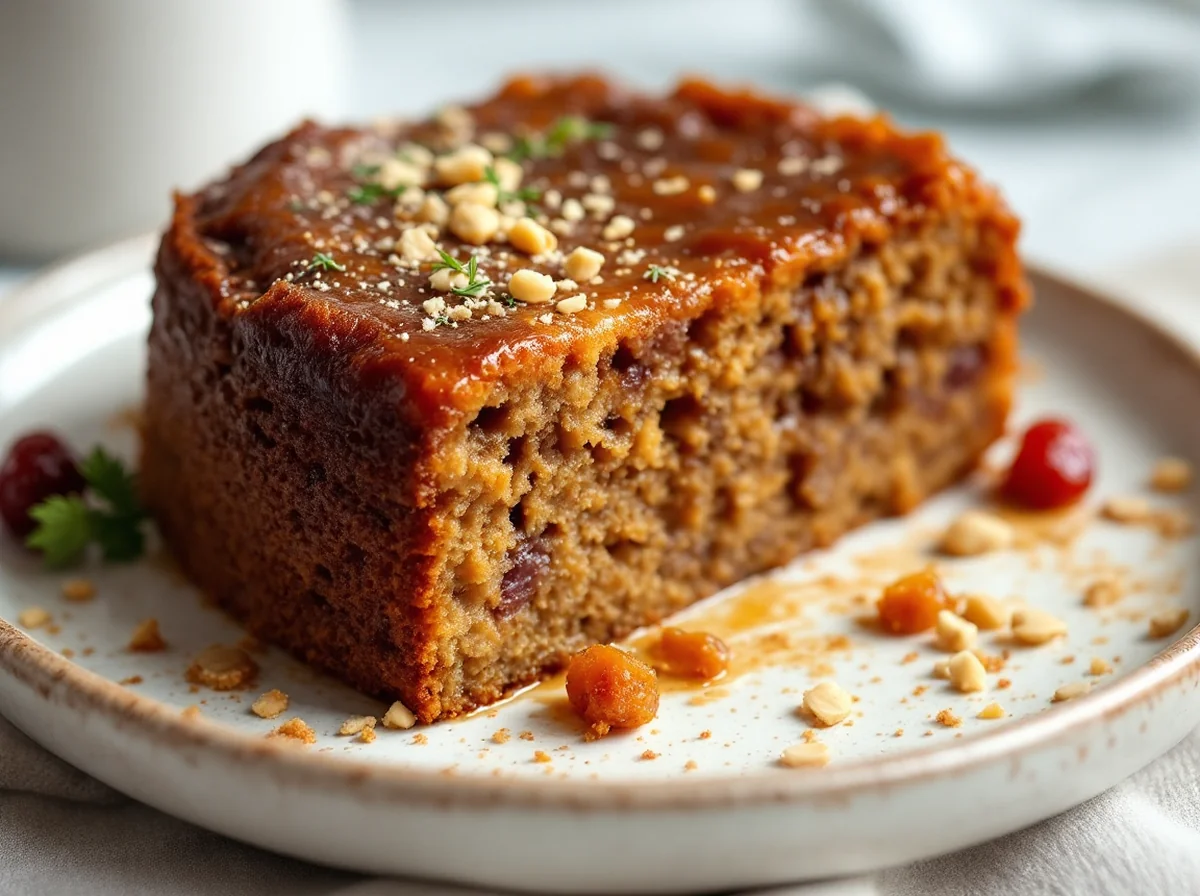
Sticky date cake, sticky toffee pudding, is the most famous winter dessert in the British Isles: a date cake that melts under a warm sauce.
Our version replaces the heavy caramel toffee sauce with a date paste sauce, so it stays sticky and the sugar calms down, and the date reclaiming its throne in it is poetic justice.
Preparation Steps
Soak the dates in boiling water and soda
The chopped dates are submerged in boiling water, the soda is sprinkled over them, and it is left for ten minutes. The soda breaks down the date fibers so they melt completely into the cake: the old English secret of the 'sticky' cake, then it is mashed with a fork in its water.
Cream the butter, sugar, and eggs
The butter and brown sugar for three minutes until fluffy, then the eggs one at a time and the vanilla.
Fold in the flour and date mash alternately
The sifted flour with the baking powder and salt is folded alternately with the warm date mash. A loose, dark batter, and this is its nature.
Bake until the skewer is nearly clean
A lined 20x30 tray at 175 degrees for thirty-five minutes. A skewer with moist, not dry, crumbs: its moistness is its identity.
Soak with the warm date sauce. The crowning
The date paste is melted with the milk, butter, and cinnamon over low heat into a sauce that is poured over the warm cake pricked with a skewer. It absorbs it and becomes truly 'sticky': the famous English winter dessert with date sauce instead of caramel, and in the land of dates we are its rightful people.
Blood Sugar Impact
The glycemic index (GI) measures how quickly a food raises blood sugar, while the glycemic load (GL) measures how much a full serving raises it. Together they give the complete picture.
Glycemic Index
GI
59Medium
Low0–55Medium56–69High70+
A low value (≤55) means a gradual rise in blood sugar — the most suitable range for diabetes and insulin resistance.
Glycemic Load
GL
23High
Low0–10Medium11–19High20+
Glycemic load reflects the impact of the full serving. To lower it: take half a serving, or pair the recipe with a source of protein and fiber.
Nutritional Information
Per ServingMakes 12 servings · one serving is about 100 g of raw ingredients
Calories236 kcal12%of Daily Value*
Protein4 g8%of Daily Value*
Carbohydrates42 g15%of Daily Value*
Fat7 g9%of Daily Value*
Fiber3 g11%of Daily Value*
Sodium391 mg17%of Daily Value*
* Percent Daily Values are based on a 2,000-calorie diet per FDA food-label reference values — your daily needs may be higher or lower. Values are derived from the recipe's ingredients via the USDA database.
Troubleshooting
The most common problems when preparing Sticky Date Cake with Warm Date Sauce, and how to fix them:
It came out as an ordinary cake with date pieces
The soda soak was cut short. The ten minutes and the mashing. Chemistry, not a luxury.
Its center sank
A loose batter overbeaten after the flour, or a door that was opened. Gentle folding and the door closed for half an hour.
The sauce did not soak in
It was poured over a cold cake with an intact surface. The warm one pricked with a skewer drinks it in. Timing and the holes.
Overwhelming sweetness
Premium dates and a generous sauce. The ordinary sugar is enough, and the sauce is served on the side for anyone who wants control.
Storage and Make-Ahead
Warm with its sauce
Its absolute peak, and a spoon of Greek yogurt balances it.
At room temperature
Three days covered, and warmed in the microwave for thirty seconds with fresh sauce.
In the freezer
Squares for two months without sauce, and the sauce always fresh.
Tested Ingredient Substitutions
Original Ingredient
Tested Substitute
Ratio
Flavor Difference
Brown sugar
Cut it in half with sweet Sukkari dates
40 g
The dates carry more than we think
Date paste sauce
Vanilla custard from our notebook
to taste
The second English school
The butter
Neutral oil
70 ml
A little moister and less rich
Half the flour
Fine whole wheat
1:1 for the half
A brown depth that suits the date
How Much Does It Make? Scaling Guide
Ingredient
12 pieces
6 pieces
24 pieces
Dates
250 g
125 g
500 g
Flour
200 g
100 g
400 g
Brown sugar
80 g
40 g
160 g
EEINA Nutrition Tip
Soak the dates in boiling water and soda before everything. This step is the cake: the alkaline soda breaks down the fiber walls of the dates so they dissolve fully into the batter, coloring it and moistening it from within; chopped dates without soaking stay as separate pieces in an ordinary cake. Ten minutes of soaking separate the sticky from its lookalike.
Add This Recipe to Your Plan
The EEINA app saves your favorite recipes, calculates them from their real ingredients, and shows your daily numbers toward your goal. Try it free now.
The soda soak dissolves the dates into the batter instead of leaving them as pieces, and the absorbed sauce makes it a moist pudding. 'Sticky' is a description of texture, not an exaggeration.
Where is its sugar calmed compared to the original?
The original toffee sauce is pure sugar and cream; our sauce is date paste with milk, and eighty grams of sugar for the whole cake versus twice that traditionally: a piece of ~240 calories counted as a winter dessert.
Is it good for a dinner party?
One of the most successful winter finale desserts. It is baked ahead and its sauce reheated at the moment of serving: the scene of the warm pour in front of the guests is half the party.
Which dates suit it?
The ordinary, fully soft kind. The soak levels the premium and the modest: save the premium for individual hospitality.