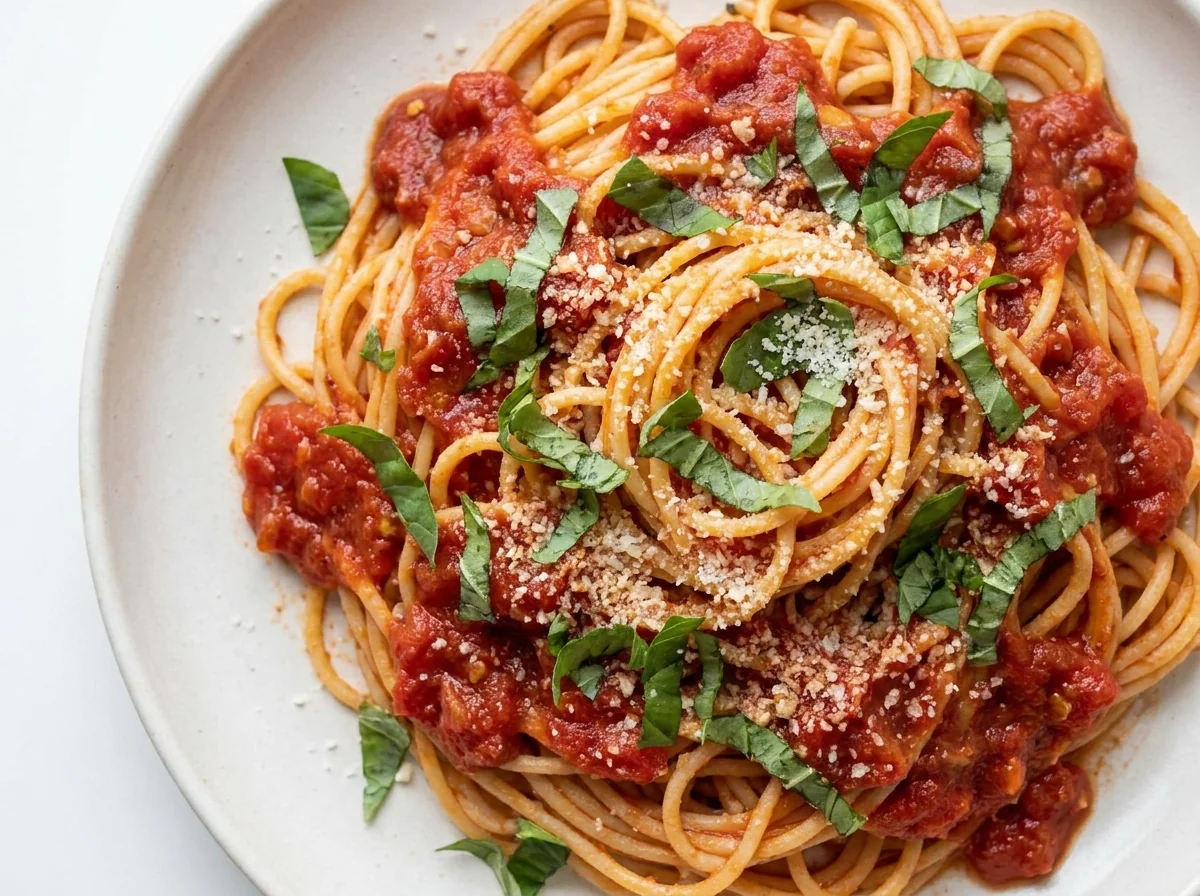
Napolitana is the mother of Italian tomato sauces.
Tomatoes, garlic, basil, and olive oil, nothing more, from the city of Naples that taught the planet pasta. The mother sauce that, once you master it, makes every tomato sauce after it a branch.
Preparation Steps
Scent the oil with whole garlic
In a wide pan over gentle heat, warm the olive oil with the garlic cloves crushed with the back of the knife. Whole, not chopped: they scent and are picked out later, for the garlic of Naples sauce is a whisper, not a shout.
Cook the tomatoes for an honest fifteen minutes
Pour in the crushed tomatoes, salt, a pinch of sugar, and a whole basil stem, and cook over gentle heat for fifteen minutes, during which they thicken, lose their raw sharpness, and deepen in red. This fifteen-minute sauce beats jars of ready-made sauce by a mile.
Boil and marry with the learned toss
Boil the spaghetti in salted water a minute short, transfer it with tongs to the sauce with a ladle of boiling water, and toss over the heat for a minute during which it absorbs and is coated. The pasta finishes cooking in its sauce: Italy's first law.
Finish with torn basil
Turn off the heat and pick out the garlic and basil stem, and tear fresh basil leaves by hand over it. Tearing, not chopping, preserves its aroma, and serve it with the parmesan: the mother of tomato sauces by which all that comes after is measured.
Blood Sugar Impact
The glycemic index (GI) measures how quickly a food raises blood sugar, while the glycemic load (GL) measures how much a full serving raises it. Together they give the complete picture.
Glycemic Index
GI
47Low
Low0–55Medium56–69High70+
A low value (≤55) means a gradual rise in blood sugar — the most suitable range for diabetes and insulin resistance.
Glycemic Load
GL
37High
Low0–10Medium11–19High20+
Glycemic load reflects the impact of the full serving. To lower it: take half a serving, or pair the recipe with a source of protein and fiber.
Nutritional Information
Per ServingMakes 3 servings · one serving is about 265 g of raw ingredients
Calories552 kcal28%of Daily Value*
Protein17 g34%of Daily Value*
Carbohydrates82 g30%of Daily Value*
Fat18 g23%of Daily Value*
Fiber4 g14%of Daily Value*
Sodium461 mg20%of Daily Value*
Potassium533 mg11%of Daily Value*
Phosphorus270 mg22%of Daily Value*
* Percent Daily Values are based on a 2,000-calorie diet per FDA food-label reference values — your daily needs may be higher or lower. Values are derived from the recipe's ingredients via the USDA database.
Troubleshooting
The most common problems when preparing Spaghetti Napolitana with Tomato and Basil, and how to fix them:
The sauce is sour and sharp
Cheap canned tomatoes or short cooking. A good can, the full fifteen minutes, and the pinch of sugar. All three together.
It came out watery and thin
Cooked in a rush, covered. Uncovered over gentle heat it thickens, and its right texture coats the spoon in a light coat.
The garlic overpowered
It was chopped instead of fully crushed. Whole cloves crushed with the back of the knife are picked out at the end. The whisper of Naples.
The basil blackened and wilted
It went on the heat early and chopped. Its stem for cooking and its torn leaf to finish off the heat. Its fixed law.
Storage and Make-Ahead
Right away
With its fresh basil. A plate of the moment.
The sauce alone in the fridge
Four days in a jar. The week's sauce ready for pasta, pizza, and toast.
The sauce in the freezer
Three months in containers. The permanent stash of the mother of sauces.
Tested Ingredient Substitutions
Original Ingredient
Tested Substitute
Ratio
Flavor Difference
Canned tomatoes
Fresh ripe grated tomatoes in season
600 g
Longer cooking and truer in summer
Spaghetti
Penne or whole-wheat
1:1
All the strands are daughters of the mother sauce
A protein addition
Tuna or our meatballs
~
The mother embraces everyone
Parmesan
Grated Roumy cheese
1:1
The nearest neighbor on the shelf and in price
How Much Does It Make? Scaling Guide
Ingredient
3 servings
1.5 servings
6 servings
Spaghetti
300 g
150 g
600 g
Tomato
400 g
200 g
800 g
Olive oil
45 ml
25 ml
90 ml
EEINA Nutrition Tip
The small pinch of sugar with the salt is not cheating. It is the correction of canned tomatoes' acidity that the kitchens of Italy themselves do: it restores the balance of the ripe fruit lost in the can; a pinch on the tip of the spoon, not a spoonful.
Add This Recipe to Your Plan
The EEINA app saves your favorite recipes, calculates them from their real ingredients, and shows your daily numbers toward your goal. Try it free now.
The jar is added sugar, stabilizers, and double the price, while your fifteen minutes are tomatoes and olive oil: the difference in taste and ledger needs no trial.
How is it different from marinara and bolognese?
Napolitana is the pure mother, marinara is its quicker sister with bolder garlic, and bolognese is its child with meat. A family tree whose root is in your plate right now.
Is it a complete meal?
Carbohydrates with a real vegetable sauce. It is completed with a simple protein: tuna, a side of cottage cheese, or our meatballs.
Why are the basil leaves torn by hand?
The knife wounds their cells so they blacken and their aroma flies off, while tearing opens the aroma and preserves the green: an honest Italian detail.