Areeka is one of the most famous breakfast and hospitality dishes in southern Saudi Arabia.
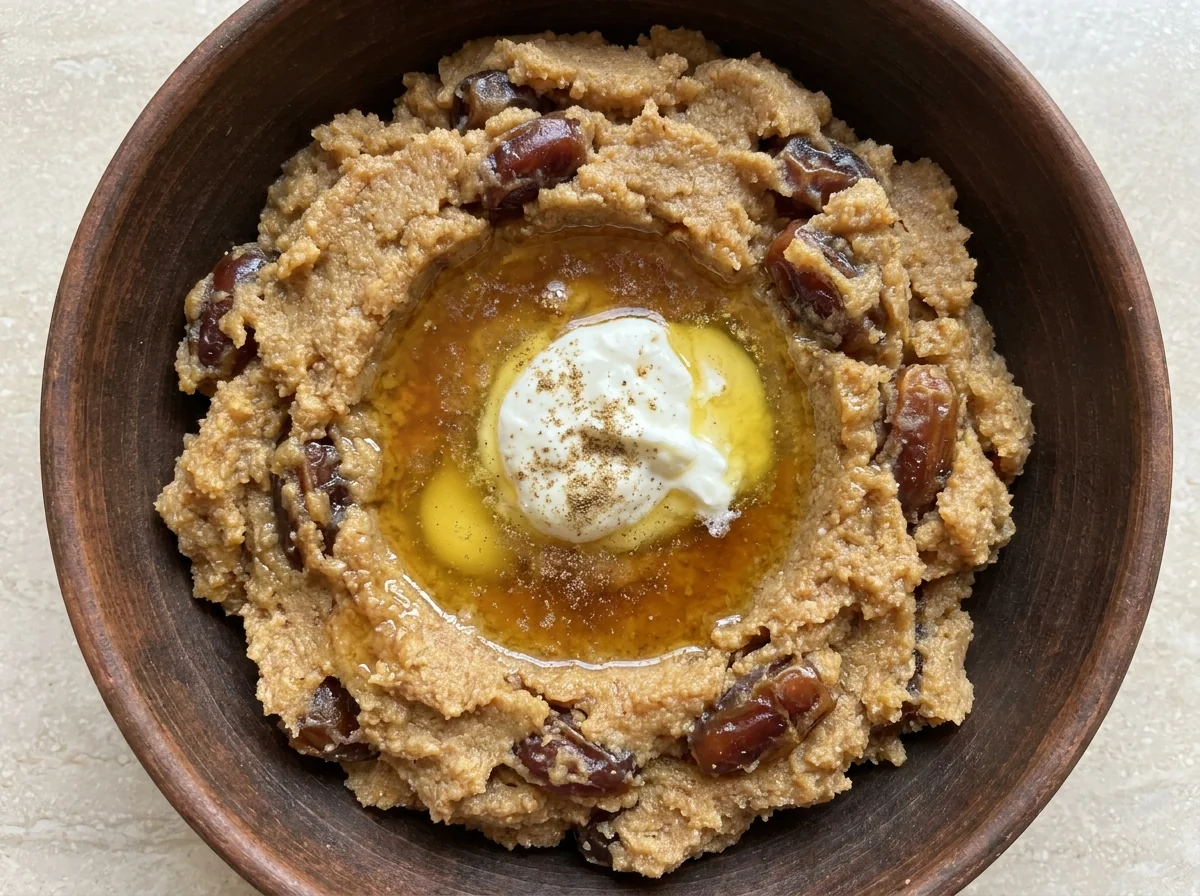
Hot wheat bread rubbed with dates until they unite, then drizzled with ghee and honey and domed into a pool at the top, as documented in Saudi cooking pages. It is distinct from the Yemeni areeka neighboring it in the library.
Preparation Steps
Bake the wheat bread as the base
Knead the wheat flour, salt, and yeast with the warm water into a soft dough and rest it for half an hour, then roll it into two discs and bake them on a hot saj or in the oven until cooked and speckled. Areeka is the daughter of fresh hot wheat bread.
Crumble and rub. The motion behind the name
Crumble the hot bread into pieces in a deep bowl, add the soft dates in small pieces, then 'rub' the two together with your fingertips or a wooden pestle. Knead and rub them until the dates melt into the bread and they become one even brown body, and from this rubbing (ark) areeka takes its name.
Drizzle with ghee and scent
Pour half the melted local ghee over the hot dough with a pinch of cardamom and keep rubbing until it absorbs it, shines, and softens into a tender dough that yields to the hand.
Dome, hollow, and drizzle
Shape the areeka into a dome on the serving plate, hollow a well in its top, and pour the rest of the ghee and the honey into it as a golden pool, and for anyone wanting the full southern luxury, crown it with the clotted cream.
Serve it hot and breathing
Served right away, scooped from its edges by the bite toward the pool, the hospitality breakfast of Asir and Al-Baha that precedes the cup of coffee and is never late to it.
Blood Sugar Impact
The glycemic index (GI) measures how quickly a food raises blood sugar, while the glycemic load (GL) measures how much a full serving raises it. Together they give the complete picture.
Glycemic Index
GI
52Low
Low0–55Medium56–69High70+
A low value (≤55) means a gradual rise in blood sugar — the most suitable range for diabetes and insulin resistance.
Glycemic Load
GL
46High
Low0–10Medium11–19High20+
Glycemic load reflects the impact of the full serving. To lower it: take half a serving, or pair the recipe with a source of protein and fiber.
Nutritional Information
Per ServingMakes 4 servings · one serving is about 210 g of raw ingredients
Calories623 kcal31%of Daily Value*
Protein14 g28%of Daily Value*
Carbohydrates100 g36%of Daily Value*
Fat21 g27%of Daily Value*
Fiber12 g43%of Daily Value*
Sodium298 mg13%of Daily Value*
* Percent Daily Values are based on a 2,000-calorie diet per FDA food-label reference values — your daily needs may be higher or lower. Values are derived from the recipe's ingredients via the USDA database.
Troubleshooting
The most common problems when preparing Southern Areeka with Dates, and how to fix them:
The dates stayed in pieces and did not melt
The bread cooled or the dates are dry. Hot bread and soft, kneadable dates, and a spoon of hot water rescues the last stubbornness.
The areeka is dry and crumbly
Scant ghee or too much bread for the dates. An extra spoon of warm ghee with fresh rubbing brings it together.
It came out heavy and clinging to the throat
Too much date or rubbing with no aeration. The ratio is 3 bread to 2 dates, and it is eaten in sips of tea that intercede for its richness.
The dome collapsed and ran
Too much ghee inside the dough. Half in the rubbing and half for the pool. This distribution preserves both texture and the scene.
Storage and Make-Ahead
Right away
Hot with its pool. All its glory is in its hour.
In the fridge
Two days without the pool drizzle. Reheat covered by steam and drizzle fresh.
Not suited to freezing
The rubbed texture collapses on thawing.
Tested Ingredient Substitutions
Original Ingredient
Tested Substitute
Ratio
Flavor Difference
Fresh wheat bread
Ready wheat bread heated well
~
An acceptable shortcut, and fresh hot bread is its master
Honey
Date molasses
1:1
Doubled sweetness for date lovers
Clotted cream
Omit it
~
A lighter version. It stays a complete areeka
Local ghee
Butter
1:1
Acceptable, and the difference in aroma is noticeable
How Much Does It Make? Scaling Guide
Ingredient
4 servings
2 servings
8 servings
Wheat flour
300 g
150 g
600 g
Dates
200 g
100 g
400 g
Ghee
70 g
35 g
140 g
EEINA Nutrition Tip
Rub while the bread is so hot it can barely be touched. Its heat is what melts the dates and marries them; if the bread cools before rubbing, the dates stay stubborn pieces no matter how you knead. A wooden pestle protects you and does the job well.
Add This Recipe to Your Plan
The EEINA app saves your favorite recipes, calculates them from their real ingredients, and shows your daily numbers toward your goal. Try it free now.
The Yemeni one is a dough that is baked then rubbed with ghee and honey, often with no dates kneaded in; the southern Saudi one unites the bread with dates by rubbing until they become one brown body. The rubbed dates are its defining line.
And how is it different from maasoub?
Maasoub (banana-bread mash dessert) is built on mashed banana with bread; areeka on rubbed dates. Each one's fruit is its identity.
Does it work as a daily breakfast?
It is a dense energy breakfast suited to a long day or hospitality, and for everyday use the portion is shrunk to one palmful and the pool is drizzled with a spoon, not a pour.
What is it served with in the south?
With bitter coffee or red tea, and in many homes cold laban sits beside it to cut its richness.