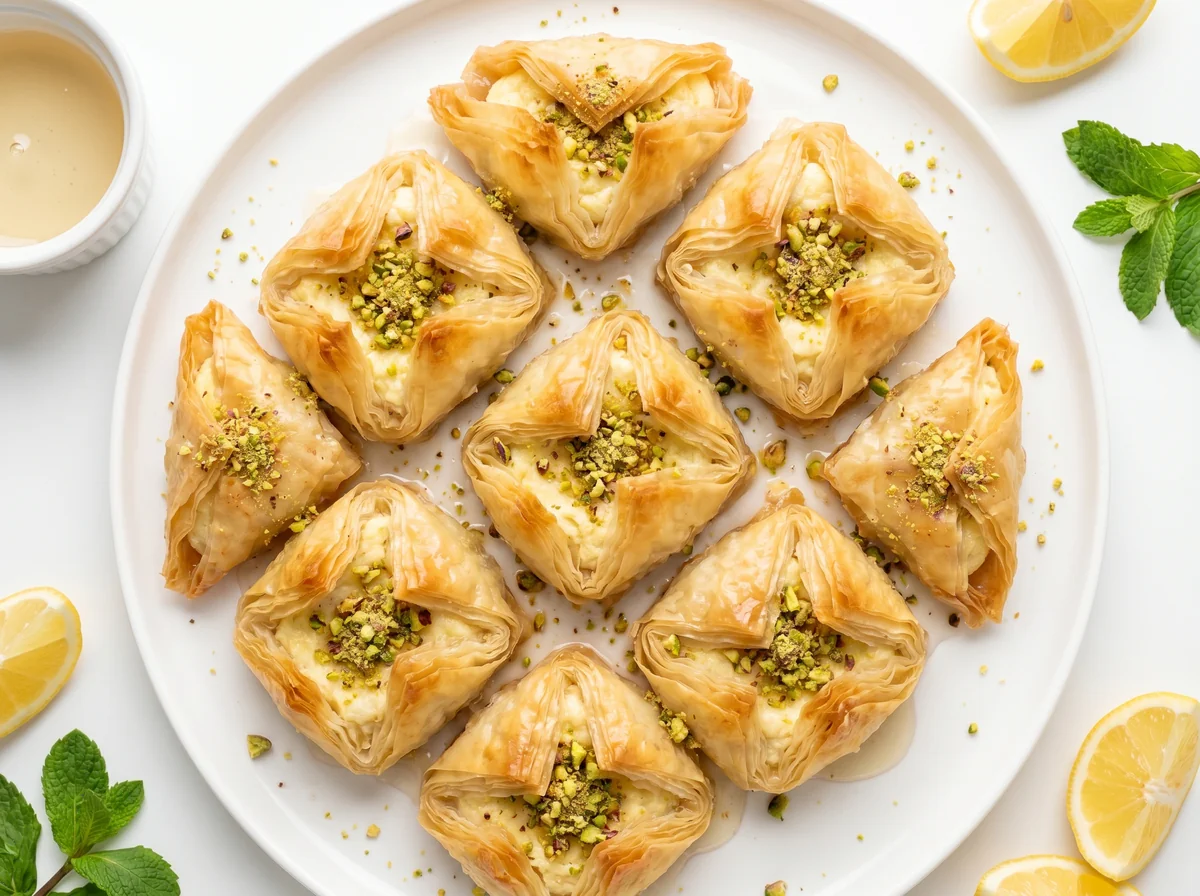
A Levantine Ramadan sweet — phyllo triangles filled with clotted cream, baked until golden, soaked in sugar syrup, and garnished with pistachios. A festive treat with medium glycemic load, containing gluten, dairy, and pistachios.
Shaabiyat (also called Warbat bil-Ashta) are a beloved Levantine Ramadan and celebration sweet — phyllo triangles filled with clotted cream (ashta), baked or fried, soaked in sugar syrup, and garnished with pistachios. They belong to the family of phyllo-and-cream pastries (znoud el-sit, knafeh), but stand apart with their distinctive triangular shape.
They are prepared abundantly during Ramadan and served after iftar. The combination of crispy golden phyllo, cool creamy ashta, sweet syrup, and pistachios is the secret to their enduring popularity.
Preparation Steps
Make the cold syrup
Boil the sugar and water, add the lemon juice, and let it boil for ten minutes until slightly thickened, then add the orange blossom water. Leave it to cool completely. Cold syrup poured over hot pastries is what preserves the crunch.
Prepare the phyllo
Lay out the phyllo sheets and cut them into rectangles or squares of a suitable size. Brush each piece with melted ghee and layer them (two or three sheets per piece for a sturdy texture). Keep unused phyllo covered with a damp towel — it dries and cracks very quickly.
Fill and fold into triangles
Place a spoonful of clotted cream at one end of a buttered piece, then fold it into a triangle repeatedly (like folding a flag) until you reach the end, forming a neat sealed Shaabiyat triangle. The triangular fold is the signature of Shaabiyat and keeps the cream inside.
Brush and bake
Arrange the triangles on a greased baking pan and brush the tops with melted ghee. Bake in an oven at 180°C for about twenty minutes until golden and crispy. The ghee and the golden color are what create the crunch. (They can also be fried for a richer, crunchier result.)
Soak with syrup
As soon as the hot Shaabiyat come out of the oven, pour the cold syrup over them (or dip them briefly) — the pastry absorbs the syrup while staying crisp thanks to the temperature difference. Do not soak them too heavily; moderate syrup preserves the crunch.
Garnish and serve
Scatter the crushed pistachios over the Shaabiyat (they stick to the sticky syrup) and serve warm or at room temperature. Shaabiyat are a classic Levantine Ramadan and celebration sweet — crispy triangles filled with creamy ashta, also known as warbat.
Blood Sugar Impact
The glycemic index (GI) measures how quickly a food raises blood sugar, while the glycemic load (GL) measures how much a full serving raises it. Together they give the complete picture.
Glycemic Index
GI
62Medium
Low0–55Medium56–69High70+
A low value (≤55) means a gradual rise in blood sugar — the most suitable range for diabetes and insulin resistance.
Glycemic Load
GL
36High
Low0–10Medium11–19High20+
Glycemic load reflects the impact of the full serving. To lower it: take half a serving, or pair the recipe with a source of protein and fiber.
Nutritional Information
Per ServingMakes 10 servings · one serving is about 145 g of raw ingredients
Calories430 kcal22%of Daily Value*
Protein7 g14%of Daily Value*
Carbohydrates59 g21%of Daily Value*
Fat19 g24%of Daily Value*
Fiber1 g4%of Daily Value*
Sodium135 mg6%of Daily Value*
* Percent Daily Values are based on a 2,000-calorie diet per FDA food-label reference values — your daily needs may be higher or lower. Values are derived from the recipe's ingredients via the USDA database.
Troubleshooting
The most common problems when preparing Shaabiyat with Cream (Levantine Phyllo Pastries), and how to fix them:
The phyllo cracked and broke
It dried out in the air. Always keep unused phyllo sheets covered with a damp towel, work quickly, and brush each sheet with ghee. Phyllo dries within minutes and cracks when you try to fold it.
The cream oozed out during baking
Too much filling or the fold was not tight. Use a moderate amount of filling, fold the triangle firmly, and use thick cold cream (not runny) so it stays sealed inside.
The Shaabiyat went soft
Hot syrup was poured on hot pastries, or too much syrup was used. Pour cold syrup over hot Shaabiyat in a moderate amount and serve soon after. Hot or excessive syrup steams away the crunch.
The tops did not brown
Not enough ghee or too low a temperature. Brush the tops well with ghee and bake at sufficient heat until golden, or turn on the top broiler for a few minutes.
The syrup did not soak in
The Shaabiyat were cold when you added the syrup. Pour the cold syrup as soon as they come out hot — the temperature contrast is what makes the syrup absorb evenly.
Storage and Make-Ahead
Room temperature
Shaabiyat are best eaten fresh on the day they are made for peak crunchiness (they contain cream). They keep for a few hours, but soften over time once they have been soaked. Do not leave them out too long because of the cream.
Freezer (-18°C)
Unbaked, filled triangles (before baking and syrup) freeze for one month and can be baked straight from frozen, then soaked. This preserves the crunch until serving time. Already-baked and soaked Shaabiyat do not freeze well.
Advance preparation
Prepare the syrup and cream ahead and fold the triangles. Bake and soak them close to serving time. Or freeze the unbaked triangles and bake them fresh from the freezer.
Crunch note
Add the pistachios and syrup close to serving time. Store any leftover unsyruped pieces separately from the syrup to keep them crispy longer.
Tested Ingredient Substitutions
Original Ingredient
Tested Substitute
Ratio
Flavor Difference
Baking in the oven
Frying in oil
same amount
Frying is richer and crunchier but heavier in fat; baking is the lighter EEINA choice
Clotted cream (ashta)
Homemade cream (milk and starch) or cream cheese
same amount
Homemade is more economical; make sure it is thick and cold so it does not leak during cooking
Full syrup soak
Drizzle syrup instead of dipping
to taste
Reduces sugar while keeping sweetness — a lighter option
How Much Does It Make? Scaling Guide
Number of servings
Phyllo
Cream
Sugar (syrup)
5 (half recipe)
0.5 pack
0.75 cup
1 cup
10 (base)
1 pack
1.5 cups
2 cups
20 (Ramadan gathering)
2 packs
3 cups
4 cups
EEINA Nutrition Tip
Shaabiyat are a festive sweet with medium glycemic load; the clotted cream adds some protein and calcium. But they are phyllo with ghee and syrup, so the calories are concentrated. Moderation is key: one or two pieces. To lighten them: bake instead of frying (less fat), use a light drizzle of syrup instead of soaking, and opt for reduced-fat cream. For those managing diabetes: a small number on a special occasion with mindfulness is acceptable.
Add This Recipe to Your Plan
The EEINA app saves your favorite recipes, calculates them from their real ingredients, and shows your daily numbers toward your goal. Try it free now.
What is the difference between Shaabiyat and Znoud el-Sit?
Both are phyllo filled with cream and soaked in syrup, but Shaabiyat are folded into triangles (usually baked) while Znoud el-Sit are rolled into cylinders (usually fried). The shape and cooking method differ.
How do I keep Shaabiyat crispy?
Bake (or fry) them until golden, pour cold syrup over them while they are still hot (temperature contrast), use a moderate amount of syrup rather than a heavy soak, and serve soon after. Hot or excessive syrup makes them go soft.
Should I bake or fry them?
Both work. Baking is lower in fat (with the phyllo still brushed in ghee), while frying is richer and crunchier. EEINA's lighter choice is baking, which gives a deliciously crispy result.
Are Shaabiyat suitable for people with diabetes?
They are a festive sweet with medium glycemic load (phyllo and syrup) — not an everyday option. One small piece with a light drizzle of syrup, baked not fried, on a special occasion with mindfulness is manageable. The cream adds a small amount of protein that slightly slows absorption.