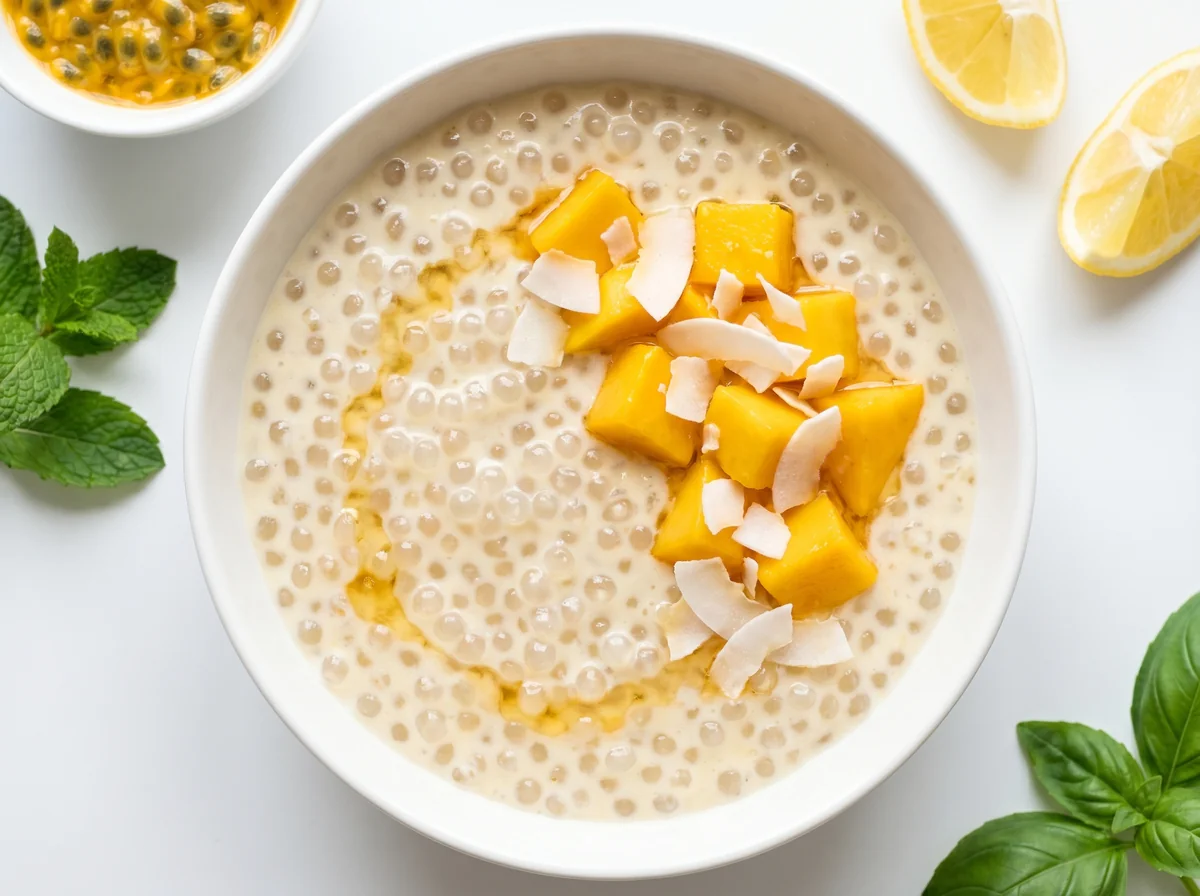
A translucent Gulf dessert — sago pearls cooked in sweetened milk with cardamom, saffron, and rose water until they turn pearly and glossy, garnished with nuts. Gluten-free with medium glycemic load, contains dairy and tree nuts.
Sago pudding is a beloved Gulf dessert (Saudi Arabia, UAE, Bahrain, and Oman), made from sago pearls — starch extracted from the trunk of the sago palm — cooked in sweetened milk. It arrived via the maritime trade routes with Southeast Asia, then blended with Gulf cuisine through the addition of cardamom, saffron, and rose water.
Its signature translucent pearly beads and creamy texture set it apart, and it is served at Ramadan and celebrations. Being gluten-free makes it a dessert that suits guests with sensitivities.
Preparation Steps
Soak the sago
Rinse the sago pearls and soak them in cold water for half an hour until they swell slightly (this shortens cooking time and prevents clumping). Drain. Sago pearls are small starch beads that turn translucent and pearly when cooked.
Cook the sago in milk
In a pot, warm the milk over medium heat, add the drained sago, and stir continuously to prevent sticking and clumping. Cook over low heat with frequent stirring until the sago pearls are cooked through and fully translucent — no white centre — about twenty minutes.
Add the sugar and flavourings
Add the sugar, cardamom, and steeped saffron, and stir until the sugar dissolves. Allow to thicken slightly. The saffron gives a golden colour, and cardamom adds a Gulf fragrance. Taste and adjust sweetness.
Perfume with rose water
Remove from the heat, add the rose water, and stir. Remember that sago thickens considerably as it cools, so leave it a little looser on the heat than you want the final result. The final texture appears after chilling.
Portion and chill
Spoon the hot sago into individual serving cups, let cool, then refrigerate for at least two hours until cold and set to a pearly pudding consistency.
Garnish and serve
Garnish the sago with crushed pistachios and almonds just before serving. Serve cold. Sago is a beloved Gulf dessert (Saudi Arabia, UAE, Bahrain) especially during Ramadan and special occasions, distinguished by its translucent pearly pearls in milk perfumed with cardamom and saffron. Being gluten-free makes it suitable for everyone.
Blood Sugar Impact
The glycemic index (GI) measures how quickly a food raises blood sugar, while the glycemic load (GL) measures how much a full serving raises it. Together they give the complete picture.
Glycemic Index
GI
64Medium
Low0–55Medium56–69High70+
A low value (≤55) means a gradual rise in blood sugar — the most suitable range for diabetes and insulin resistance.
Glycemic Load
GL
28High
Low0–10Medium11–19High20+
Glycemic load reflects the impact of the full serving. To lower it: take half a serving, or pair the recipe with a source of protein and fiber.
Nutritional Information
Per ServingMakes 5 servings · one serving is about 235 g of raw ingredients
Calories251 kcal13%of Daily Value*
Protein6 g12%of Daily Value*
Carbohydrates43 g16%of Daily Value*
Fat6 g8%of Daily Value*
Fiber0 g0%of Daily Value*
Sodium84 mg4%of Daily Value*
* Percent Daily Values are based on a 2,000-calorie diet per FDA food-label reference values — your daily needs may be higher or lower. Values are derived from the recipe's ingredients via the USDA database.
Troubleshooting
The most common problems when preparing Sago Pudding, and how to fix them:
Sago clumped into a sticky mass
Not soaked, or insufficient stirring. Soak the sago before cooking and stir continuously in the milk — the starchy pearls stick and clump easily without constant stirring.
Sago pearls have a white centre
Not cooked through. Cook until fully translucent and pearly (a white centre means undercooked). Add hot milk and continue cooking.
Too thick, like dough
Sago thickens considerably on chilling. Gradually add hot milk until the desired consistency, and leave it looser on the heat. It thickens further in the fridge.
Too runny, has not set
Not enough sago or undercooked. Cook until the pearls are done and it has thickened. Remember it sets more firmly after two hours of chilling — the final texture appears cold.
Milk stuck and burned
Insufficient stirring or heat too high. Stir continuously, especially near the base, and cook over low heat — milk and sago stick and burn easily.
Storage and Make-Ahead
Refrigerator (4°C)
Store in airtight cups in the refrigerator for three days (contains milk). It thickens on chilling; add a splash of milk and stir to loosen. Add the nut garnish only at serving to keep them crunchy.
Advance preparation
An ideal make-ahead dessert: cook, portion into cups, and chill — ready to serve. Practical for Ramadan iftar and special occasions.
Freezer
Not recommended for freezing (milk and starch change texture on thawing). Prepare fresh and store refrigerated.
Texture note
Portion the sago into cups while still hot before it sets — it thickens on chilling and becomes difficult to spoon when cold.
Tested Ingredient Substitutions
Original Ingredient
Tested Substitute
Ratio
Flavor Difference
Sugar
Reduced sugar or date molasses
To taste
Lowers the glycemic load; date molasses adds flavour and minerals
Full-fat milk
Low-fat milk or coconut milk
Same quantity
Low-fat milk is lighter; coconut milk makes it vegan with a tropical flavour
Saffron and cardamom
Vanilla or cinnamon
To taste
Saffron and cardamom are the traditional Gulf flavourings; vanilla gives a simpler flavour
How Much Does It Make? Scaling Guide
Servings
Sago
Milk
Sugar
3 (half batch)
1/4 cup
2 cups
1/4 cup
5 (base)
1/2 cup
4 cups
1/2 cup
10 (dinner party)
1 cup
8 cups
1 cup
EEINA Nutrition Tip
Sago is lighter than deep-fried Eid sweets: no frying, no excessive added fat, and the milk adds protein and calcium — and it is gluten-free. Its challenge is that sago is pure starch (low-nutrient carbohydrate) combined with sugar. To lighten it: reduce the sugar, use low-fat milk, and add more nuts for nutritional value. Serving in a small individual cup helps with portion control.
Add This Recipe to Your Plan
The EEINA app saves your favorite recipes, calculates them from their real ingredients, and shows your daily numbers toward your goal. Try it free now.
Small starch beads (traditionally extracted from the trunk of the sago palm, also known as tapioca or sabudana) that become translucent and pearly when cooked in milk. They form the base of Gulf-style sago pudding.
Is sago gluten-free?
Yes, sago is pure starch and completely gluten-free, making it a dessert suitable for people with wheat sensitivity and coeliac disease (being mindful of other ingredients such as milk and nuts).
How do I prevent sago from clumping?
Soak it before cooking for half an hour, and stir continuously in the milk during cooking. The starchy pearls stick and clump easily, so soaking and constant stirring are essential.
Is sago healthy?
Lighter than fried or syrup-soaked sweets (no frying, milk adds protein and calcium, gluten-free). However, sago is a low-nutrient starch and the sugar raises the load. Reduce the sugar, use low-fat milk, add more nuts, and keep portions small.