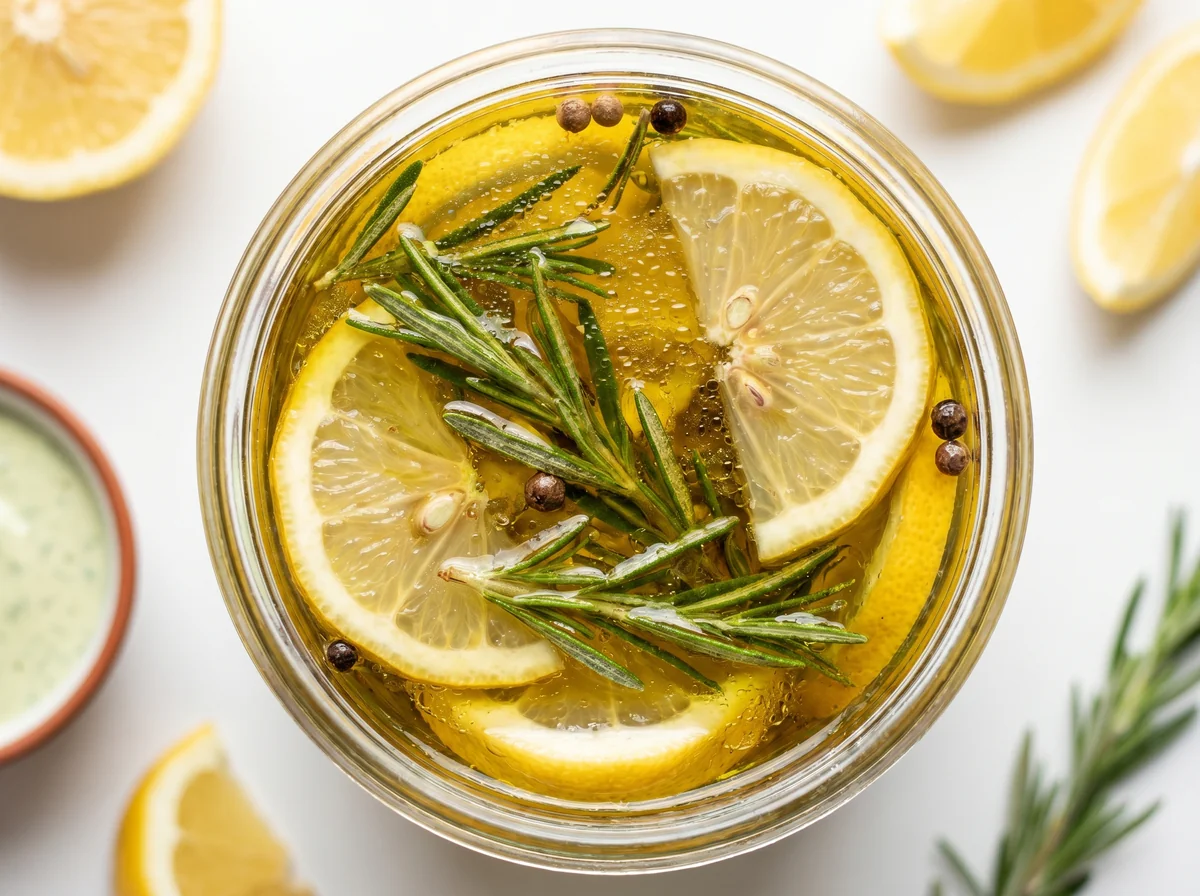
In many Mediterranean homes and Gulf garden plots, a hardy evergreen rosemary shrub grows — from which household members snip a sprig to perfume grilled meats or steep in hot water.
This simple infusion borrows that long-standing domestic tradition and presents it as a clear warm cup, with a quiet pine fragrance rising from the steam — a reminder of a walk among mountain trees. A slice of lemon breaks the weight of the scent with a refreshing citrus edge, turning it into a drink to be sipped slowly on a cool evening as a gentle alternative to yet another cup of coffee.
Preparation Steps
Rinse the rosemary
Rinse the fresh rosemary sprigs under cold running water for about 10 seconds until any dust caught between the needle-like leaves is removed — rinsing protects the infusion's flavour from an earthy taste. Skip this step if using dried rosemary.
Heat the water
Place the water in a kettle or small saucepan over a medium heat until small bubbles begin to form at the edges without coming to a full boil — about 90 °C. Very hot water extracts bitterness from the leaves, and the resinous flavour then overpowers the fragrance.
Steep the rosemary
Remove the pan from the heat, add the rosemary sprigs, then cover and leave to steep for 5 to 7 minutes until the water turns a pale gold and a clear pine-like aroma rises. Covering traps the volatile aromatic oils instead of letting them evaporate.
Add the lemon
Place the two lemon slices in the infusion and leave for thirty seconds only — the lemon adds a refreshing citrus note, and long steeping of the peel releases a slight bitterness you do not want.
Strain and serve
Strain the infusion into two cups through a fine sieve to catch the leaves. Stir in the honey if using until fully dissolved, then serve hot immediately before the fragrance fades.
Blood Sugar Impact
The glycemic index (GI) measures how quickly a food raises blood sugar, while the glycemic load (GL) measures how much a full serving raises it. Together they give the complete picture.
Glycemic Index
GI
43Low
Low0–55Medium56–69High70+
A low value (≤55) means a gradual rise in blood sugar — the most suitable range for diabetes and insulin resistance.
Glycemic Load
GL
2Low
Low0–10Medium11–19High20+
Glycemic load reflects the impact of the full serving. To lower it: take half a serving, or pair the recipe with a source of protein and fiber.
Nutritional Information
Per ServingMakes 2 servings · one serving is about 265 g of raw ingredients
Calories23 kcal1%of Daily Value*
Protein0 g0%of Daily Value*
Carbohydrates6 g2%of Daily Value*
Fat0 g0%of Daily Value*
Fiber2 g7%of Daily Value*
Sodium2 mg0%of Daily Value*
Potassium44 mg1%of Daily Value*
Phosphorus4 mg0%of Daily Value*
* Percent Daily Values are based on a 2,000-calorie diet per FDA food-label reference values — your daily needs may be higher or lower. Values are derived from the recipe's ingredients via the USDA database.
Troubleshooting
The most common problems when preparing Rosemary and Lemon Infusion, and how to fix them:
The infusion tastes bitter and heavy
The water boiled too hard or the steeping time was too long. Use water at about 90 °C after removing the pan from the heat, and reduce the steeping time to five minutes.
The flavour is pale and weak
Add a little more rosemary, or bruise the fresh leaves between your fingers before steeping to release their aromatic oils. Make sure the cup is covered during steeping.
The drink is too acidic
The lemon steeped too long. Add the lemon for the final thirty seconds only, or squeeze in a few drops instead of placing a whole slice.
Small leaves are floating in the cup
Strain the infusion through a fine-mesh sieve or a piece of muslin. If using dried rosemary, place it in an empty refillable tea bag.
The honey will not dissolve
Add the honey while the drink is still hot and stir well. If it has cooled too much the honey dissolves slowly — or replace it with a few drops of liquid date molasses.
Storage and Make-Ahead
Serve immediately
Best drunk hot within ten minutes of straining so it retains its volatile fragrance before it evaporates.
Refrigerator
The strained, cooled infusion keeps in a sealed container in the fridge for up to 24 hours, then served cold over ice as a refreshing drink.
Rosemary sprigs
Fresh sprigs keep wrapped in a damp paper towel in a bag in the fridge for about a week, or can be dried and stored in a sealed container away from light for several months.
Avoid
Do not leave the infusion at room temperature for more than two hours to prevent microbial growth, especially if you have added honey.
Tested Ingredient Substitutions
Original Ingredient
Tested Substitute
Ratio
Flavor Difference
Fresh rosemary
Dried rosemary
2 tsp dried for every 4 fresh sprigs
Dried rosemary has a more concentrated flavour — start with a smaller quantity and taste before adding more.
Lemon
Lime
Same quantity, 2 slices
Gives a sharper acidity and a more intense aroma — good for those who enjoy a more refreshing flavour.
Honey
Date molasses or a little stevia
1 tsp honey equals a few drops of date molasses or a pinch of stevia
Stevia is a calorie-free option suitable for people with diabetes and those monitoring their weight.
Rosemary alone
Rosemary with a sprig of mint
2 rosemary sprigs with 1 mint sprig per 500 ml
Mint adds a refreshing coolness and softens the intensity of the pine fragrance.
Hot water
Long cold infusion
Same quantities, in the fridge for 6 to 8 hours
Cold infusion gives a gentler, less bitter flavour — a great summer drink.
How Much Does It Make? Scaling Guide
Ingredient
2 servings (500 ml)
4 servings (1 L)
6-serving jug (1.5 L)
Fresh rosemary
4 sprigs
8 sprigs
12 sprigs
Water
500 ml
1000 ml
1500 ml
Lemon slices
2
4
6
Honey (optional)
1 teaspoon
2 teaspoons
3 teaspoons
Steeping time
5 to 7 minutes
7 minutes
7 to 8 minutes
EEINA Nutrition Tip
Keep the steeping time to between five and seven minutes only. The longer you steep and the hotter the water, the more bitterness the resinous leaves release, and that bitterness then masks the refreshing fragrance you are looking for in this drink.
Add This Recipe to Your Plan
The EEINA app saves your favorite recipes, calculates them from their real ingredients, and shows your daily numbers toward your goal. Try it free now.
No — it is an herbal infusion that is virtually caffeine-free, making it a fragrant alternative to coffee in the evening without affecting sleep.
Does rosemary help improve memory or digestion?
Limited preliminary human studies suggest a possible effect, but they are not conclusive (weak evidence). The drink is presented for its aromatic flavour and antioxidants, not as a documented treatment.
Can it be drunk daily?
One or two cups a day is acceptable for most healthy people as part of hydration. Avoid very concentrated doses, and consult your doctor if you are pregnant or taking blood-thinning medication.
Should I use fresh or dried rosemary?
Both work. Fresh rosemary gives a more delicate fragrance; dried is more concentrated, so start with a smaller amount. A rough guide: 2 tsp dried equals 4 fresh sprigs.
Will the drink raise blood sugar?
Without honey or added sugar the drink contains almost no carbohydrates and barely raises blood sugar. If you wish to sweeten it, choose a calorie-free option such as stevia.