A refreshing pink sherbet — concentrated rose syrup diluted with cold water and ice into a fragrant, chilled pink drink; a celebration and Ramadan beverage, low glycaemic load and free from common allergens.
Rose sherbet is a timeless and beloved Arabic celebration drink, especially at occasions, weddings, Ramadan and during hospitality. It is made by diluting concentrated rose syrup (sweetened pink sherbet, or a mix of rose water and sugar) with cold water and ice, becoming a fragrant, floral, pink drink.
The rose is precious in Arab culture (rose water and Taif roses are celebrated), and rose sherbet is the drink of welcome and celebration (offered to guests at weddings and on Ramadan tables). Its beautiful pink colour, floral fragrance and cold temperature make it a distinctive festive drink — a symbol of joy and generous Arabic hospitality.
Preparation Steps
Prepare the rose syrup
Use ready-made concentrated rose syrup (the sweetened pink sherbet variety), or make a substitute by mixing rose water with sugar syrup and a natural pink colouring. The rose syrup is the flavour and the source of the drink's distinctive pink colour — it is a concentrate that needs diluting with water. Choose a good-quality syrup.
Dilute with water
In a jug, mix the concentrated rose syrup with the cold water (roughly a 1:8 ratio, or adjust to the syrup's concentration) and stir. Diluting transforms the heavy concentrate into a refreshing drink — adjust the ratio until the drink is fragrant, pleasantly pink and balanced.
Add the lemon
Add the lemon juice (it balances the sweetness of the syrup, adds freshness and brightens the rose flavour). Lemon is important — it cuts through the sweetness of the pink sherbet so it does not feel heavy, and adds refreshment and vitamin C. Taste and adjust the sweetness and acidity.
Adjust the sweetness
Taste the drink: if it is too sweet, dilute with more water; if it is too weak, add a little more syrup. The goal is a refreshing balance — fragrant, moderately sweet, pink and fresh, not a heavy syrup. The concentrated syrup is high in sugar, so good dilution keeps it moderate.
Chill
Chill the drink well in the fridge or add plenty of ice. Rose sherbet is drunk very cold — it is a refreshing drink, especially during Ramadan, summer and celebrations — cold temperature doubles its refreshment and pleasure. Serve iced.
Serve
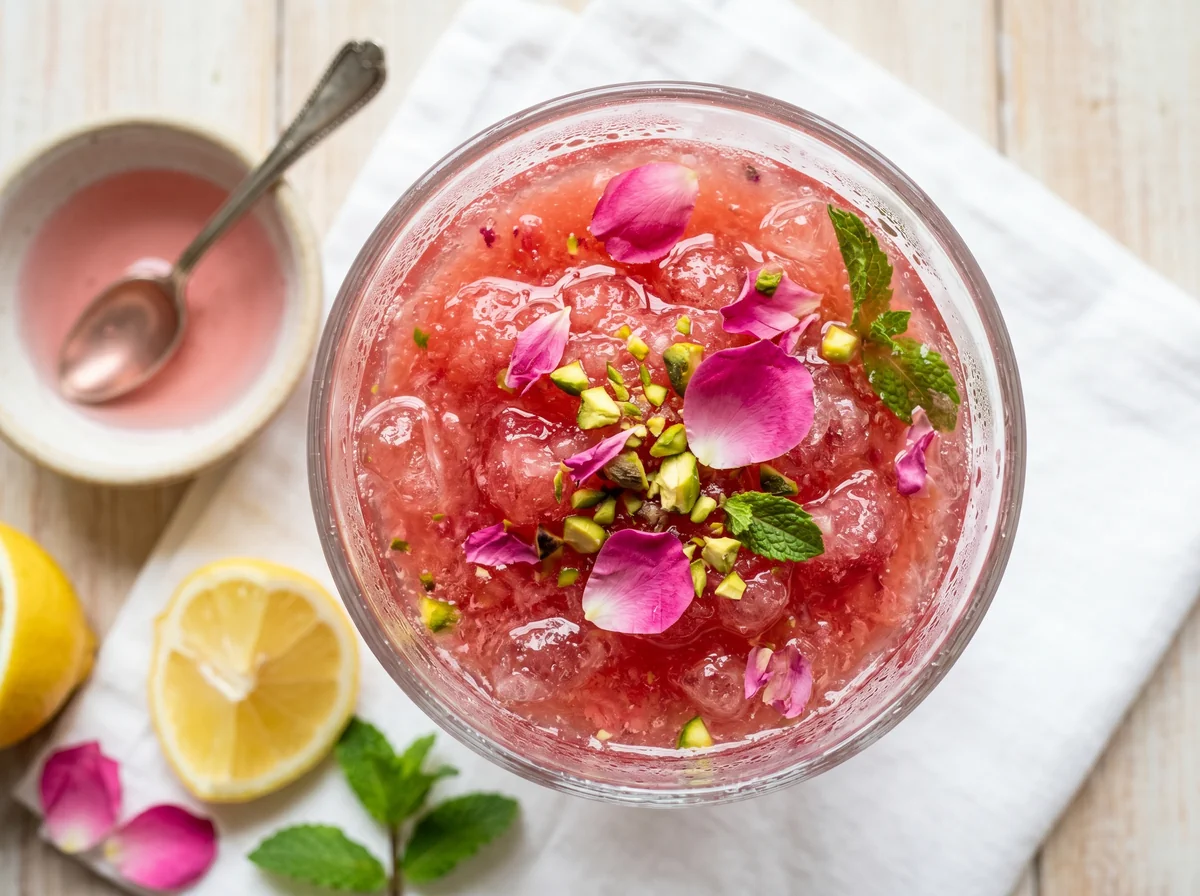
Pour the rose sherbet into glasses over ice, garnish with dried rose petals or mint, and serve cold. This is a beloved and timeless Arabic pink sherbet — a drink of celebrations, weddings, Ramadan and hospitality — where its beautiful pink colour, floral fragrance and chill make it a festive, distinctive drink, a symbol of generous Arabic hospitality and joyful celebration.
Blood Sugar Impact
The glycemic index (GI) measures how quickly a food raises blood sugar, while the glycemic load (GL) measures how much a full serving raises it. Together they give the complete picture.
Glycemic Index
GI
64Medium
Low0–55Medium56–69High70+
A low value (≤55) means a gradual rise in blood sugar — the most suitable range for diabetes and insulin resistance.
Glycemic Load
GL
17Medium
Low0–10Medium11–19High20+
Glycemic load reflects the impact of the full serving. To lower it: take half a serving, or pair the recipe with a source of protein and fiber.
Nutritional Information
Per ServingMakes 4 servings · one serving is about 290 g of raw ingredients
Calories106 kcal5%of Daily Value*
Protein0 g0%of Daily Value*
Carbohydrates27 g10%of Daily Value*
Fat0 g0%of Daily Value*
Fiber0 g0%of Daily Value*
Sodium2 mg0%of Daily Value*
Potassium14 mg0%of Daily Value*
Phosphorus1 mg0%of Daily Value*
* Percent Daily Values are based on a 2,000-calorie diet per FDA food-label reference values — your daily needs may be higher or lower. Values are derived from the recipe's ingredients via the USDA database.
Troubleshooting
The most common problems when preparing Rose Sherbet, and how to fix them:
Too sweet and heavy
Dilute more. Add more water to the concentrated syrup (it is high in sugar), and squeeze in some lemon (it cuts the sweetness). Good dilution and lemon juice together create a balanced, refreshing drink.
Strong, soapy rose flavour
Too much rose syrup or rose water. Adjust the amount of syrup or rose water (rose is potent — excess gives a soapy taste). Dilute well. A little gives a delicate floral note; too much overwhelms.
Colour is pale or looks artificial
Not enough syrup, or the colour is synthetic. For a natural pink, use a naturally coloured rose syrup or add a drop of beet juice (a healthy pink), and avoid excessive artificial colours. Pink colour is part of the drink's beauty.
Not refreshing
Not cold enough. Chill the drink well or add plenty of ice — rose sherbet is meant to be drunk very cold, especially during Ramadan and summer. Cold temperature doubles the refreshment.
Flat, weak flavour
Over-diluted. If it has been diluted too much it tastes bland — add a little more rose syrup and lemon to restore balance. Adjust the ratio until it is clearly fragrant, pink and refreshing.
Storage and Make-Ahead
Refrigerator (4 °C)
The diluted rose sherbet keeps in a sealed pitcher in the fridge for two to three days (it is water, sugar and flavour). Stir before pouring. Practical for preparing a ready chilled drink for Ramadan and gatherings. Add ice at serving time.
Concentrated syrup
Concentrated rose syrup (commercial or home-made) keeps in the fridge for weeks to months (sugar acts as a preservative) and is diluted with water when needed. A practical pantry item for a quick drink (one spoonful of syrup plus cold water). Store sealed.
Freezer
The diluted sherbet can be frozen in ice cube trays (pink ice cubes for drinks) or lolly moulds for children. The drink itself is quick to make fresh by dilution — no need to freeze it.
Food safety
Use food-grade rose syrup or rose water (for food, not cosmetics), clean water and clean utensils, and keep the drink chilled. Sugar-based drinks keep relatively well, but store cold and drink fresh.
Tested Ingredient Substitutions
Original Ingredient
Tested Substitute
Ratio
Flavor Difference
Commercial concentrated rose syrup
Rose water, a little sugar or honey, and natural colouring
To taste
The natural version is far healthier (you control the sugar and avoid artificial colours and flavours). Use rose water, a little honey, and beet juice for the pink.
Sugar / sweetened syrup
Reduce the sweetening or use a sweetener substitute
To taste
Reduces sugar — dilute more or use rose water with minimal sweetening. A sweetener substitute suits people with diabetes; lemon balances without extra sugar.
Rose syrup
Lemon, tamarind or apricot leather (qamar al-deen) syrup
Same quantity
If rose syrup is unavailable, other refreshing sherbet drinks work (lemon, tamarind, apricot leather); rose gives the distinctive pink colour and floral fragrance.
How Much Does It Make? Scaling Guide
Number of cups
Rose syrup
Water
Lemon
2 (small)
1/4 cup
2 cups
1/4 lemon
4 (base)
1/2 cup
4 cups
1/2 lemon
8 (guests)
1 cup
8 cups
1 lemon
EEINA Nutrition Tip
Rose sherbet is a lovely festive drink, but its main challenge is sugar: commercial concentrated rose syrup tends to be high in sugar and artificial colours and flavours, and the drink is essentially water, sugar and flavour (little nutritional value beyond pleasure and hydration). The glycaemic load is low after good dilution, but watch your portion. For a healthier version, make it with natural rose water, a little sugar or honey, and a natural colouring (from beet or rose), dilute well, add lemon and mint (freshness without extra sugar). People with diabetes should be cautious. A refreshing celebratory drink, in moderation with sugar, and the natural version is always better.
Add This Recipe to Your Plan
The EEINA app saves your favorite recipes, calculates them from their real ingredients, and shows your daily numbers toward your goal. Try it free now.
A refreshing Arabic celebration drink made by diluting concentrated rose syrup (sweetened pink sherbet or rose water and sugar) with cold water and ice, producing a fragrant, floral, pink drink. A drink of occasions, weddings, Ramadan and hospitality — its pink colour, floral flavour and cold temperature make it a distinctive, beloved festive drink.
What is the difference between rose sherbet and rose milk?
Rose sherbet (the pink drink) is water-based (concentrated rose syrup diluted with water and ice — a clear, refreshing pink drink), while rose milk is milk-based (cold milk with rose water or syrup — a creamy, opaque drink). Rose sherbet is crisp and transparent for celebrations and summer; rose milk is creamy and comforting. Both are pink and fragrant; the base (water or milk) is the difference.
How do I make it naturally without commercial syrup?
Mix natural rose water with cold water, a little honey or sugar (to taste) and lemon juice, then add a natural pink colouring (a drop of beet juice gives a healthy pink) instead of commercial packaged syrup. This way you control the sugar and avoid artificial colours and flavours. The natural version is healthier and more delicate.
Is rose sherbet healthy?
A lovely festive drink, but its main challenge is sugar (concentrated syrup is high in sugar and artificial colours and the drink is essentially water, sugar and flavour). The glycaemic load is low after good dilution, but watch your portion. Make it with natural rose water, a little honey and natural colouring, dilute well, and add lemon. People with diabetes should be cautious. A refreshing celebration drink in moderation — the natural version is always better.
Sources: University of Sydney · Gulf GSO · Our methodology · Updated on